

China, Russia, Iran: Diplomacy Put To The Test
The fourth week of September 2026 was one of extraordinary diplomatic activity, between the UN General Assembly General Debate in New York, accompanied by hundreds of meetings among Heads of State and Government on the sidelines, and the summit between US President Donald John Trump and his Chinese counterpart Xi Jinping in Washington DC on September 23-25. The latter brought a certain element of stability into international relations that are otherwise marked by volatility.
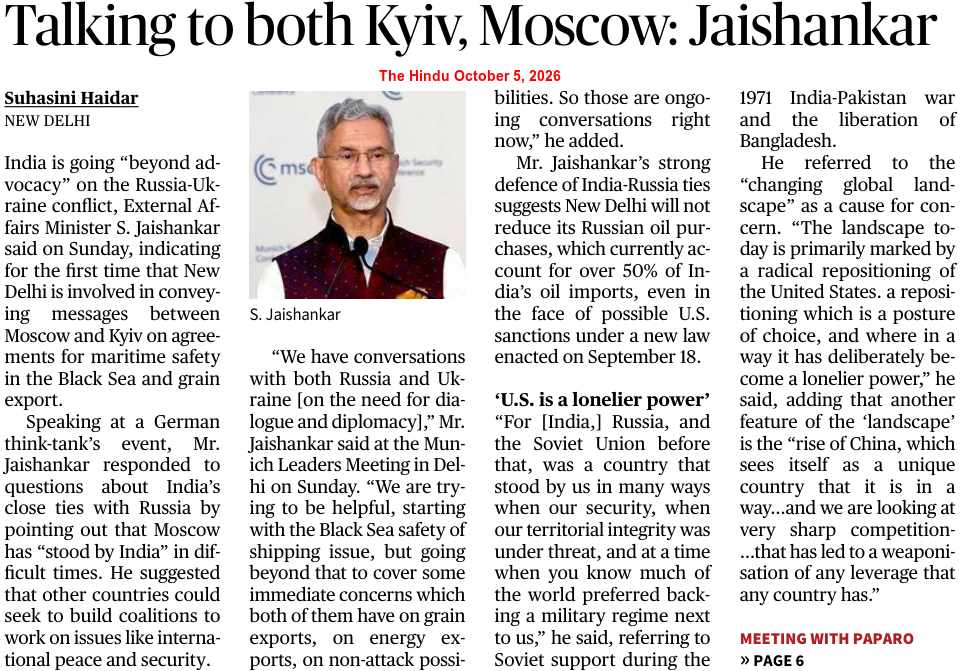
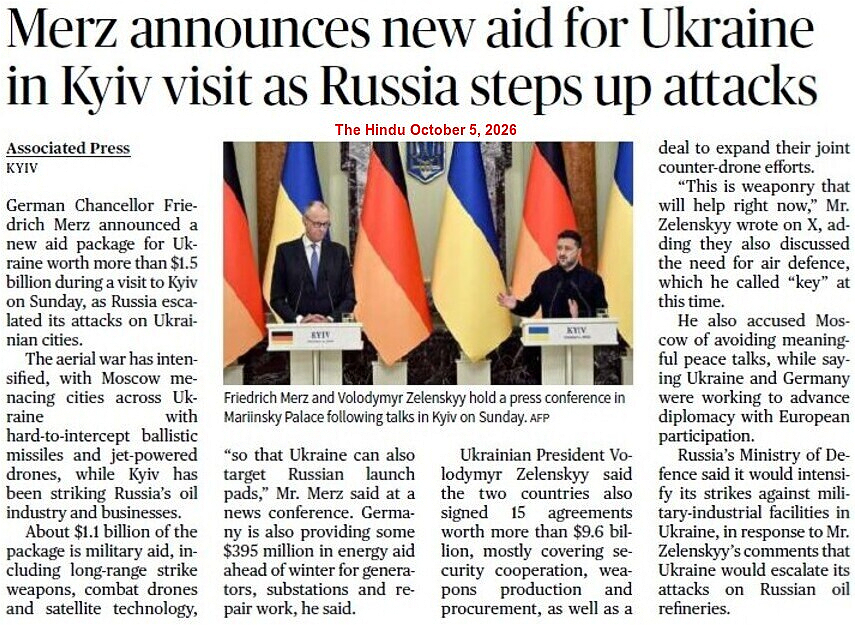
Russian Foreign Minister Sergey Lavrov, who attended the UNGA in lieu of President Vladimir Putin, met some 50 delegations separately, in addition to his highly polemical address at the General Debate, targeting European powers more specifically. Significant is that US Secretary of State Marco Rubio announced in New York that President Trump invited President Putin to participate in the G20 Meeting to be held in Florida in December 2026. “We think it’s an opportunity for him to engage not just with President Trump, but with other world leaders,” Rubio explained. (The remark struck observers as strange, given the number of interactions the Russian President had in September at the Summits of the Shanghai Cooperation Organisation and of the BRICS.) In any case, the Kremlin has not yet responded to the invitation.
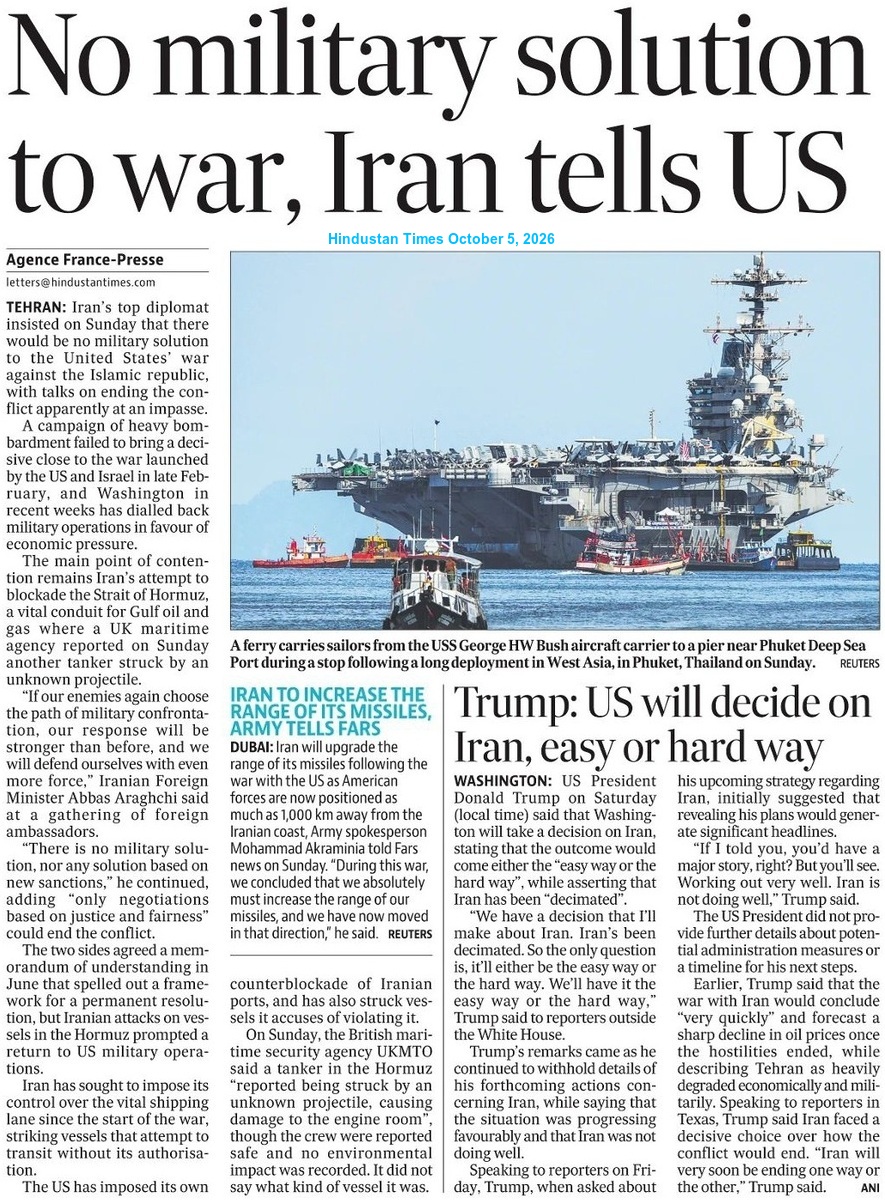
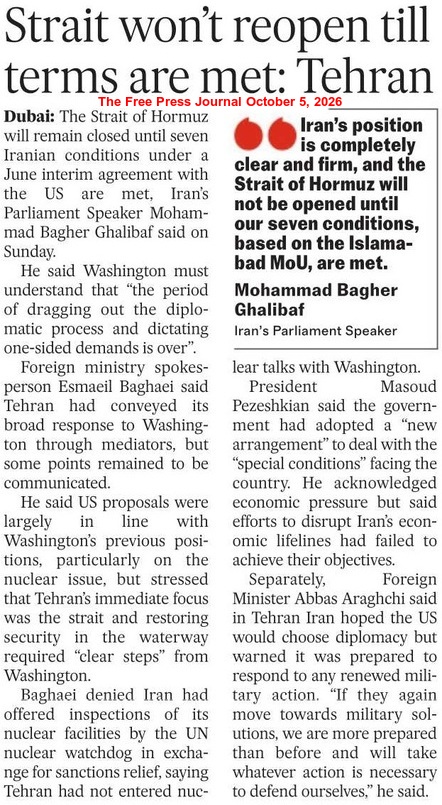
The other major news was that Iran offered the US a seven-day ceasefire at the end of which Tehran would open the Strait of Hormuz in return for the lifting of the naval blockade imposed by the US Navy. The response from President Trump was negative, as he stressed: “They made a proposal but I reject it.”
Iranian Foreign Minister Abbas Araghchi, who accompanied President Masoud Pezeshkian to the UN headquarters, explained that the proposal resembles the Memorandum of Understanding (MoU) already signed on June 17, 2026 by Iran and the US that briefly eased the conflict before breaking down. “The moment they accept this plan, from the next day, this timetable can start, and after seven days, the strait will be open,” he stated.
The announcement was made a few days after the three-hour meeting Araghchi had held on September 23 with US Envoys Steve Witkoff and Jared Kushner. Nonetheless, President Trump said that he was sceptical, indicating that the bombing of Iran could resume after the US mid-term elections in November, presumably so as not to harm the chances of his allies who were up for election or re-election. The Iranian leadership, who are well aware of Trump’s erratic statements and moves, said that they were awaiting an official response to their offer.
Meanwhile, US Treasury Secretary Scott Bessent announced how pleased he was with his plan to strangle the Islamic Republic financially with his Operation Economic Outcast. At his direction, “teams were dispatched across the globe to engage with countries and demand action against the Iranian regime”, including cutting off trade and bank relations.
This article was first published in Executive Intelligence Review (EIR) Strategic Alert weekly newsletter (Volume 40, No. 40) on October 1, 2026.
Meanwhile,

Boundless Ocean of Politics on Facebook
Boundless Ocean of Politics on Twitter
Boundless Ocean of Politics on Linkedin
Contact us: kousdas@gmail.com

 ISMC
ISMC
