

Strategic Advantage For Iran As US Forces To Exit Iraq
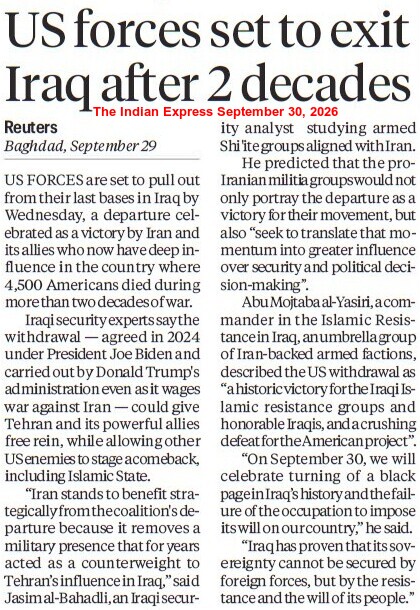
Amidst the backdrop of tensions with Iran, the US has decided to completely withdraw its troops from neighbouring Iraq. There will no longer be any US military bases in Iraq after more than two decades. During the tenure of then-US President Joe Biden in 2024, Washington DC concluded an agreement with Baghdad regarding the withdrawal of troops. Now, the Donald John Trump Administration has decided to implement the very same agreement. According to Reuters, US forces are preparing to withdraw from their last bases in Iraq by October 1, 2026 morning.
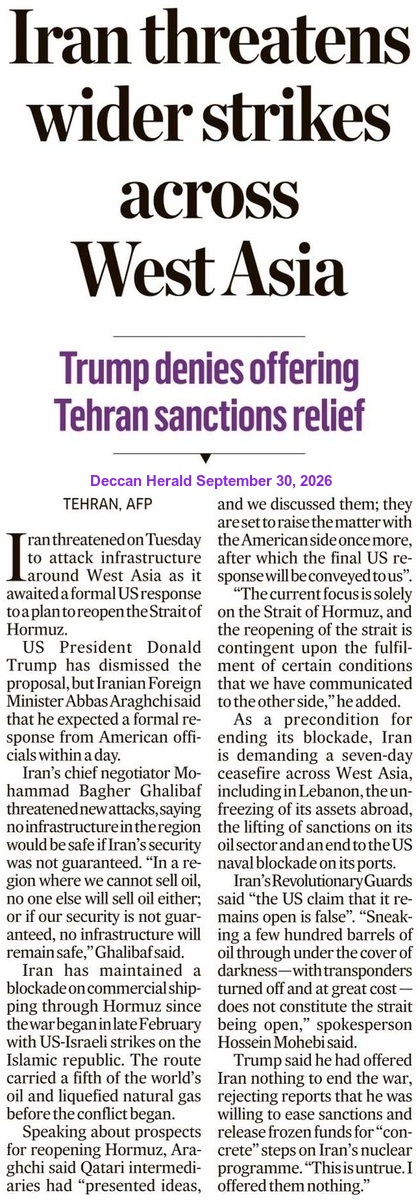
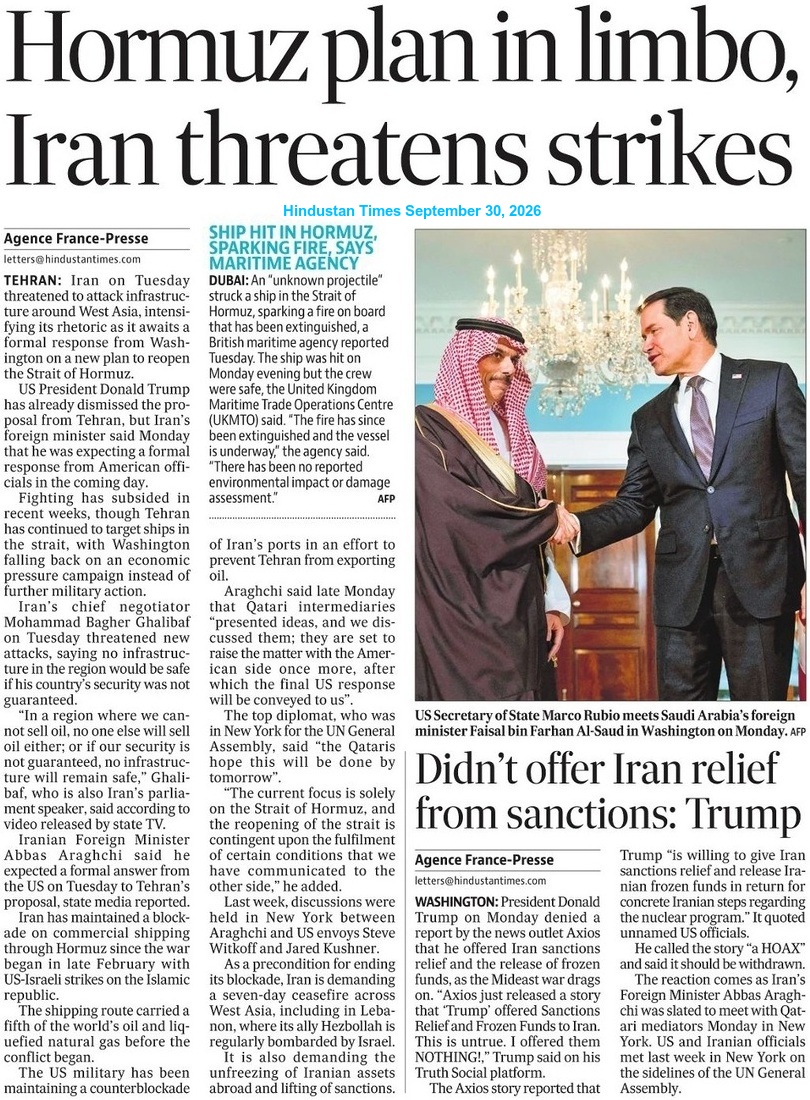
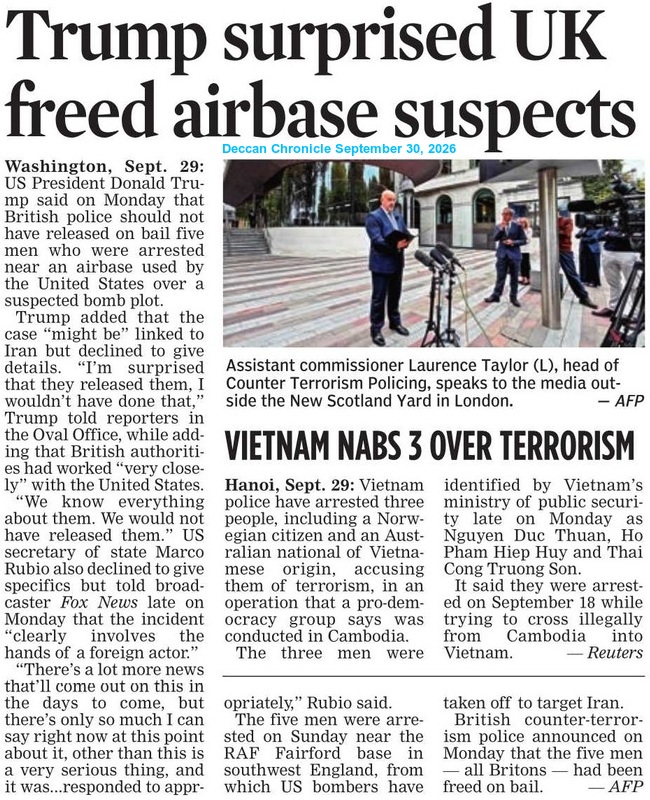
In the fourth week of September, President Trump signalled the possibility of further military action against Iran, stressing that the Islamic Republic must choose between reaching a deal or facing total annihilation. In such a situation, the Pentagon‘s decision to withdraw troops from Iraq will certainly strengthen the strategic position of Iran in West Asia.
Incidentally, Kata’ib Hezbollah (also known as the Hezbollah Brigades, an Iraqi Shia paramilitary group) – formed under the direct supervision of the pro-Iran armed group Popular Mobilisation Forces (PMF) active in Iraq and the Iranian military’s elite Islamic Revolutionary Guard Corps (IRGC) – recently warned that it could launch attacks on US military bases in West Asia in the near future.
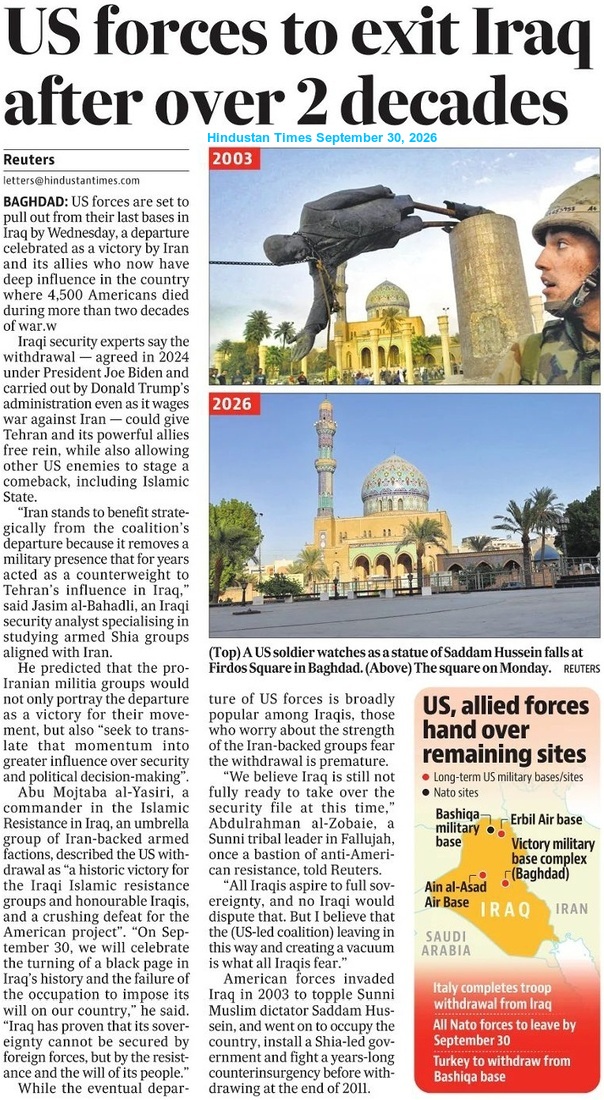
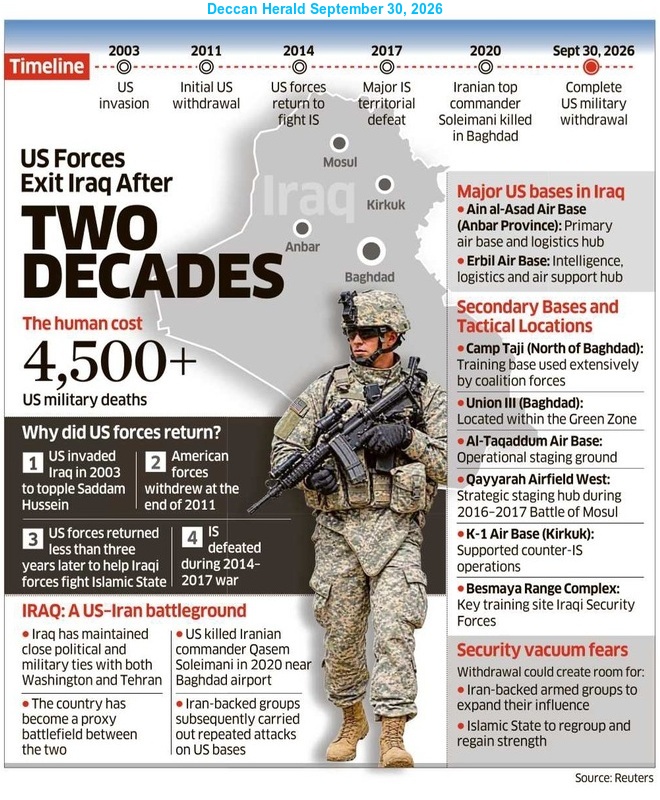
Both Kata’ib Hezbollah and the PMF are Iraq-based organisations. The PMF, which maintains deep operational ties with Tehran, is quite active in the area along the Iran-Iraq border. Reports suggest that these two outfits, which are members of the Iran-led Axis of Resistance, could launch attacks on US military bases in Iraqi cities of Mosul, Kirkuk, Badra and Nasiriyah.
Iraqi experts fear that the security situation in their country could become even more complex once US troops leave. Iraqi security analyst Jassim al-Bahadli has warned that the departure would remove a counterweight to Iranian influence, risking a power vacuum. He stressed: “Iran stands to benefit strategically from the coalition’s departure because it removes a military presence that for years acted as a counterweight to Tehran’s influence in Iraq.” al-Bahadli is of the opinion that pro-Iran Shia armed groups may become more active in the war-ravaged country.
Meanwhile, Abu Mojtaba al-Yasiri, a Commander of the Islamic Resistance in Iraq – an umbrella group of Iran-backed armed factions, has described the US withdrawal as “a historic victory for the Iraqi Islamic resistance groups and honourable Iraqis, and a crushing defeat for the American project“. He told Reuters: “On September 30, 2026, we will celebrate the turning of a black page in Iraq’s history and the failure of the occupation to impose its will on our country.” al-Yasiri added: “Iraq has proven that its sovereignty cannot be secured by foreign forces, but by the resistance and the will of its people.“
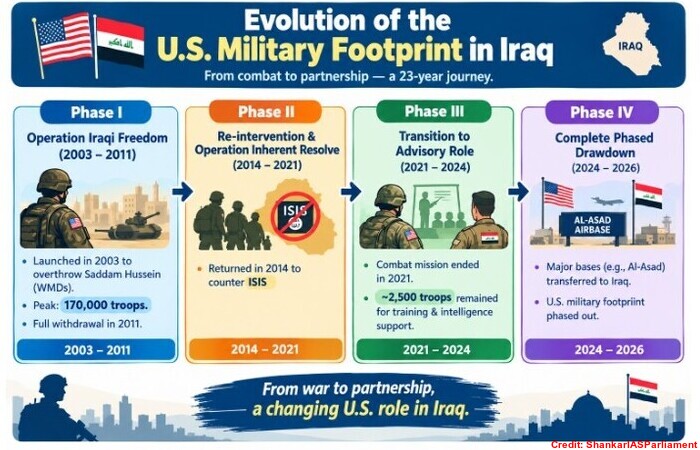
It may be noted that the Pentagon carried out Operation Iraqi Freedom on March 19-20, 2003, as a US-led coalition launched an invasion of Iraq that successfully toppled the Regime of Saddam Hussein within weeks. Since then, the US has stationed its forces in the West Asian nation. Subsequently, US forces have had to conduct successive operations against al-Qaeda, ISIS and pro-Iran militant groups in Iraq. Approximately 4,500 US soldiers have been killed in those conflicts which have spanned more than two decades.
Meanwhile,


Boundless Ocean of Politics on Facebook
Boundless Ocean of Politics on Twitter
Boundless Ocean of Politics on Linkedin
Contact us: kousdas@gmail.com

 ISMC
ISMC
