

No Means To Quench Your Thirst, Iran Warns Foes
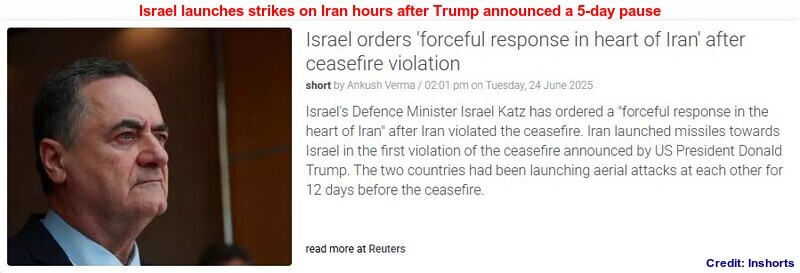
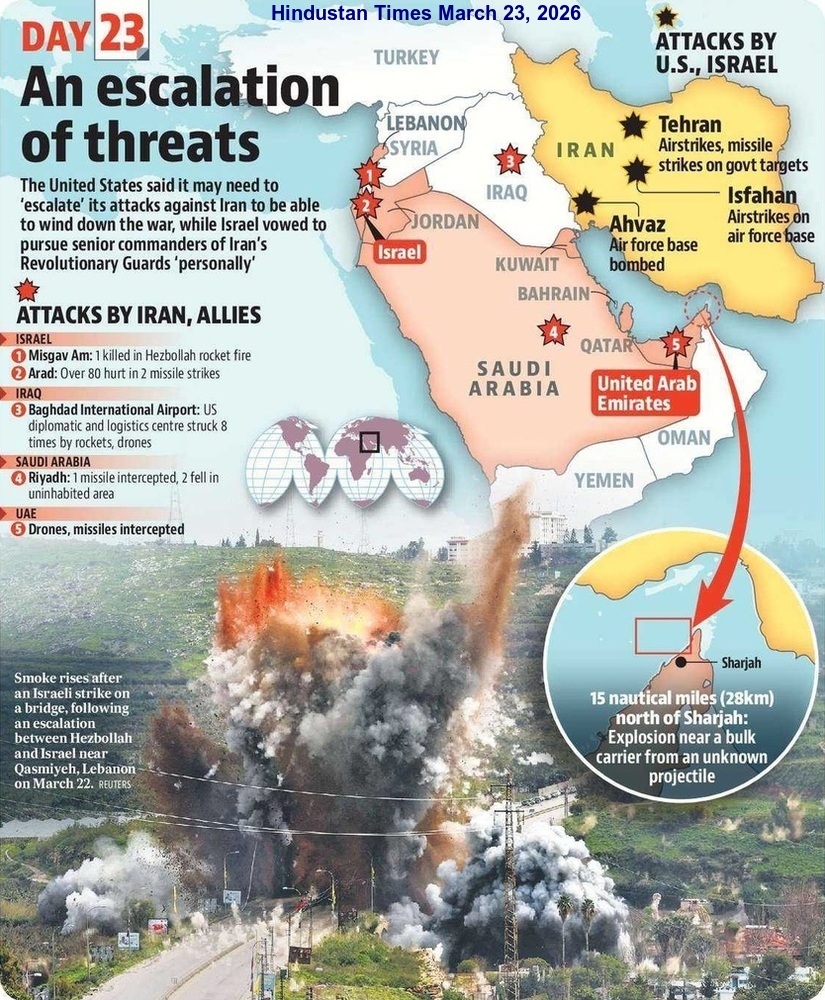
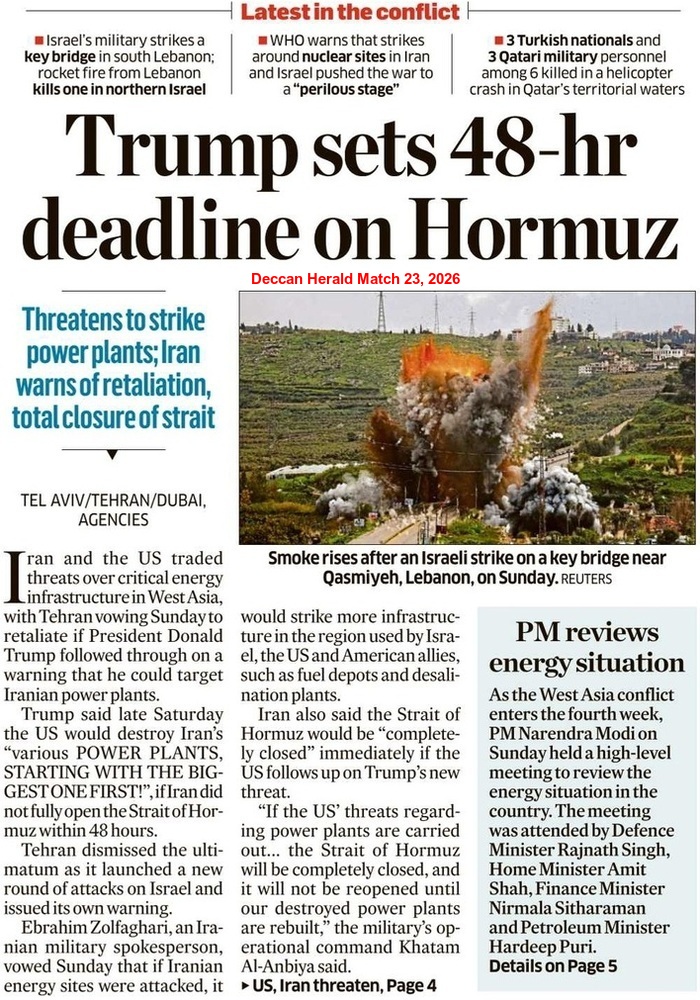
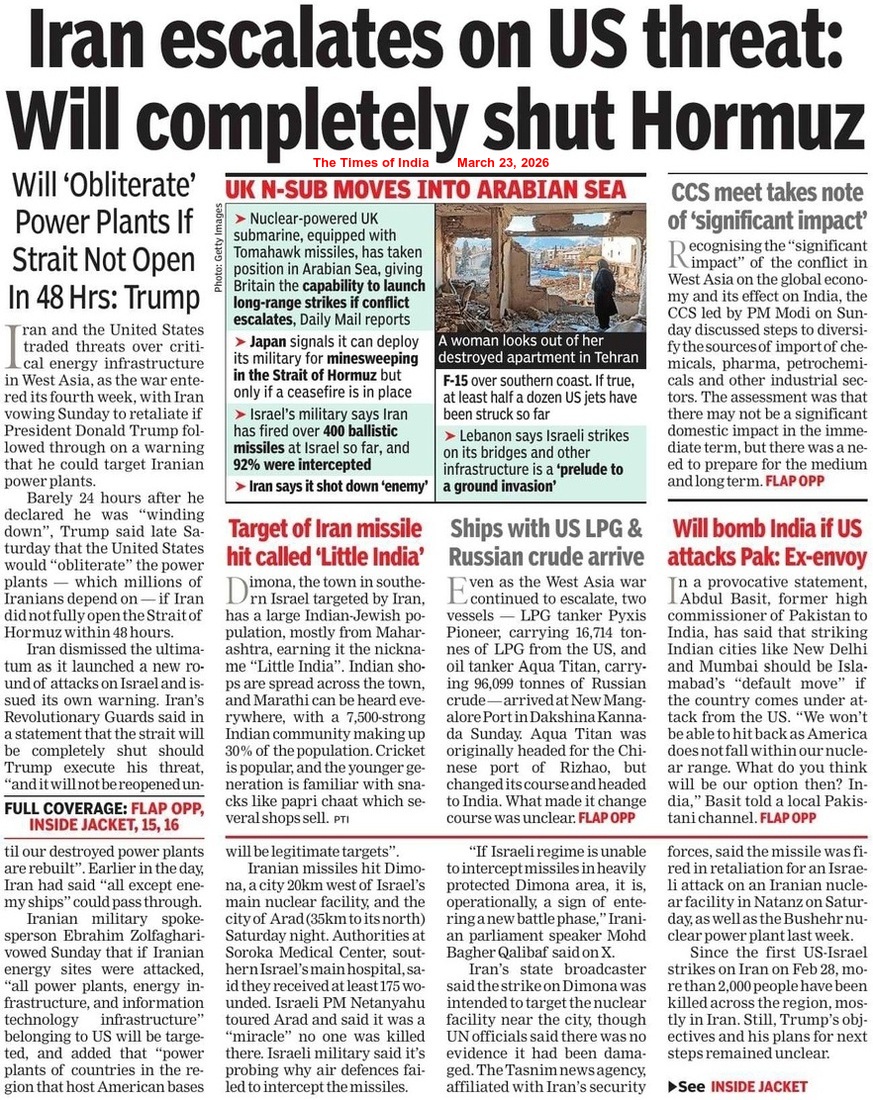
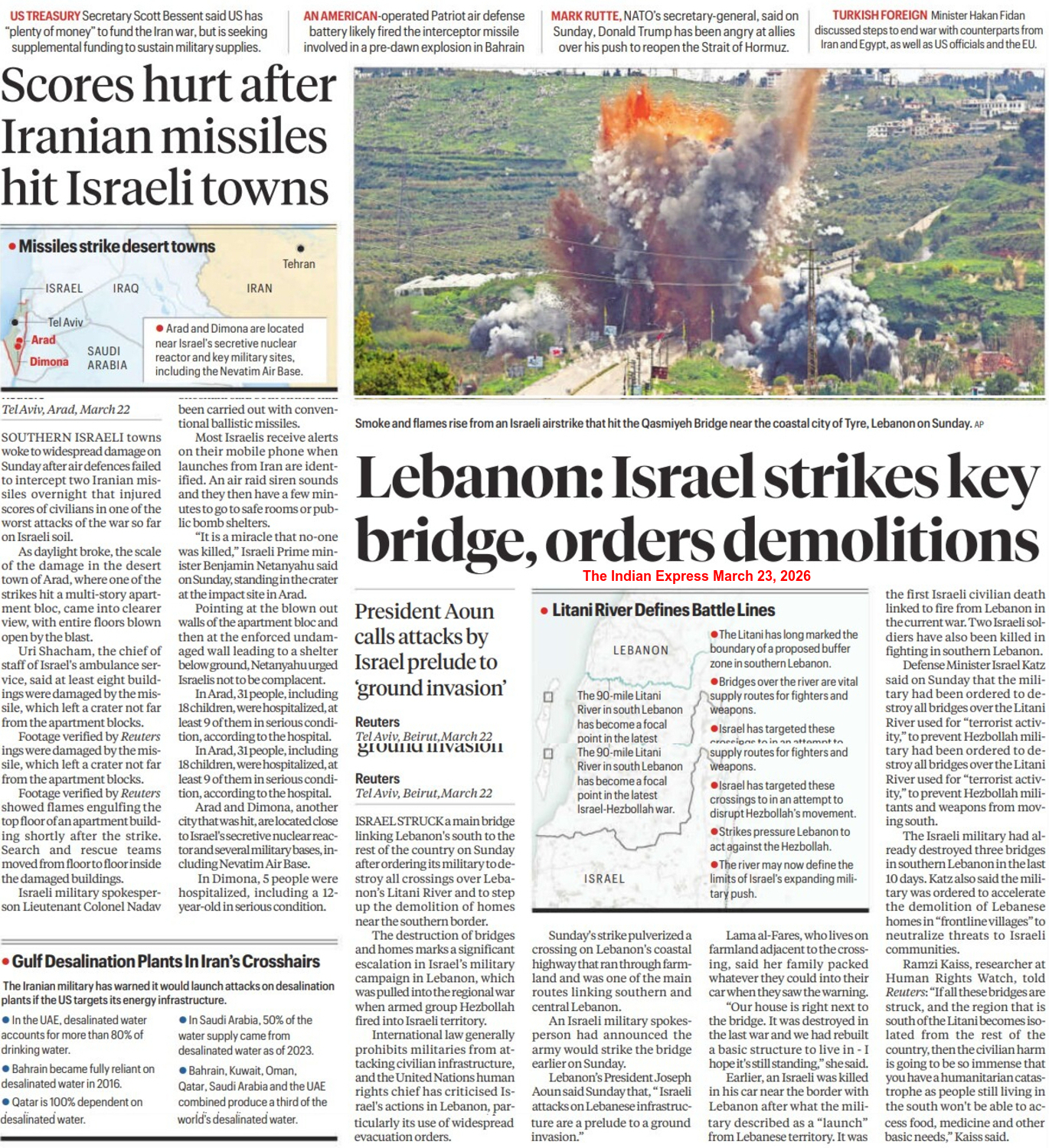
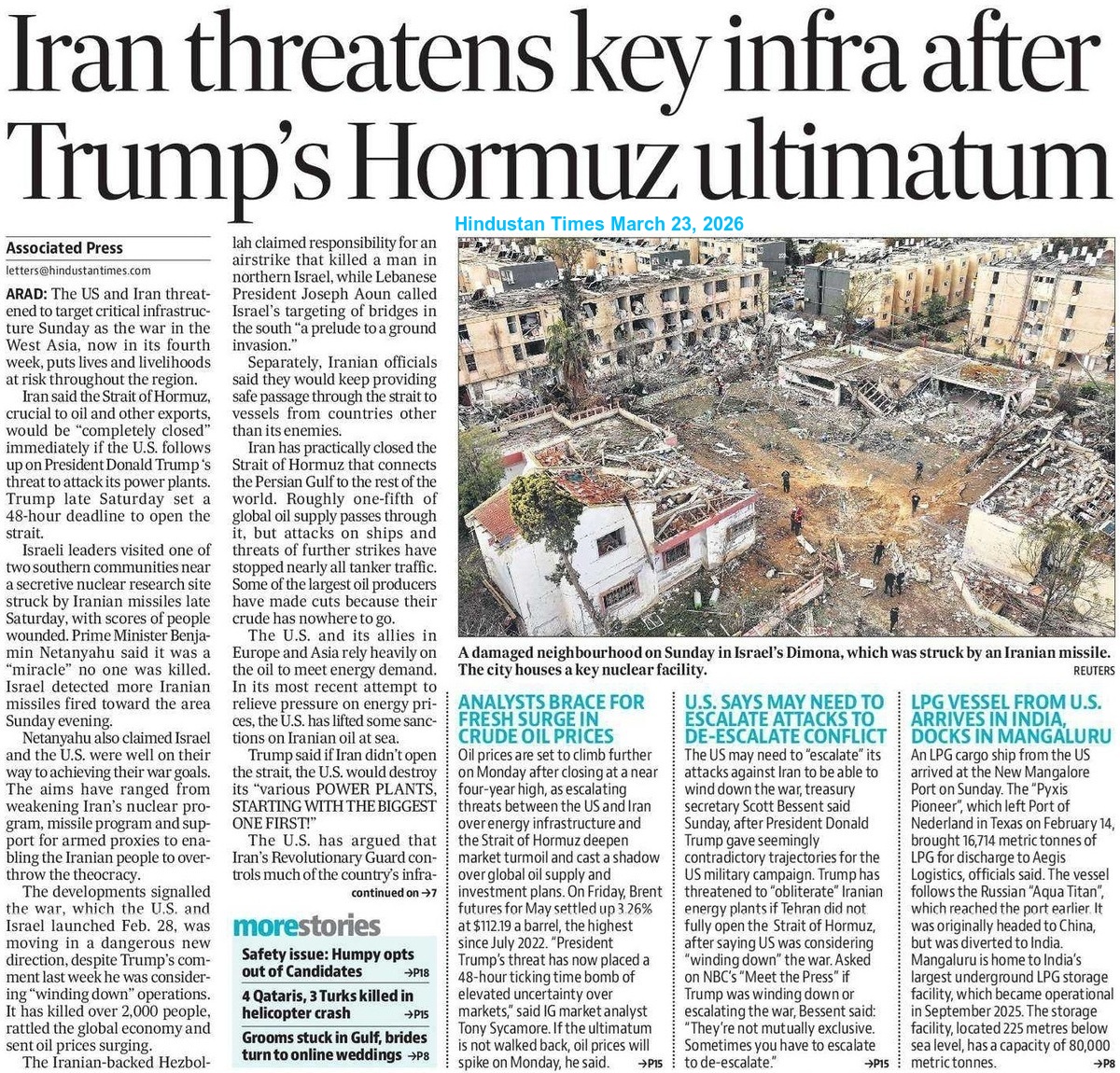
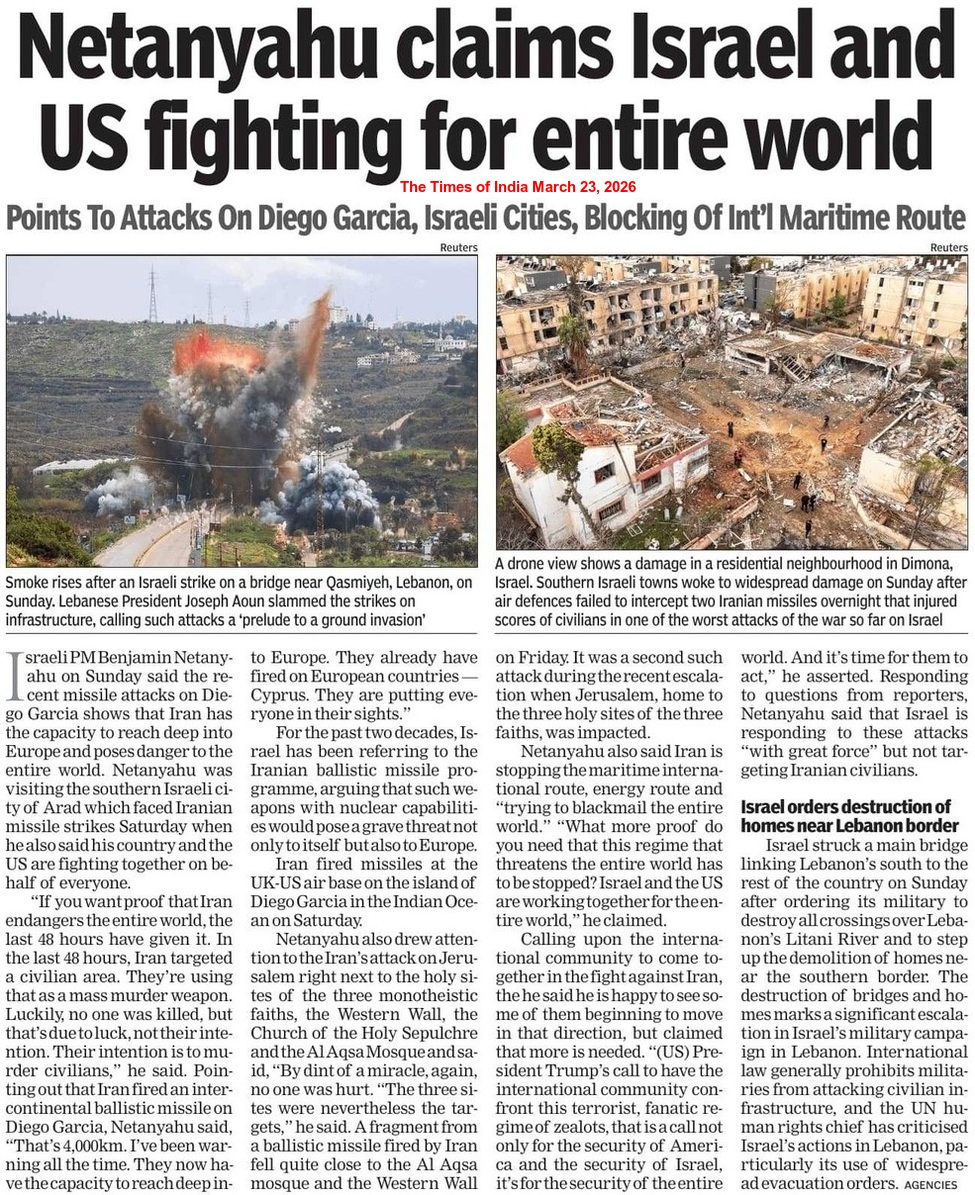
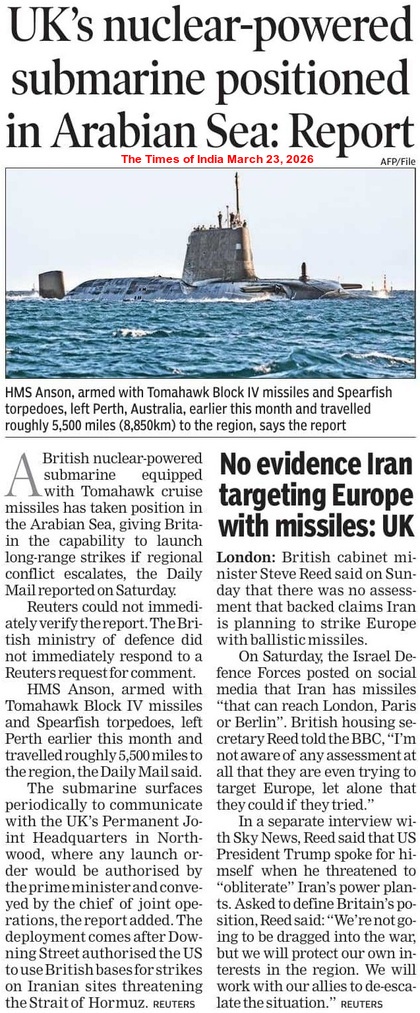
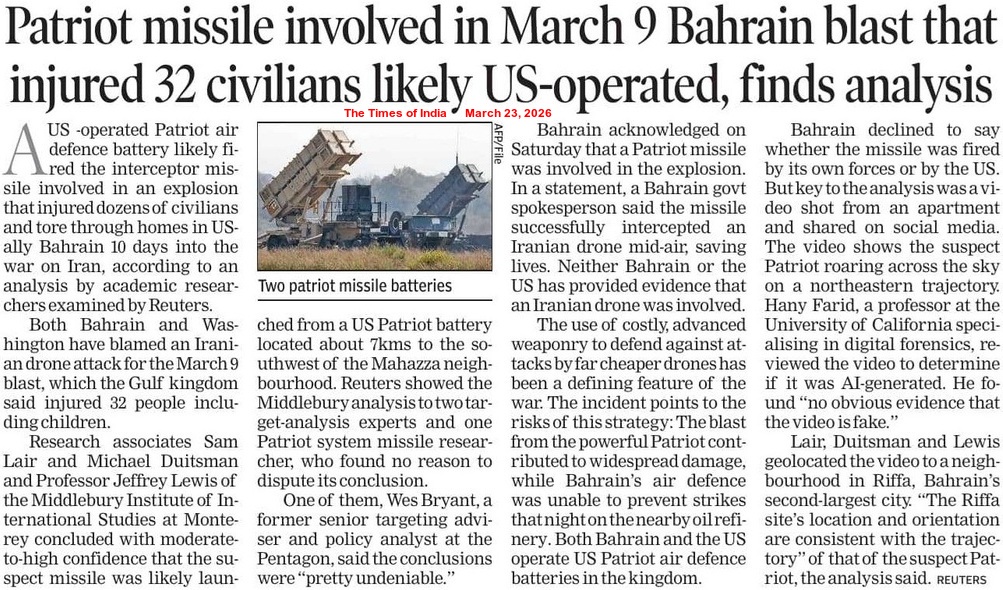
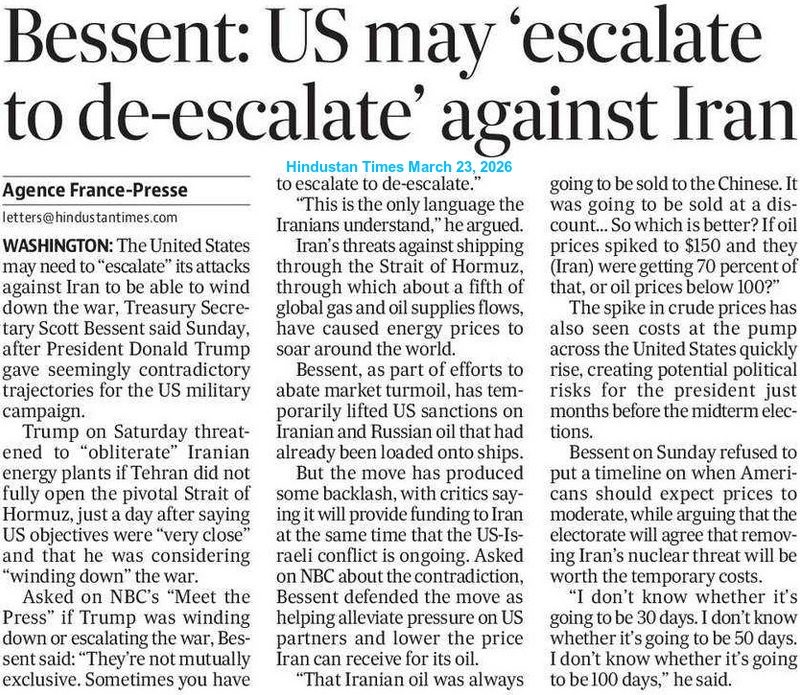
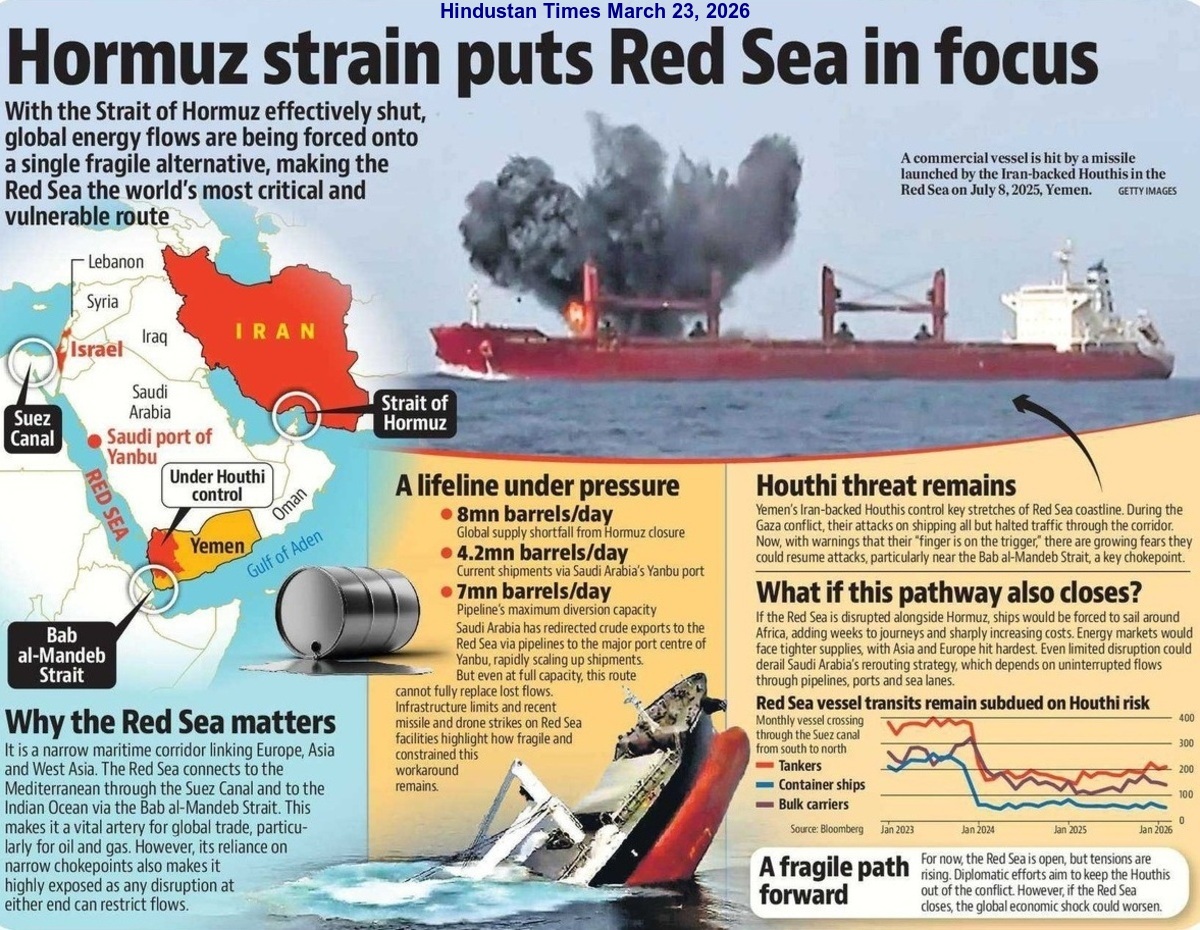
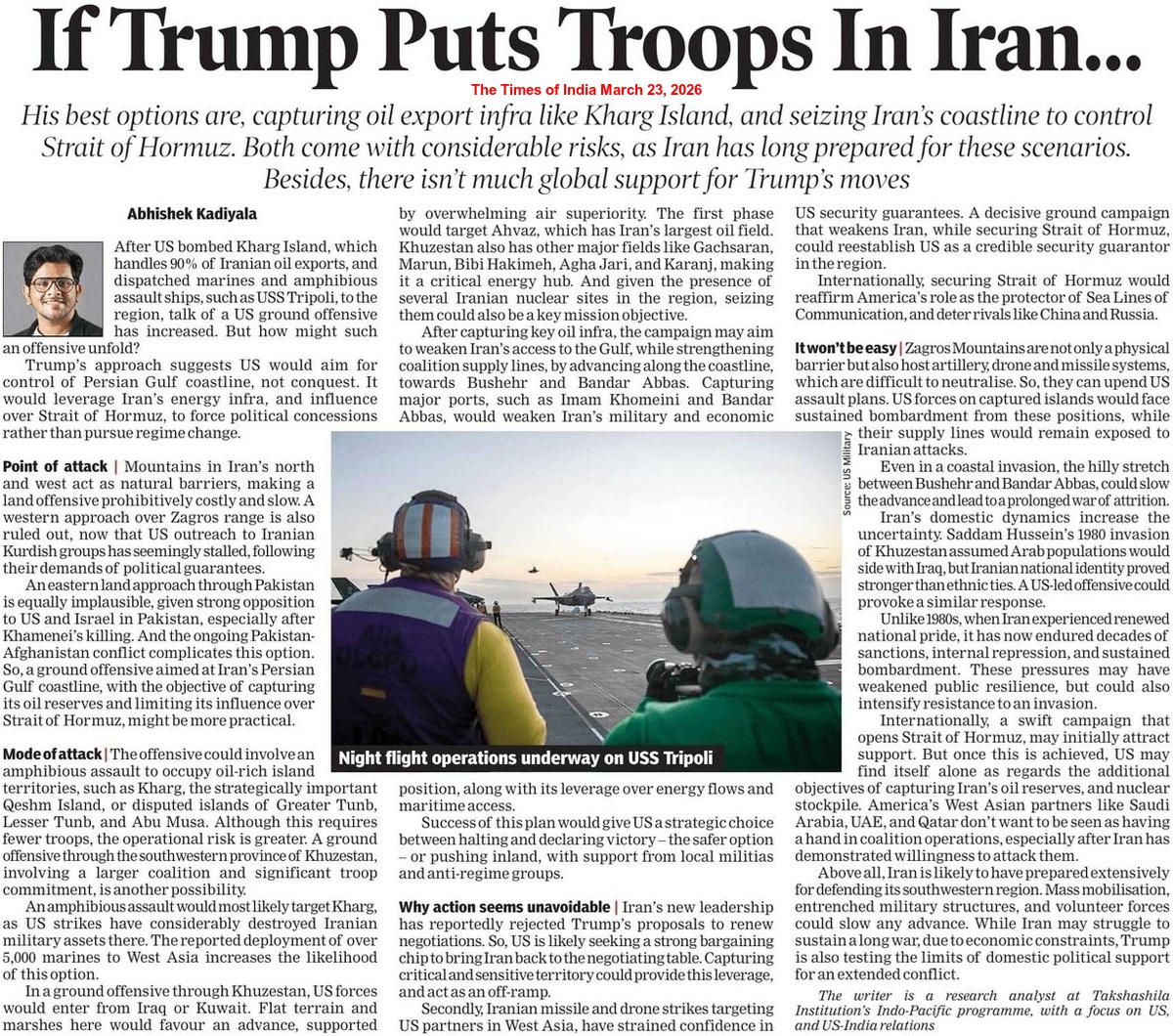
If the US and Israel do not cease attacks on Iranian power centres, they would face even more dire consequences in the days to come. The US allies in the Gulf region, too, would pay a heavy price. Tehran issued such a warning soon after US President Donald John Trump stressed on March 22, 2026 that he would “obliterate” the Islamic Republic’s electricity plants if Iran did not fully reopen the Strait of Hormuz within a 48-hour deadline. Tehran also threatened to attack desalination plants and Information Technology (IT) facilities in the Gulf nations (if its power plants are attacked).
Ebrahim Zolfaghari, the senior spokesperson of Iran’s Khatam al-Anbiya Central Headquarters, said that if even the “smallest attack on the energy infrastructure and ports of the Islamic Republic takes place”, it would trigger a “crushing and devastating response” from Tehran. He also said: “In the event of such aggression, all oil and gas infrastructure in the region in which the US and its Western allies have an interest will be set on fire and destroyed.”
It may be noted that the Khatam al-Anbiya Central Headquarters sits at the highest operational level in Iran’s military structure and coordinates activities between the regular Army (Artesh) and the elite Islamic Revolutionary Guard Corps (IRGC). It means the statement issued by Zolfaghari is not a mere political rhetoric, but a strategic military warning.
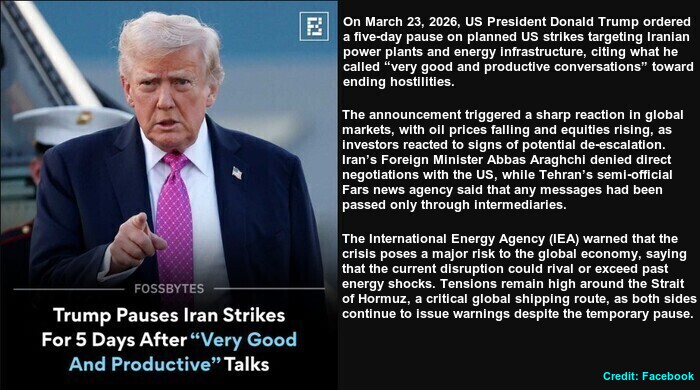
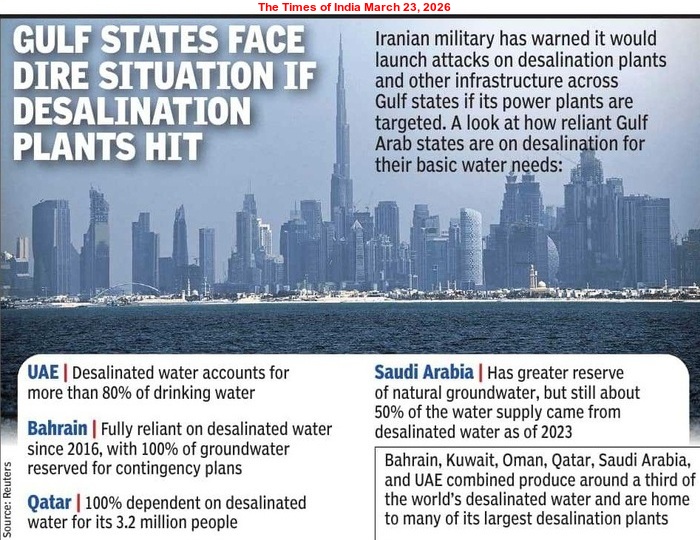
Experts are of the opinion that if Iran attacks water desalination plants in the Gulf region, it could certainly trigger an acute crisis of drinking water as the Gulf countries are heavily dependent on those water treatment plants. And, Tehran knows how to keep the Gulf nations thirsty.
As per a report, a successful attack on Saudi Arabia’s Jubail desalination plant would pose a catastrophic risk to the water supply of Riyadh, with potential for a severe and immediate crisis for its residents. The Jubail complex, located on the Persian Gulf coast, supplies more than 90% of drinking water to the households in the Saudi capital, transporting it through a 500km-long pipeline network. Experts have stated that if the Jubail plant or its pipelines are destroyed, Riyadh – home to roughly 8.5 million residents – could run out of water within a few days.
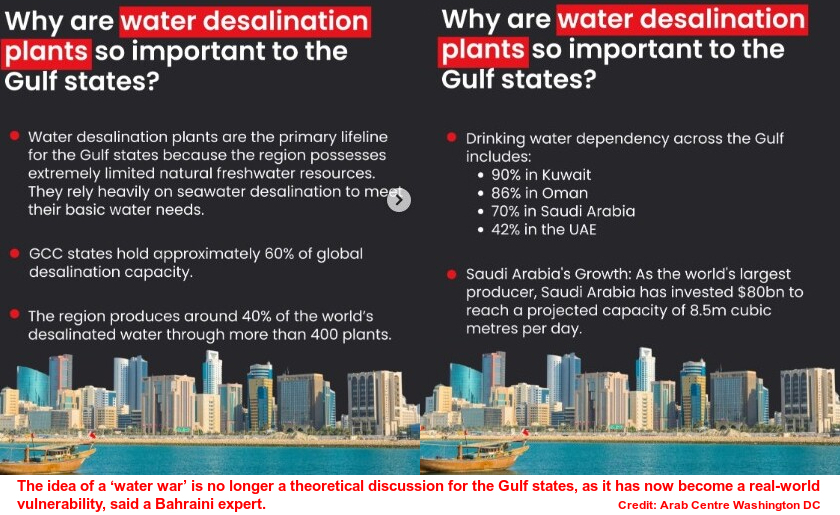
The Gulf region is widely considered to have the most inadequate supply of natural renewable drinking water in the world, often described as the most water-stressed area globally. The region has more than 400 desalination plants operating along the coastlines of the Gulf Cooperation Council (GCC) countries. These facilities are essential for survival in one of the world’s most arid regions, providing up to 90% of drinking water in some countries. The GCC nations produce roughly 40% of the world’s desalinated water.
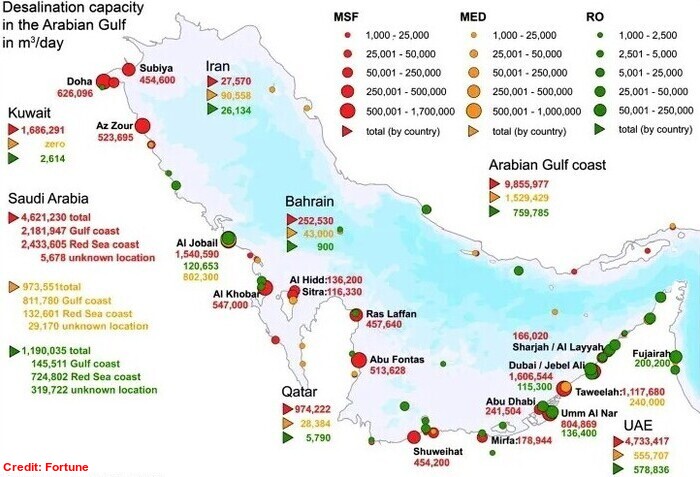
Data from the Gulf Research Centre indicates that Kuwait relies on seawater desalination for approximately 90% of its drinking water supply. Because of its arid climate and lack of permanent rivers or significant natural freshwater resources, Kuwait is one of the most water-stressed nations on Earth, with desalination forming the cornerstone of its water security. Other Gulf nations, too, are heavily dependent on seawater desalination for freshwater, with rates often exceeding 90% in Bahrain, 86% in Oman and around 70% in Saudi Arabia.
Since most of these water treatment plants are situated along the coast, they lie well within the strike range of Iranian missiles and drones. Interestingly, the desalination plants are frequently integrated with power generation facilities due to their high energy demands and operational efficiencies, a setup known as co-generation or Integrated Water and Power Plants (IWPPs). Therefore, if Iran targets the power plants, water treatment plants will also be severely affected.
The wars in Ukraine and Gaza represent significant modern examples of the weaponisation of water, where control over, destruction of, and access to water resources are used as tools of war to inflict severe damage on civilian populations, as well as infrastructure. These conflicts demonstrate how attacking water infrastructure – dams, pipelines and treatment plants – can be used for coercion, resulting in widespread environmental, health and humanitarian crises. The recent armed conflicts have further demonstrated just how fragile the situation is.
It seems that water is going to be the ultimate decisive factor in the Iran War; as agriculture, food security, industry and even urban life depend on adequate water supply. Urgent action is required to stop bloodthirsty Israel and the US. Else, the two rogue states would destroy human civilisation soon.
Meanwhile,


Boundless Ocean of Politics on Facebook
Boundless Ocean of Politics on Twitter
Boundless Ocean of Politics on Linkedin
Contact us: kousdas@gmail.com

 ISMC
ISMC Boundless Ocean Of Politics