

Macron Makes Big Request To Putin, Shocks Europe
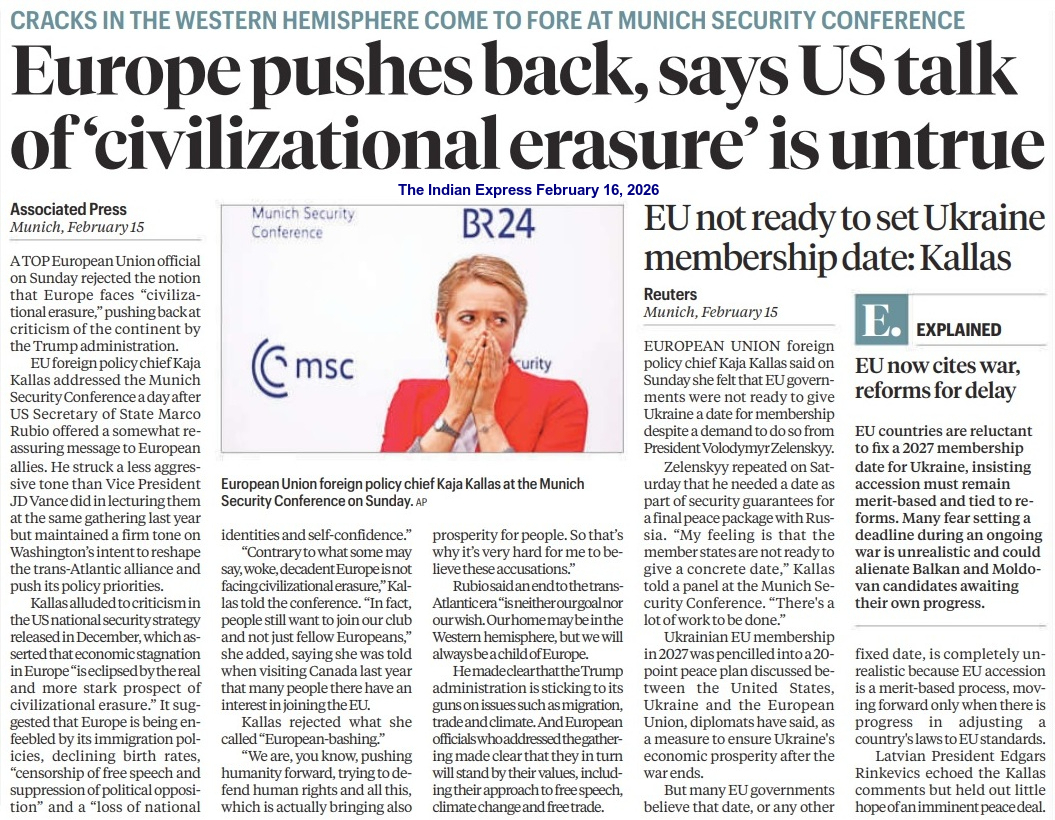
A diplomatic shockwave is rippling through Europe. After years of confrontation, one of the continent’s most powerful leaders is floating a reset with Moscow. French President Emmanuel Jean-Michel Frédéric Macron has urged Europe to reopen talks with Russia even as tensions remain raw. Experts believe that the move could redraw Europe’s strategic playbook.
For years, Europe and Russia have spoken in whispers of suspicion, while diplomacy has frozen under the weight of sanctions and open hostility. Now, a crack appears in the icy silence as President Macron is stepping forward, urging European leaders to risk the call and reopen direct talks with Moscow. The question hangs in the air: Can dialogue survive decades of mistrust?
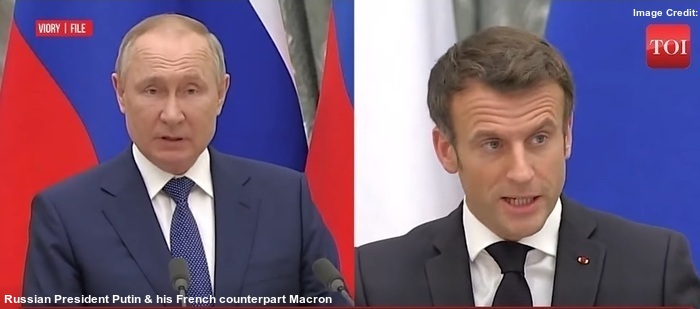
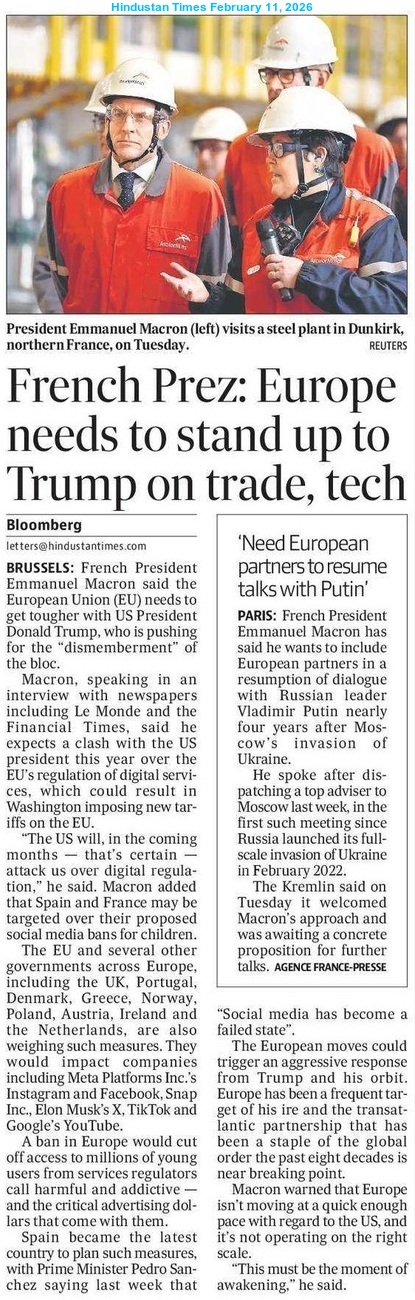
In an interview with a German television channel, the French President recently revealed that he already invited several European leaders to consider restarting diplomatic engagement with Russia, a move that some allies believe may be premature. Macron acknowledged the resistance, saying that some leaders felt it was too early to send diplomatic advisers back to Russia as France has already done. However, his argument was blunt. “Geography does not change. Whether we like Russia or not, it was still be there,” stressed the President. Calling Moscow Europe’s neighbour and insisting that the continent cannot outsource its security dialogue to others, the French President stated that Europe must reclaim strategic independence, reopening talks with Russia without being naïve, without pressuring Ukraine and without allowing third parties to dictate the conversation. President Macron even suggested a timeline, saying that it would be reasonable for Europe to resume dialogue with Moscow as early as December 2026. It can be considered as a striking proposal, keeping in mind the current global geopolitical climate.
The Kremlin was quick to respond as the Russian officials said that Macron’s comments were noted and welcomed. Dmitry Sergeyevich Peskov, the spokesperson of the Kremlin, said that the statements issued by the French President appealed to Moscow, signalling openness to renewed engagement. “We can confirm that contact has indeed taken place, which, if desired and necessary, could help us quickly establish a dialogue at the highest level. So far, we have not received any indication of this desire, although we have noted President Macron’s statement about the need to establish relations with Russia,” he added. Peskov further said: “We have long stated that reducing our relations to a state of zero is illogical, counterproductive and harmful. Russia has always been a supporter of maintaining dialogue. We believe that, based on our convictions, it can contribute to the resolution of the most pressing and complex problems.“
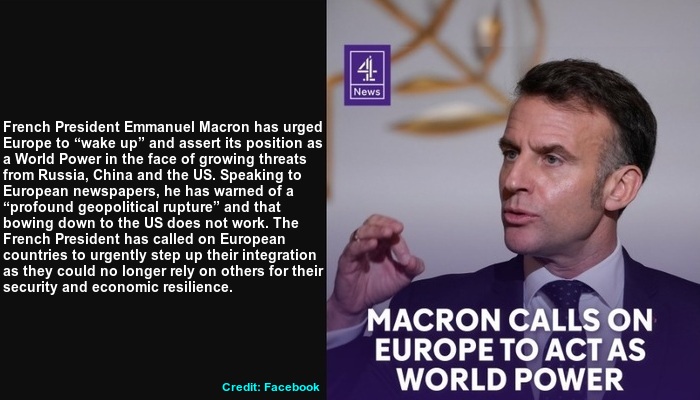
President Macron previously confirmed that France had already reestablished technical communication channels with Russia, quietly reopening lines that had gone dark. He has gone further, calling for a new European security architecture one that includes Russia, rather than isolates it. It’s the vision that challenges the current posture of deterrence and confrontation. However, this bold proposal comes shadowed by deep mistrust.
In recent months, France and Russia have traded barbed accusations, with each side warning of the other’s dangerous intentions. Paris has repeatedly accused Moscow of anti-European schemes, from destabilisation efforts to, at one point, even preparing hostile actions against Europe. Such stark warnings have pushed relations to the edge, tittering on the brink of full-grown rapture.
Once a power, military and economic hub, Europe is now losing to Russia’s pressure. France is panicking. It is fearing Russia’s mighty military and preparing for a worst-case scenario. What if President Vladimir Vladimirovich Putin orders a strike on Paris? Though such a possibility is less, Macron is not taking a chance. The French Army has now begun a training service of voluntary military recruits. The French Military’s Seventh Battalion of Alpine Hunters welcomed a young batch to a base in Versailles. It is a mute 10-month paid voluntary national service for 18-25 years old. Volunteers would be paid at least EUR 800 a month, and would receive accommodations, food and equipment. The service would last 10 months, beginning with an initial month of training, followed by nine months in operational roles. Tasks would range from helping out during natural disasters and providing support for counter-terrorism surveillance to more specialised jobs, such as drone operations, mechanics, electrical work, baking and medical support. At the end of the 10 months, participants would be free to return to civilian life, join the military reserves or continue on a full-term career in the Armed Forces.
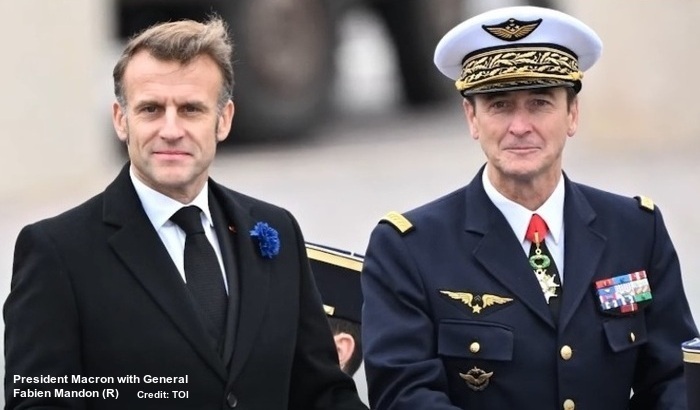
Announced by President Macron in November 2025, the scheme is aimed at bolstering the country’s Armed Forces at a time of heightened security concerns across Europe. Speaking at a press conference in Paris, General Fabien Mandon, the Chief of Staff of the Armed Forces, said that the programme would help those who wanted to play a part in the nation’s capacity to resist in an uncertain environment. The scheme would be rolled out gradually. After 3,000 volunteers in 2026, the target is to reach 4,000 recruits in 2027, then 10,000 per year by 2030 and about 42,500 by 2035. Ultimately, the annual total could reach 50,000, including the voluntary military service and the adapted military service, which would continue in parallel.
France has had no compulsory military service since 2001. The new voluntary scheme underlines a broader shift across Europe. The US-backed Western Governments are reassessing their defence needs, amid worries about Russia’s position and uncertainties over long-standing US security guaranties. However, the newly-launched scheme is a controversial one. General Arnaud Goujon, the Head (Youth Recruitment) of the French Army, said that he was not allowed to talk about what other countries were doing. He said so when asked if the new voluntary military service could soon be mandatory. Meanwhile, Macron and British Prime Minister Sir Keir Rodney Starmer have said that they are prepared to send troops to Ukraine in the event of a ceasefire.
Following the suit, Germany recently passed the Military Service Modernisation Act, allowing the Bundestag (the German Parliament) to impose partial conscription or a lottery system if the military failed to meet its target of recruiting 20,000 new volunteers per year.
With inputs from The Times of India.
Meanwhile,
Boundless Ocean of Politics on Facebook
Boundless Ocean of Politics on Twitter
Boundless Ocean of Politics on Linkedin
Contact us: kousdas@gmail.com

 ISMC
ISMC Boundless Ocean Of Politics