

2025: The Year Of One-Man Show & A Global Turmoil
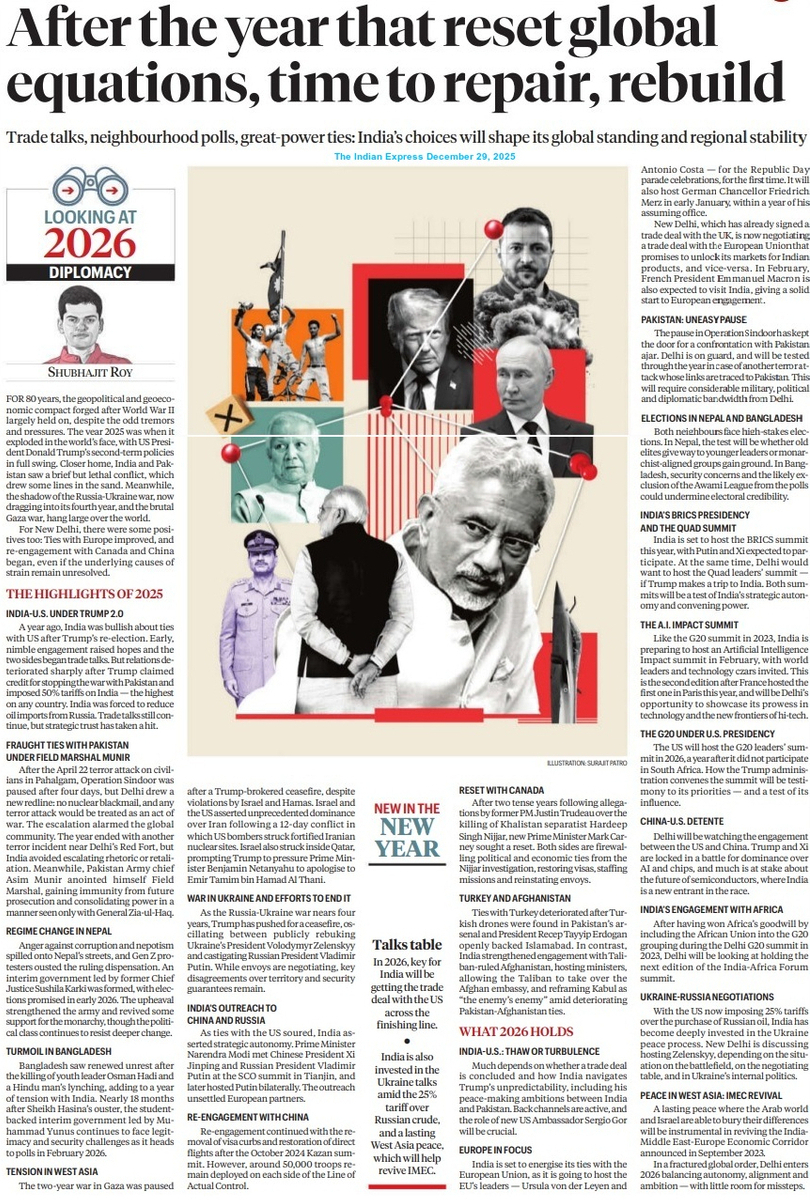
Various countries largely moved towards the free trade system in the first couple of decades of the 21st Century. However, international trade took a different turn in 2025 because of the impact of US President Donald John Trump‘s successive trade policies. Immediately after assuming office for his second term on January 20, 2025, he signed a Presidential Memorandum on an America First Trade Policy, expressing strong dissatisfaction with the trade practices of other countries, which he later followed with the implementation of new tariffs. President Trump also claimed that some countries engaged in trade were taking unfair advantage of the US’ liberal policies. He argued that it would be impossible to compete with the wages at which the Developing Nations employ workers, stressing that the US had to tolerate the dominance of China, South Korea and India in global trade as the cost of production was comparatively higher in his country.
It is a fact that the Developing Nations, like India and Brazil, have leveraged World Trade Organisation (WTO) rules for Special and Differential Treatment, securing flexibilities, including higher bound tariff ceilings (import duties they commit not to exceed) and longer transition periods, in order to protect nascent industries and to boost development, a key aspect of North-South trade dynamics in WTO negotiations. They aim for strategic autonomy and industrial growth, balancing global integration with domestic needs, even while facing pressure from larger economies.
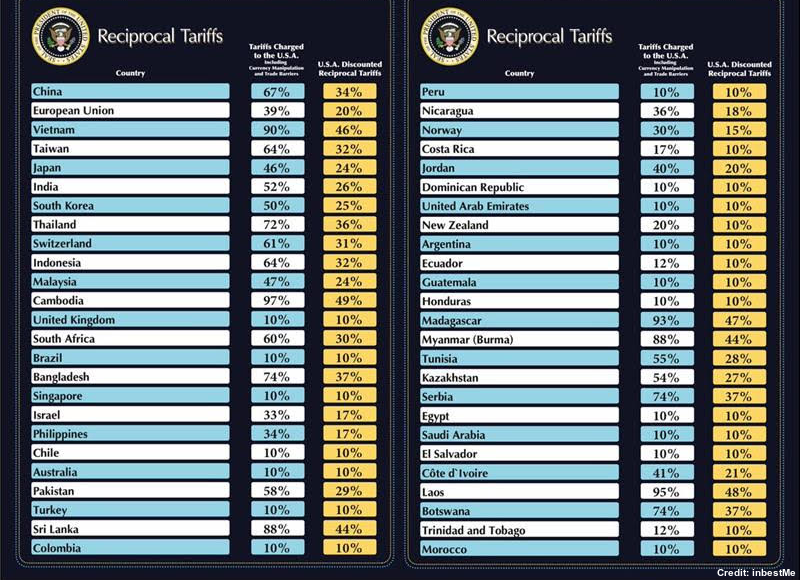
As a remedy for these two types of comparative disadvantages, the US President’s Office issued guidelines for imposing tariffs. Notably, the average US import tariff rate surged from around 2.5% in early 2025 to a peak of approximately 27% by April 2025, marking the highest level in over a century, driven by new broad tariffs on almost all imports under the Trump Administration, followed by negotiations that lowered it later in the year. The US President’s main objective was to reduce imports from abroad and to protect domestic producers. Other countries would be harmed by not being able to export was also a part of his plan. President Trump imposed a 25% tariff on all Indian products, even on pharmaceuticals. Another objective of the President was to impose tariffs at a rate that would eliminate the long-standing trade deficit with China and other countries. Although it was possible on paper, the method was not a practical one and the US failed to achieve that objective.
The political narrative behind the announcements made by President Trump between January and March is also quite important. Experts have pointed out that although the US President is powerful enough, he does not possess such arbitrary power. Trump is well aware of this. Hence, he used the International Emergency Economic Powers Act (IEEPA) to justify sweeping tariffs, declaring national emergencies related to trade deficits, illegal immigration and drug smuggling. He implemented tariffs before major announcements, sparking legal challenges that went to the Supreme Court, with lower courts questioning his authority to apply emergency powers globally for tariffs.
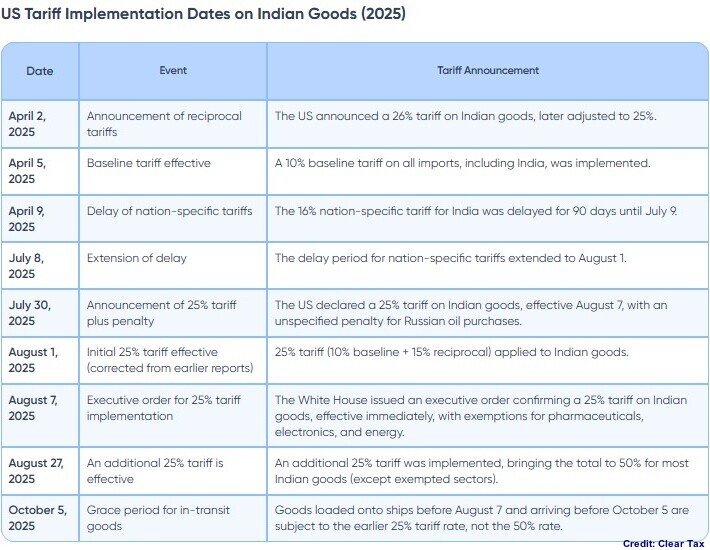
On April 2, the US President unveiled an array of new tariffs, including a 10% minimum tariff on all imported goods and higher reciprocal tariff rates for over 80 countries. These tariff rates were as high as 50% for some countries. He also imposed 25% tariffs on car imports to the US. However, he had to pause higher tariffs for most countries as the initial shock of his announcement triggered a collapse in the stock market. With a number of US businesses depending on raw materials exported from Developing Nations, Trump’s tariff policies not only harmed the country’s exports, but also increased the prices of domestic products and reduced demand. The Wall Street Journal reported that President Trump knew his tariff policy might cause a recession, but his fear of a depression preceded his decision to pause the implementation of duties for 90 days.
When Trump signed the Presidential Memorandum, titled Reciprocal Trade and Tariffs, to impose revised tariffs on February 13 and also withdrew favourable trade agreements with friendly nations, no country could quite understand what he was prioritising – to address the issue of imposing unfair tariffs or to cover government expenditures with the help of tariffs. The Canadian Prime Minister thought that President Trump had planned to weaken the economy of his country and then annex Canada to the US. The high-ranking Japanese officials had not received an answer from the US President’s Office regarding the main objective of his tariff policy. Even when Vietnam announced that it was ready to withdraw tariffs on all US products, the Trump Administration did not agree to reciprocate by withdrawing its tariffs. Washington DC only wanted to reduce the trade deficit at that time.
The US imposed a 145% import tariff on China between April and June 2025. In other words, a Chinese product worth USD 100 would cost USD 245 in the US. Therefore, demand for Chinese products plummeted in the US, severely damaging China’s businesses. The Asian Giant, too, raised duties on US goods to 125%, hitting back at President Trump’s decision to single out the second largest economy of the world for higher duties. Beijing also dismissed the US President’s tariff strategy as “a joke”.
On August 27, 2025, the US implemented an additional 25% tariff, bringing the total to 50%, for most Indian goods (except exempted sectors). President Trump made the move to punish India for purchasing crude oil from Russia. He explicitly threatened to impose 50% tariffs on Brazilian imports and subsequently signed an executive order to implement them, directly linking the action to his demand that Brazil end the “witch hunt” prosecution of former President Jair Messias Bolsonaro. There are virtually no examples of issues not directly related to trade being used as bargaining chips in negotiations over tariff rates in the 21st Century.
In what may be seen as a great relief for the global community, the US Supreme Court justices have raised doubts over the legality of President Trump’s use of the International Emergency Economic Powers Act of 1977 to unilaterally set tariffs on imports from more than 100 countries in an attempt to reduce the trade deficit and to ignite more manufacturing in the US. The Apex Court has also issued formal rulings on specific legal challenges. It is currently considering a major case regarding the legality of the tariffs imposed by President Trump. Experts are of the opinion that the verdict in this case, referred to as Learning Resources, Inc. vs Trump (consolidated with V.O.S. Selections, Inc. vs Trump), would have an impact on the US trade policy.
President Trump’s tariff policy badly affected businesses in India, prompting the Narendra Modi Government to reduce the Goods and Services Tax (GST) in an attempt to sustain businesses and to increase domestic demand. In many cases, capital has shifted away from businesses based on foreign trade and has been invested in other businesses. This includes some services that depend on petroleum products. Their production and supply have increased several times. Therefore, it is more likely that India’s oil imports from Russia would decrease in the short term due to US tariffs and sanctions. However, they are expected to be resilient or potentially increase again in the long term through alternative trading channels.
Trump’s trade war has caused immense problems for the common US citizens by pushing up inflation, slashing US job gains, slowing economic growth and causing the manufacturing sector to sputter. No matter what the president claims, it is difficult to stop imports overnight as it takes time to produce those goods domestically. Meanwhile, the US Government revenue from import duties has tripled in recent times. Economic analyses conclude that these costs are primarily borne by the US importers and subsequently passed on to ordinary people in the form of higher prices. However, the President is reportedly making arrangements to return that money to common people!
The year 2025 witnessed how the reckless decision of an immensely powerful individual could plunge the global economy into a turmoil.
Meanwhile,
Boundless Ocean of Politics on Facebook
Boundless Ocean of Politics on Twitter
Boundless Ocean of Politics on Linkedin
Contact us: kousdas@gmail.com

 ISMC
ISMC Boundless Ocean Of Politics