

Geopolitical Equation Redrawn In Asia
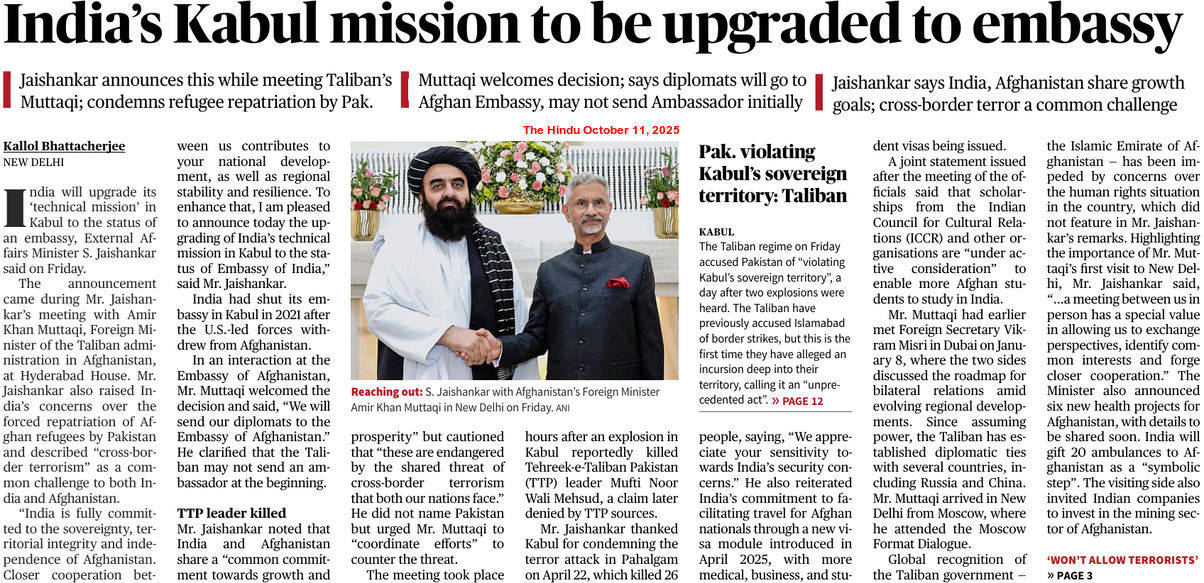
Sensitive global geopolitical issues can arise at any time and their dynamics often lead to a complex, as well as unstable, international environment. For example, New Delhi faces a new problem all of a sudden. In response to the Pahalgam terrorist attack on April 22, 2025, India launched a multifaceted strategy, combining diplomatic, economic and military actions, to hold Pakistan accountable and isolate it on the global stage. Now, Pakistan has put India under diplomatic pressure by signing the Strategic and Mutual Defence Agreement (SMDA) with Saudi Arabia (on September 17, 2025). The agreement clearly states that “any aggression against either country shall be considered an aggression against both“. The Indian Ministry of External Affairs has cautiously said that it takes the matter seriously.
The SMDA is quite significant for regional security dynamics between South Asia and West Asia, as it reflects an increasingly multipolar strategic environment, whereby countries hedge against growing insecurity by diversifying their security partnerships in novel ways. It may be noted that Saudi Arabia has maintained warm relations with Pakistan since the latter’s independence in 1947, reflecting in part ideological convergences between their Sunni Muslim majority populaces. By publicly upgrading its security ties with Islamabad, Riyadh has conveyed its concern about the regional threats it faces. However, a Saudi official told Reuters that the agreement with Pakistan is not a response to specific events or actors.
It is noteworthy that the Pakistani Army has been a crucial partner for Saudi Arabia’s security since the 1960s. Islamabad not only provides the Saudis with military training and stations troops on Saudi soil, but also exports weapons to Riyadh. However, the SMDA is qualitatively different as it marks a significant upgrade in their long-standing (bilateral) security ties. The agreement is somewhat similar to NATO’s collective defence clause. Article 5 of NATO is the core of the alliance’s collective defence as it states that an armed attack against any NATO member in Europe or North America shall be considered an attack against all members. It means each member must assist the attacked party by taking “such action as it deems necessary, including the use of armed force” to restore and maintain security.
The timing is also of particular significance in case of the SMDA as Pakistan and Saudi Arabia signed the accord only nine days after Israel’s surprise September 9, 2025 airstrike on Doha that targeted a negotiating delegation of the Palestinian Hamas Movement. According to political analysts, Riyadh lost faith in the US’ informal security guarantees to its Gulf allies especially after the Donald Trump Administration gave Israel a light rebuke following its strike on Qatar despite Doha being a close ally of Washington DC. In such a situation, Riyadh badly needed a partner through whom it could send a strong message to its regional rivals – Iran and Israel. The top Saudi leadership considers Pakistan an ideal alternative (of the US) that could assist Riyadh in nuclear deterrence.
Although India, too, has strengthened strategic and economic cooperation with Saudi Arabia (especially in trade and defence) in recent times, the SMDA has made the India-Pakistan security equation a bit complicated. It is because this agreement has formally integrated Pakistan as a security actor in the Persian Gulf region.
The accord may also affect India’s relations with Saudi Arabia. According to analysts, Riyadh’s support would encourage Islamabad to take a tough stance on issues, like Kashmir, terrorism and water distribution (between India and Pakistan), in the coming days. If Saudi Arabia continues to provide Pakistan with financial assistance through oil subsidies, then it could help modernise the Pakistani Armed Forces. It is also a serious concern for the national security of India.

It is increasingly plausible that South Asia could become more entangled in West Asian rivalries, if Saudi Arabia views Pakistan’s nuclear capabilities as a security guarantee. Therefore, India needs to actively reshape its engagement with West Asia in an attempt to protect its national interests.
Meanwhile,



Boundless Ocean of Politics on Facebook
Boundless Ocean of Politics on Twitter
Boundless Ocean of Politics on Linkedin
Contact us: kousdas@gmail.com

 ISMC
ISMC Boundless Ocean Of Politics