

The Politics Of Starvation
The so-called civilised people have started using hunger or starvation as a weapon in the 21st Century. They have rightly realised that although weapons can instantly claim thousands of lives, hunger can make people lifeless for the rest of their lives.
Scientists, philosophers, authors, artists and social workers have explored various feelings that deeply affect individuals, and found that every individual’s scope, purposes and causes of suffering are different. They have come to the conclusion that hunger haunts people the most as it makes them feel disturbed (both physically and mentally), irrespective of their wealth, social status, educational qualification, race, religion or nationality. According to social-psychologists, many around the world do not understand the feeling of hunger because they, consciously or subconsciously, know that they have sufficient food or have the ability to obtain it. However, those who have no food know the feeling of hunger.

Philosophers believe that people, who enjoy the advantages of the education system, as well as technological advancement, and are culturally rich, are not the real people. Instead, a hungry person is the Essential Human. Hunger or appetite prompt people to do anything. S/he can give up all her/his savings, wealth and even physical, as well as mental, dignity for food.
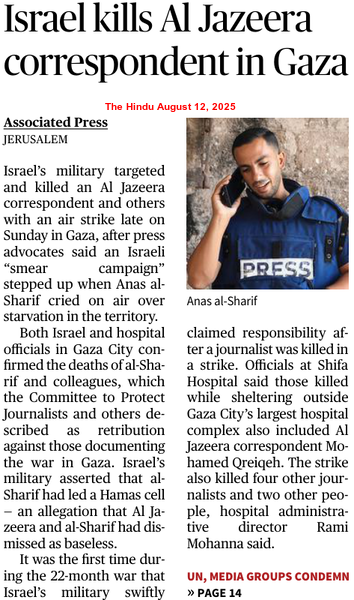
History suggests that the powerful have frequently employed hunger as a weapon during conflicts. Starvation, sieges and blockades, often resulting in famine, have been used as military and political strategies throughout history. This tactic aims to weaken or eliminate opposition by depriving them of sustenance. In the past, people used to build forts and castles not only to defend themselves from enemies, but also to preserve food. In case of an enemy attack, the monarch and his subjects were protected within the fort, often surrounded by a moat and a large wall. They managed to survive inside forts for a long time mainly because of sufficient food reserves.

Modern technology has radically changed the nature of war in the 21st Century. Now, one can easily eliminate enemies by pressing a button from faraway. While modern warfare involves increasingly sophisticated weaponry, the tactic of using hunger as a weapon persists, causing widespread suffering and violating international law. This practice, where food supplies are deliberately restricted or destroyed to weaken or displace populations, remains a devastating feature of a number of contemporary conflicts. Ukraine and Gaza are no exception.
As per an article published in The Guardian on July 31, 2025, “The mathematics of famine are simple in Gaza. Palestinians cannot leave, war has ended farming and Israel has banned fishing, so practically every calorie its population eats must be brought in from outside. Israel knows how much food is needed. It has been calibrating hunger in Gaza for decades, initially calculating shipments to exert pressure while avoiding starvation.” The British daily quoted a senior adviser to former Israeli Prime Minister Ehud Olmert as saying: “The idea is to put the Palestinians on a diet, but not to make them die of hunger.” The Israeli Government has also blocked all aid entering Gaza, including food, medicines and fuel (sent by the UN, Human Rights organisations and other countries), in flagrant violation of international humanitarian law.

As the Gazans have become desperate for fishing, the Zionist Regime has banned their access to the Mediterranean Sea! Neighbouring Egyptians, horrified by the scenes of starvation coming out of Gaza, have launched a symbolic initiative, named From Sea to Sea – a Bottle of Hope for Gaza. They have started filling one- and two-litre bottles with grains, rice, lentils, milk and other dry food supplies before placing them in the Mediterranean Sea in the hope that they would reach Gaza.
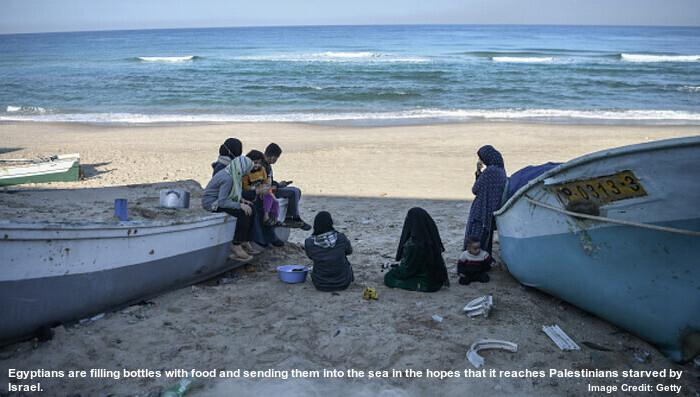
Israel has been conducting research on hunger for the past few decades. The Israeli agency responsible for supplying food to Gaza has calculated that Palestinians required an average minimum 2,279 calories per person per day, which could be provided through 1.836kg of food. Even half of the amount is not available in the Gaza Strip because of the war.
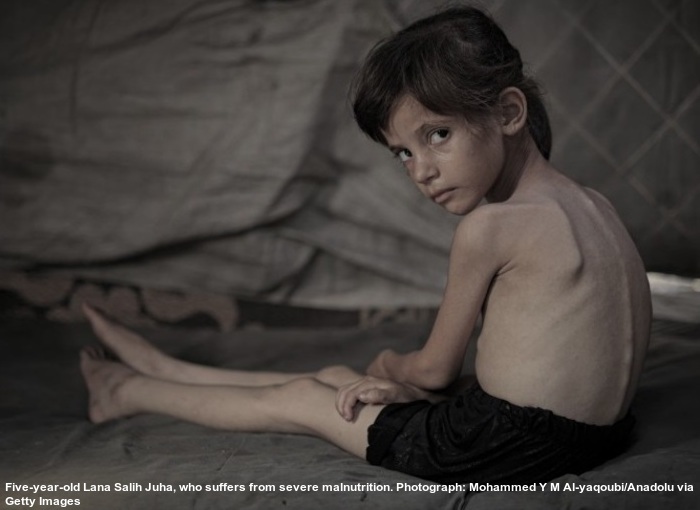
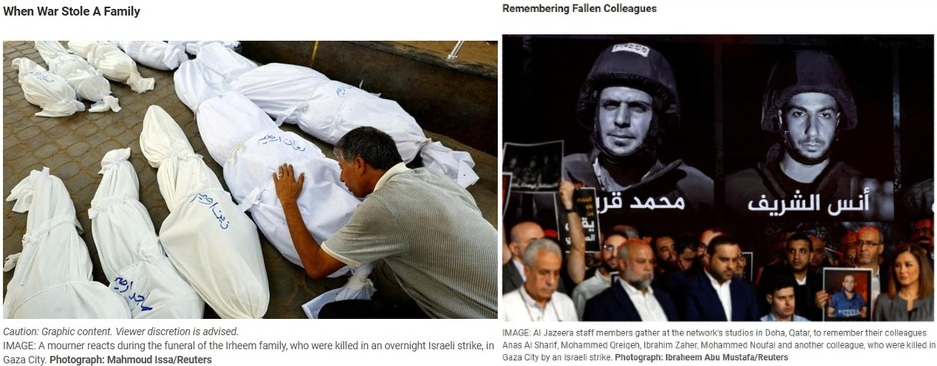
Experts have opined that the current condition of the Gazans can only be compared to the Jews and other prisoners in Nazi concentration camps. The statement “history repeats itself” is a complex one, and whether it’s accurate is a matter of debate. However, the history of hunger still continues.
Boundless Ocean of Politics on Facebook
Boundless Ocean of Politics on Twitter
Boundless Ocean of Politics on Linkedin
Contact us: kousdas@gmail.com

 ISMC
ISMC Boundless Ocean Of Politics