

Remembering The Voice Of A Lonely Conscience
The Chinese media outcast him not only during his lifetime, but also after his demise on July 13, 2017. The State-influenced social media platforms, including microblogging site Weibo, banned searches for the words Liu Xiaobo, candle, Nobel, RIP, the candle emoji, as well as I have no enemies, Liu’s final statement delivered to a Chinese court in 2009. Searches for these terms returned Weibo’s canned censorship message: “According to relevant laws and policies, the results you searched for cannot be displayed.” Many have fought against authoritarianism and sacrificed their lives to ensure Human Rights for centuries. Liu was one of them who used to be the voice of the oppressed and lonely conscience. Every July 13th reminds the global community of one of the mottoes of his life: Freedom.
Liu (December 28, 1955 – July 13, 2017), the Chinese literary critic, Human Rights activist, philosopher and Nobel Peace Prize laureate, took part in various movements for building a China with moral values, democracy, humane and free from exploitation, as well as the Mao-influenced idea of Freedom of Speech. He also wanted his countrymen to enjoy the Right to Peaceful Protests. The indiscriminate killing of students in Tiananmen Square on June 3-4, 1989 changed his life. Liu penned poems for the mothers of slain students and accepted a prison term for raising voice against the dictatorship of the Communist Party of China (CPC). After learning about his Nobel Peace Prize win in 2010, Liu, while still in prison, dedicated the award to the “martyrs of the Tiananmen protests“. The Chinese state media responded that the award was an unwarranted interference in the legal sovereignty of the country.
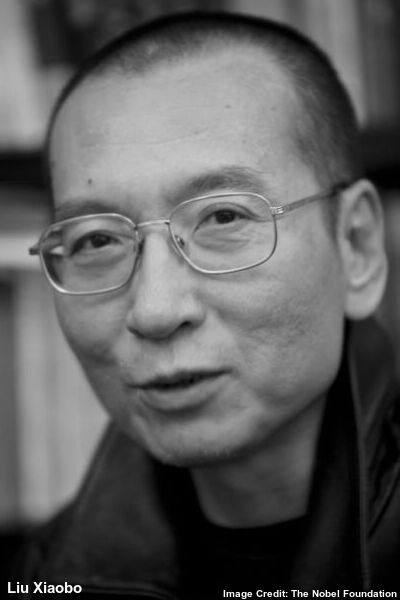
After serving an 11-year prison term for subversion, Liu died of liver cancer in prison on July 13, 2017. The concerned authorities in China immediately cremated his body in a private ceremony in the north-eastern city of Shenyang and scattered the ashes in the Yellow Sea in an attempt to ensure that there would be no grave to serve as a magnet for protests against the Communist Party. Perhaps, Beijing wanted people to forget the voice of conscience.
Liu spent most of his life in prison. Whenever he spoke out for the establishment of democracy, he was detained in prison or labour camp. On June 2, 1989, Liu, along with some of his friends, joined the hunger strike called by students gathered in Tiananmen Square, as the death of countless students disturbed him. Later, he was arrested on charges of organising counter-revolutionary riots. Although Liu was released after spending 19 months in prison, his life became a misery. The Chinese administration imposed a ban on all his publications and he also lost his teaching job. Despite facing difficult financial circumstances, his ability to think freely and independently was not affected. Liu was sent to a labour camp for three years, yet again, in 1996 for criticising China’s one-party rule.
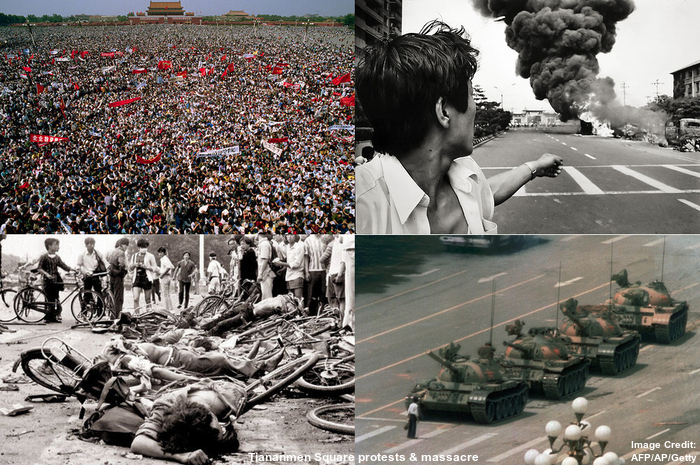
Liu, who marked the first anniversary of Tiananmen Square protests and massacre in jail, wrote: “Even if I know/death’s a mysterious unknown/being alive, there’s no way to experience death and once dead/cannot experience death again/yet I’m still/hovering within death/a hovering in drowning/Countless nights behind iron-barred windows/and the graves beneath starlight have exposed my nightmares.” (Liu Xiaobo; Experiencing Death, 2010) “I am merely/a discarded wooden plank/powerless to resist the crushing of steel/still, I want to save you no matter if you’re/dead or still barely breathing, breathing,” the poet wrote in Memories of a Wooden Plank, on the 12th anniversary of the massacre.
Liu read out the Charter 08, a Manifesto for Human Rights and Social Change in China, in front of countless students at Tiananmen Square. He never deviated from the values described in the Charter till his last breath. In his Nobel Lecture in Absentia, Liu stressed: “Hatred can rot away at a person’s intelligence and conscience. Enemy mentality will poison the spirit of a nation, incite cruel mortal struggles, destroy a society’s tolerance and humanity, and hinder a nation’s progress toward freedom and democracy. That is why I hope to be able to transcend my personal experiences as I look upon our nation’s development and social change, to counter the regime’s hostility with utmost goodwill, and to dispel hatred with love.“

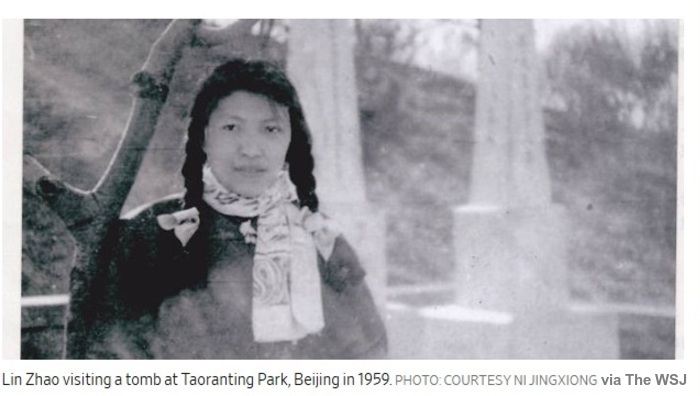
Liu faced the ire of the Chinese State because of his huge popularity among university students. He had a deep, as well as extensive, understanding about politics, literature and history. Liu also penned a prose poem in tribute to Lin Zhao (born Peng Lingzhao; January 23, 1932 – April 29, 1968), a fellow Chinese intellectual and Human Rights advocate who was a victim of the Mao era‘s political persecution. She was executed in 1968 for her outspoken criticism of the Communist Party during the Cultural Revolution.
In 2008, nearly 300 Chinese dissident intellectuals and Human Rights activists signed Charter 08, demanding the end of one-party rule, the establishment of the Rule of Law, the independence of the judiciary, the Right to Criticise the government and the formation of a government through democratic means or fair elections in China. It was published on December 10, 2008 (the 60th anniversary of the Universal Declaration of Human Rights), adopting its name and style from the anti-Soviet Charter 77 issued by dissidents in erstwhile Czechoslovakia. Liu played a crucial role in drafting this charter. The Chinese administration became active after more than 10,000 people signed this charter and Liu was sentenced to 11 years in prison on December 25, 2009 for “inciting subversion of state power“.
In his Nobel Lecture, Liu said: “I hope that I will be the last victim of China’s endless literary inquisitions and that from now on no one will be incriminated because of speech.” He used to believe that Democracy and the Right to Freedom of Speech would be established in his country one day. His countrymen are still waiting to see a Democratic China.
Boundless Ocean of Politics on Facebook
Boundless Ocean of Politics on Twitter
Boundless Ocean of Politics on Linkedin
Contact us: kousdas@gmail.com

 ISMC
ISMC Boundless Ocean Of Politics