

Aspirations, Expectations, Hopes & Burdens
Democracy expects a lot from people… rational thinking, patience, tolerance, etc. However, the majority do not have these abilities and they do not even want to practice them. Instead, people want a quick solution to all major issues under the leadership of a strong political personality. The majority often accept such a leadership even at the cost of (their personal) liberty. This habit of acceptance of the majority allows the men in power to destroy the very essence of democracy. In 2019, Shawn W Rosenberg, the Professor of Political Science and Psychological Science at University of California, Irvine, reportedly said: “Democracy is devouring itself“.
In an article titled City and Village (1924), Indian poet and philosopher Rabindranath Tagore (May 7, 1861 – August 7, 1941) mentioned: “What in the West is called democracy can never be true in a society where greed grows uncontrolled and is encouraged, even admired, by the people. In such an atmosphere a constant struggle goes on among individuals to capture public organisations for their personal ends. Democracy is then like an elephant whose one purpose in life is to give joyrides to the clever and the rich.” Tagore rightly realised that democracy without a sense of morality becomes a tool of greed. According to the first Asian Nobel laureate (in Literature in 1913), true democracy is not just a system of government, but it should be the collective responsibility of the whole.
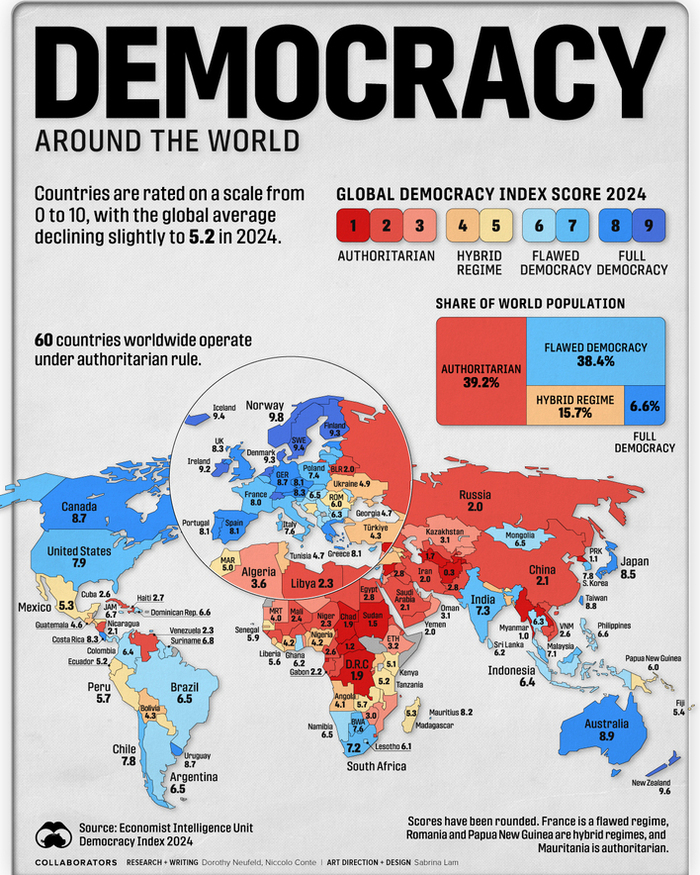
Contemporary India is a fine example of what democracy looks like when the political system is captured by a few powerful people. As democratic institutions have become tools of political control for the ruler, the Indian State has started suppressing minority rights, freedom of the press and voice of opposition. According to the Democracy Report 2024 released by the Gothenburg-based V-Dem Institute that tracks democratic freedoms worldwide, India, which was downgraded to the status of an electoral autocracy in 2018, declined even further on multiple metrics to emerge as one of the worst autocratisers. Rosenberg has argued that as the majority of people prefer to avoid complexity, they do not hesitate to abandon the true ideals of democracy and often choose an authoritarian ruler.
As mentioned earlier, democracy expects certain abilities, like the ability to tolerate uncertainty or critical thinking, from people. And to avoid complexity, the majority look for simple answers. The answer is Trump in the US, Netanyahu in Israel, Erdoğan in Turkey or Modi in India. Hence, the support of the majority is quite important for these powerful leaders. Rosenberg has argued that preserving democracy requires education that cultivates reason, empathy and moral maturity in people. He has also stressed on the importance of critical thinking and deliberative engagement in democratic processes. Rosenberg believes that an education system focused on those skills could only help people to navigate complex issues. It also ensures the effective participation of people in a healthy democratic system. Therefore, democracy does not face the biggest crisis from outside. Instead, lack of critical thinking and moral disintegration within society create serious troubles for it.
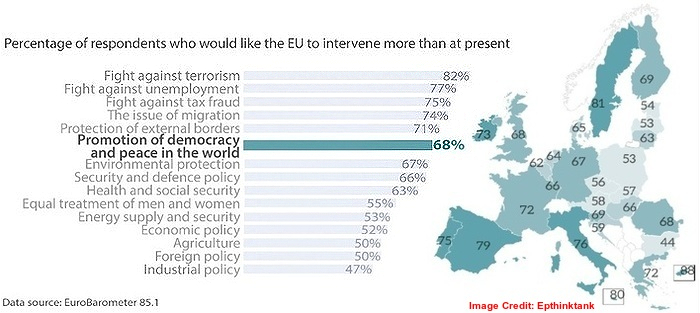
Democracy without morality only legitimates the means of oppression. For example, one can mention the holocaust in Nazi Germany or the ongoing genocide in Palestine committed by Israel. Adolf Hitler came to power by winning elections, enacted laws and committed genocide with the help of state institutions. Israel and India, too, are democratic countries which hold elections on a regular interval. The judiciary and media still exist there. However, the state is constantly sending special messages to minority communities, spreading hatred and silencing anti-government protesters by enacting laws in these countries. All these are taking place in a democratic system, as the state knows how to take advantage of the moral laxity of people.
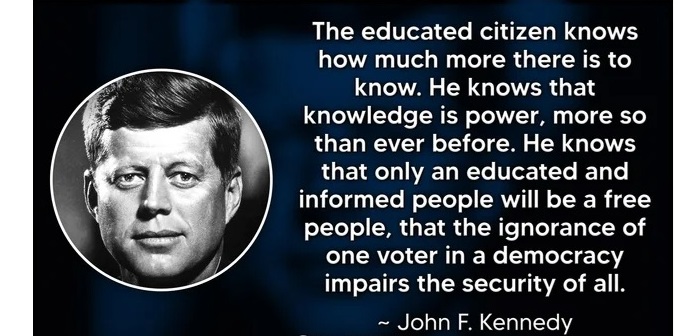
Democracy is not the ultimate protection shield, but just a structure that reflects the hopes and aspirations of people. Also, hopes and aspirations of people are not always just. When hatred, fear and ultra-nationalism replace the concepts of rationality, tolerance and morality, then the Parliament, judiciary and other state apparatuses survive only as a structure in democracy. If people stop thinking logically, abandon their moral senses and become fascinated by powerful populist leaders, then it would become extremely difficult to prevent the fall of democracy. Democracy imposes a substantial moral burden on citizens, and not on the ruler.
Boundless Ocean of Politics on Facebook
Boundless Ocean of Politics on Twitter
Boundless Ocean of Politics on Linkedin
Contact us: kousdas@gmail.com

 ISMC
ISMC Boundless Ocean Of Politics