

Trump Appoints Terrorists To His Advisory Board
US President Donald John Trump assured India that he would back New Delhi’s war against terrorism immediately after the April 22 (2025) Pahalgam terror attack. And in the third week of May, two former jihadist operatives in the US, including one who attended Lashkar-e-Taiba (LeT) camps and also took part in terror attacks in Kashmir, secured their places in the Advisory Board of President Trump! According to sources close to the White House, Ismail Royer and Shaykh Hamza Yusuf have been appointed to the Advisory Board of the White House’s Religious Freedom Commission.
Laura Loomer, a political activist, has described the appointment of Royer and Yusuf as “insane”, stressing that they used to maintain a direct contact with the LeT, al-Qaeda and the Palestinian Hamas Movement. She revealed that Ismail Royer (born Randall Todd Royer), now a self-proclaimed advocate for interfaith harmony, was converted to Islam in 1992 and served as a devoted foot soldier of the LeT after receiving training at a Lashkar camp in the Pakistan-occupied-Kashmir (PoK) in 2000. He was convicted in a US court in 2004 of illegal possession of firearms, as well as explosives, and involvement in terrorist activities. Although Royer was sentenced to 20 years in prison, he was released in 2017 after serving a jail term of 13 years.
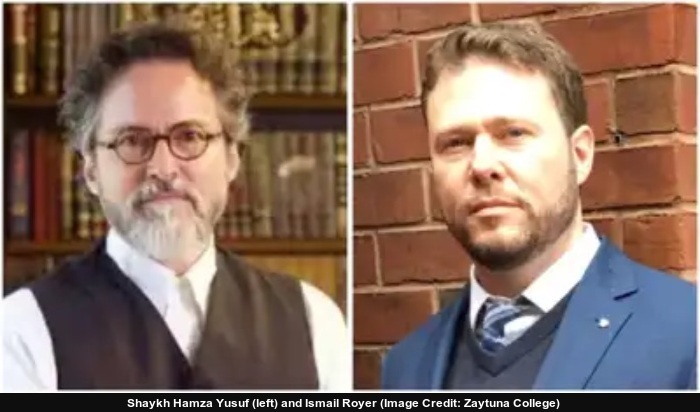
In a statement, the White House has mentioned: “Since converting to Islam in 1992, Royer has studied Religious Sciences with traditional Islamic scholars and spent over a decade working at non-profit Islamic organisations. He has worked with various nonprofit organisations to promote peace between faiths.” According to the statement, Royer’s writings have been published in several publications. He also co-authored a chapter on Islam in Religious Violence Today: Faith and Conflict in the Modern World.
Loomer further claimed that Yusuf, the co-founder of Zaytuna College, had links with Islamic jihadists and proscribed terror groups. However, the White House has identified Yusuf only as a co-founder and educator at Zaytuna College, the first Islamic Liberal Arts college in the US.
In a separate development, President Trump met Interim President of Syria Ahmed Hussein al-Sharaa (also known by his nom de guerre Abu Mohammad al-Julani) during his recent visit to Saudi Arabia. It may be noted that the US scrapped a USD 10 million reward for the arrest of the Syrian de facto leader in December 2024, following meetings between senior US diplomats and representatives from Hayat Tahrir al-Sham (HTS), a Sunni Islamist political organisation and paramilitary group involved in the Syrian civil war that ousted former President Bashar al-Assad.

The US had imposed sanctions on Syria during the rule of al-Assad. After HTS formed an Interim Government under the leadership of al-Sharaa in December 2024, Washington DC hinted that it would lift the sanctions. President Trump made an official announcement in this regard on May 13, 2024 in the presence of Saudi Crown Prince Mohammed bin Salman Al Saud in Riyadh, stating: “There’s a new government that will hopefully succeed in stabilising the country and keeping peace. I will be ordering the cessation of sanctions against Syria in order to give them a chance at greatness.”

On May 14, the US President met al-Sharaa in the Saudi capital to discuss the current political scenario in the war-ravaged West Asian nation. Later, President Trump told the media that al-Sharaa was a “young, attractive guy. Tough guy. Strong past. Very strong past. Fighter”. While the Syrian President hailed his US counterpart’s decision to lift sanctions as “a historic and courageous decision, which alleviates the suffering of the people, contributes to their rebirth and lays the foundations for stability in the region”, his countrymen rejoiced after Trump pledged to lift the crippling sanctions. The Syrian Foreign Ministry, too, welcomed the US President’s decision by issuing a statement.
Pak Army Chief Honoured
General Syed Asim Munir Ahmed Shah has secured his place in the history of the Pakistani Armed Forces as Prime Minister Mian Muhammad Shehbaz Sharif approved the promotion of the Chief of the Pak Army to the rank of Field Marshal on May 20, 2025 for his apparent role in the recent conflict with India. With this, the 11th Chief of the Army Staff of Pakistan became the second senior military officer to get elevated to this prestigious position. Before Munir, former military dictator General Mohammad Ayub Khan (May 14, 1907 – April 19, 1974), who served as the second President of Pakistan from October 27, 1958 until his resignation on March 25, 1969, had enjoyed the status of a Five-Star General.

In response to the April 22 Pahalgam terror attack that claimed 26 innocent lives, the Indian Army carried our airstrikes, codenamed Operation Sindoor, to destroy terrorist bases in Pakistan and also in Pakistan-occupied-Kashmir (PoK) on the night of May 6-7. In an attempt to counter Indian airstrikes, the Pak Army launched Operation Bunyan al-Marsoos (Unbreakable Wall). Meanwhile, the Pakistani Armed Forces named the recent conflict with India as Marqa-e-Haq (Battle of Truth), referring to the period of military conflict between the two South Asian nations that spanned from April 22 to May 10, 2025. The Dawn daily of Pakistan has reported that the Pakistani Army achieved great success against the Indian Army during the conflict. Hence, the PM elevated General Munir to the position of Field Marshall.
In may be noted that General Ayub Khan promoted himself to the rank of Field Marshal after seizing power in a bloodless military coup in 1958. However, General Munir is the first officer in the history of the Pakistani Army to be promoted to the rank of Field Marshal by an elected civilian government.

Incidentally, only two Indian Army Chiefs have become Field Marshals so far. General Sam Hormusji Framji Jamshedji Manekshaw (also known as Sam Bahadur (Sam the Brave); April 3, 1914 – June 27, 2008) was the Chief of the Indian Army during the Liberation War of Bangladesh in 1971. He was the second Indian Army officer to be promoted to the rank of Field Marshal. His active military career spanned four decades, beginning with service in the Second World War. Kodandera Madappa Cariappa (January 28, 1899 – May 15, 1993), the first Commander-in-Chief of the Indian Army after Independence, also held the five-star rank of Field Marshal. He took charge of the Army of Independent India on January 15, 1949, marking the transition from British control to an independent Indian Armed Forces. This date is celebrated as Army Day in India.
Boundless Ocean of Politics on Facebook
Boundless Ocean of Politics on Twitter
Boundless Ocean of Politics on Linkedin
Contact us: kousdas@gmail.com

 ISMC
ISMC Boundless Ocean Of Politics