

Defence, Offence & Restraint
The term Ceasefire generally has a temporary connotation. It signifies a temporary suspension of hostilities, often as a prelude to more permanent peace negotiations or agreements. One can express hope against hope that the much-awaited ceasefire between India and Pakistan agreed on May 10, 2025 would be a permanent one (even after an initial violation). Both New Delhi and Islamabad should realise the fact that the ceasefire could serve their respective national interests, as well as the interests of the entire Indian Subcontinent.
It has already been proven how skilled the Indian Army is in carrying out military operations in an enemy country, without hurting the common people and damaging their properties. It has also been proven how commendable the Indian Army is as far as the self-restraint is concerned. If Pakistan, too, shows the same amount of restraint, then it might be possible for the two belligerent South Asian neighbours to put aside the terrible possibility of a war and to consider alternative avenues to resolve their outstanding issues.

In fact, India is facing an acute crisis, with the Pahalgam incident showing how widespread and terrible the danger of a terrorist attack can be. After such an incident, any state may feel obligated to respond militarily to terrorists. At the same time, the state is well aware of the fact that it may not always be possible to save its citizens from this menace through military actions alone. Hence, it is necessary to destroy the terrorist bases through covert operations and put a country, which sponsors terrorism as a state policy, under tremendous pressure through diplomacy. The goal might not be achieved only through large-scale military strikes (or retaliation) as such a move could create an adverse global opinion. Just as carrying out Operation Sindoor became essential for India especially after the April 22 (2025) Pahalgam terror attack, it was also necessary to contain the military operation within a limited time frame. Therefore, New Delhi’s decision to declare a ceasefire is an appropriate one.

The question arises here: Why did India allow a top leader of a foreign country to mediate the ceasefire? It may be noted that US President Donald John Trump announced the ceasefire (between India and Pakistan) on May 10 (2025) before New Delhi issued an official statement regarding this. The Opposition parties (in India) have rightly claimed that President Trump’s announcement exposed the weakness of the Indian State to the global community. They have also criticised the US President for commenting on the Kashmir issue, ignoring India’s official stand that there would be no third-party involvement in this particular issue.
Now, the onus is on the Government of India to ensure that New Delhi’s long-standing claim on the Kashmir issue is not undermined. This is not just a matter of honour for any particular leader, party or government, but a matter of national honour. It is also a fact that there is a difference between mediating in a military conflict and playing a meaningful role in resolving the Kashmir issue. It is also inappropriate to compare the present scenario with the past, with global diplomacy changing dramatically in the last few decades. In the current global geopolitical landscape, one should appreciate a third-party mediation between the two warring countries in an attempt to ensure peace. There is no logic in dragging the Indian people into a larger conflict as such a move cannot ensure their security.
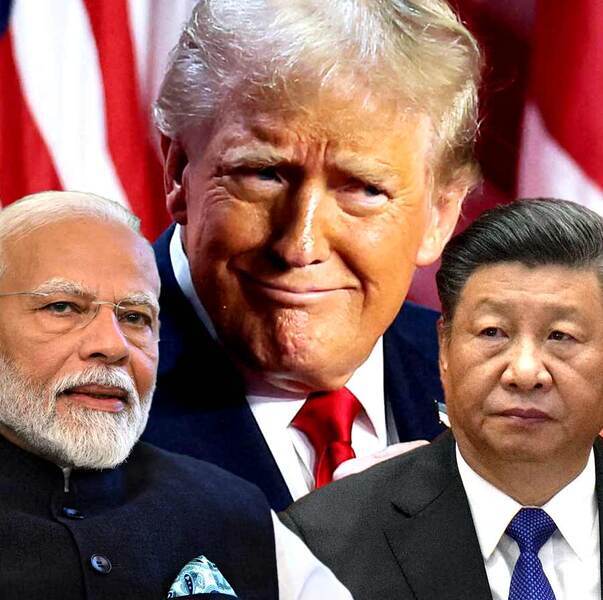
India needs to remain firm, as well as steadfast, on the path of peace, and to show diplomatic skills in preventing and destroying terrorism. Prime Minister Narendra Modi has made it clear that conversation between India and Pakistan would only be on terror and return of Pakistan-occupied-Kashmir (PoK). It is expected that all political outfits, social circles or groups in India would back the PM’s stand, and the Prime Minister should walk the talk.
The Diplomatic Challenge
Although India and Pakistan have agreed to an uneasy truce, both the parties continue to make claims and counter-claims. On May 13 (2025), New Delhi released a six-point statement, with a clear and unambiguous response to claims related to the ceasefire made by President Trump. While vigorously rejecting the claims of spreading nuclear terror against India and the demand for US mediation on the Kashmir issue (or for an impartial meeting on this), the Narendra Modi Administration strongly condemned the US’ attempt to hyphenate India and Pakistan on the global stage.
Click to watch: ‘Clear who wanted ceasefire…
No wonder, the hyphen is convenient for the US and its Western allies as their main aim is to maintain the momentum of the global economic system through quick deals or rapid agreements. On the other hand, the matter is quite serious for India because there are some hidden signs of danger in this attempt of hyphenation. Firstly, it creates a new possibility of internationalisation of the Kashmir issue that could be against India’s interests. Secondly, there could be a decline in India’s diplomatic importance in South Asia because of this. As India is facing a difficult, as well as complex, diplomatic crisis (due to the US), the Modi Administration needs to take each and every step after careful consideration.
While President Trump’s (over)activism grabs headlines on a regular basis, activities of Beijing have become somewhat more covert. Perhaps, it is because the Indian airstrikes on the terrorist bases in Pakistan, codenamed Operation Sindoor, have exposed the quality of the Chinese weapons acquired by Islamabad. Another thing that has become clear is that although China backs the ceasefire between India and Pakistan, Beijing stands firmly by Islamabad and would continue to do so.

It may be noted that India’s rise in trade, technology and infrastructure development in the 21st Century has been somewhat slower than that of China. Yet, India has maintained a strategic independence in its relations with the US and various Western countries. India is no longer seen as a regional player on the global stage. Hence, it has become crucial for China to prevent India’s emergence as the leader of the Global South. To create troubles for India, China has strengthened ties with Pakistan through defence cooperation, economic investment and diplomatic assistance with the help of the Belt and Road Initiative (BRI). The China-Pakistan Economic Corridor (CPEC) could open up a commercial, as well as strategic, route for Beijing to reach Central Asia.

China further plans to increase its importance on the global stage by making Pakistan dependent on it. Such a move would allow the Asian Giant to make fresh attempts to assert its rights over the north-eastern Indian Province of Arunachal Pradesh and to create disturbance on the western border of India by taking advantage of the Kashmir issue. It seems that China does not consider Pakistan a friend, but a pawn to serve its own vested interests.
Although one war may be over for now, another one is raging towards India at full speed. Indian diplomacy should be prepared for a tough test.
Boundless Ocean of Politics on Facebook
Boundless Ocean of Politics on Twitter
Boundless Ocean of Politics on Linkedin
Contact us: kousdas@gmail.com

 ISMC
ISMC Boundless Ocean Of Politics