

Liberals Are On A Lonely Road!
Yogendra Yadav, the noted Indian political activist, recently said: “Nowadays we often call ourselves Left-Liberals, just like the supporters of Hindutva ideology.” Delivering a speech, he also said that Left and Liberal were different concepts which could not co-exist! Yadav is right as the Leftist ideology, whether it means Communism to Socialism, is fundamentally a critique of Liberalism. Karl Marx (May 5, 1818 – March 14, 1883) was arguably one of the foremost critics of Classical Liberalism. Hence, the birth of the concept of Left-Liberals in contemporary India is quite interesting!
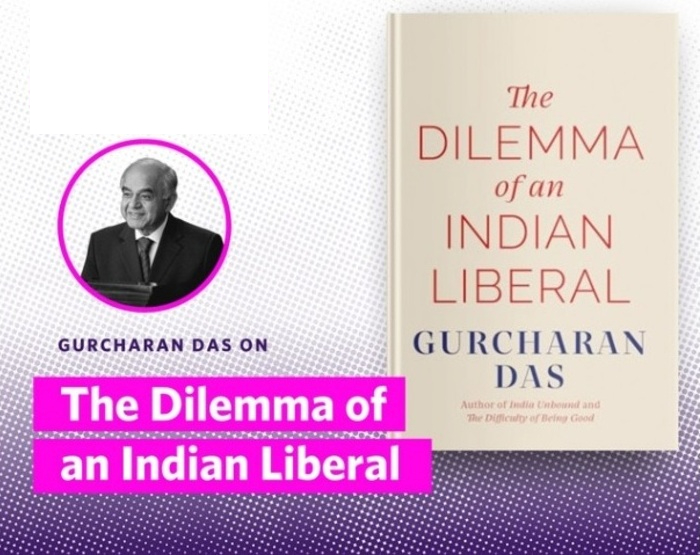
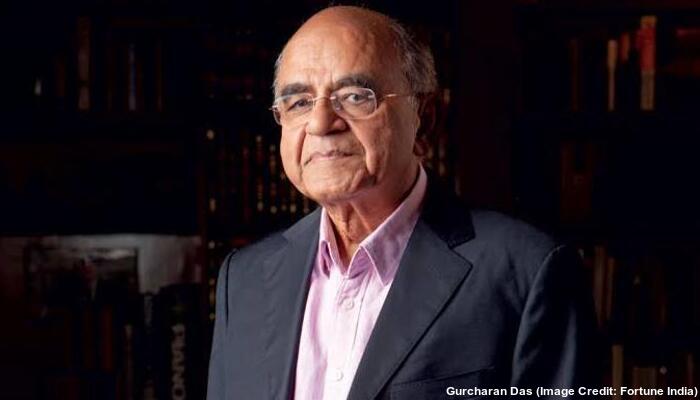
In his latest publication ‘The Dilemma of an Indian Liberal‘, Gurcharan Das has discussed this dilemma in detail. Das (b. October 3, 1943), who graduated with Honours in Philosophy from Harvard University before attending Harvard Business School, has dealt with the issue in two parts. In the first part, he has mentioned who can be called Left-Liberals, the history of Liberalism and the concept of Indian Liberalism. The author has argued that the Indian popular culture is the fertile ground of Liberalism, stating that there is no place for envy in a country where 33 million gods are worshipped! Such importance has been given to this matter by him that it has secured a place in the table of contents of his book!
According to Das, India has always maintained a balance between various gods and the supreme one in order to accommodate different types of blood, colours and languages! Indian intellectuals tried their best to cope with different beliefs with knowledge. Ancient concepts of Dinnaga, Shabar, Kumarila, Dharmakirti, Nyaya, Sankhya, Mimamsa Philosophy, Buddhist Philosophy, the Samyasutras of Bhaktism, etc. have guided the basic trend of Indian society. Das is of the opinion that the Western Philosophy has influenced Indian (socio-political) thoughts in modern times!
The second part of the book covers 28 milestones of a personal journey of becoming a liberal man in Independent India! Das has portrayed how some Indians became liberal at some points of time by hurting the core Indian sentiment.
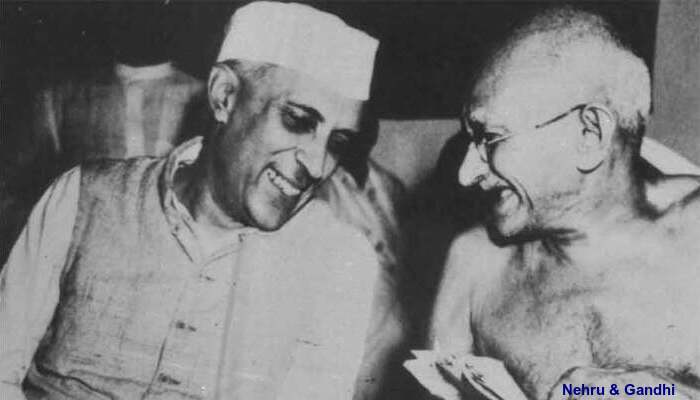
Das recalled that he met Pandit Jawaharlal Nehru, the first Prime Minister of India, on a special day in 1954 in New Delhi during a procession of schoolchildren from India Gate to Raisina Hill. Nehru had tossed a garland towards him. However, the 10-year-old Das failed to catch the garland. Since then, the author has considered the liberal hero as an advocate of the well-meaning, but illiberal economy. Whether or not one agrees with Das, Nehru moved away from Classical Liberalism. Surprisingly, none was seemingly seen to accept this fact in the mid-1950s.
In the second part, the author has mentioned the 1971 Liberation War of Bangladesh, too! Had India kept pace with the Asian Tigers, the great promise made by the Indian State under the leadership of Indira Gandhi, the then Prime Minister of India, by helping Bangladesh to win the War of Liberation could have made great progress. However, it did not take place and the journey of Liberal Economy stopped in India! In fact, the South Asian nation had to wait another two decades to follow the path of Liberal Economy.

Once, Das was reportedly shocked to see an Indian woman, clad in clothes that were vermilion in shade, gazing at a figure of dancing Nataraja figure. The author immediately realised that what he considered as superstition was actually an other form of artistic fascination! He also realised that one should bridge the hiatus between the secular sense of art and the religious sense of art. It is because there may be an alternative idea of universal generosity (not necessarily narrow) and a different worldview in the religious art sense. According to the author, when Friedrich Wilhelm Nietzsche (October 15, 1844 – August 25, 1900) said that “God is dead“, the German philosopher actually meant “God is dead to modern secular individuals, like me“! Although there are people with secular minds, they cannot be the only flag bearers of impartiality or universalism. Das believes that he became a matured Indian liberal on that day when he saw the woman gazing at a figure of Nataraja.
Das’ publication shall help readers to discover how Leftists and Liberals are considered as followers of similar ideologies due to the common feature of modern secular thought! The Leftists and the Liberals have gradually come closer in Hindutva-dominated India. However, it would be a mistake to label the others as Illiberals; as the concept of Liberalism has its own context! The Indian Liberalism has its own roots and context, irrespective of whether one calls it Liberalism in the Classical sense or not! According to the author, this is where Mahatma Gandhi‘s Utopia is relevant. However, Das did not discuss the idea of Nehruvian Socialism in his book. The extreme individualism within Liberalism ultimately stands in opposition to social identity, connection and responsibility. Conscious Indian thinkers have no other option, but to realise the reality in their country in order to find the roots of Indian Liberalism. Many of them, who are deeply Liberal, have thought of the new trend of perspective-based Liberalism.
According to Das, this particular trend is not much visible in today’s India. He has opined that the Indian Liberals are in danger due to their lack of political consciousness. Hence, religious intolerance, ultra-nationalism, group interest, distrust and lack of individual liberty have rocked the South Asian country in recent times. Far-Rights have also started attacking the Liberals with the term Pseudo-secular!
Meanwhile, the author still believes that the Indians have the strength to establish the Liberal Civilisational Temper. Although India is currently heavily influenced by Illiberal Democracy, Indians can reiterate it with the idea of Liberalism in spite of its limitations!
Boundless Ocean of Politics on Facebook
Boundless Ocean of Politics on Twitter
Boundless Ocean of Politics on Linkedin
Contact: kousdas@gmail.com

 ISMC
ISMC Boundless Ocean Of Politics