

The ‘Brutal’ Truth About Silence…
It seems that Socrates would not have tried to trace the philosophical roots of justice in ancient Greece, had Athens and Sparta not engaged in the Peloponnesian War (BCE 431-405). Similarly, the First World War prompted Thomas Stearns Eliot (September 26, 1888 – January 4, 1965) to pen The Waste Land, one of the most influential English-language poems of the 20th Century!
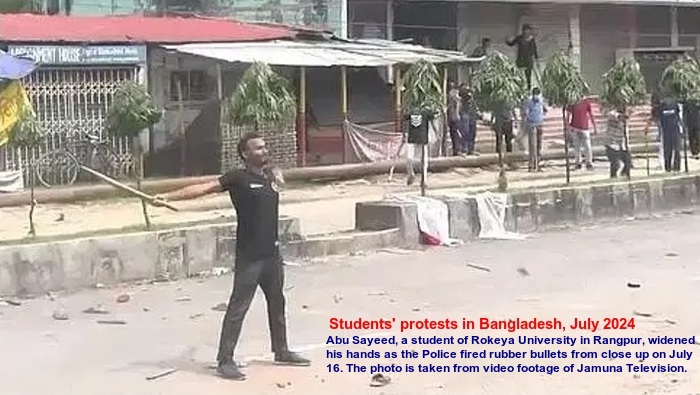
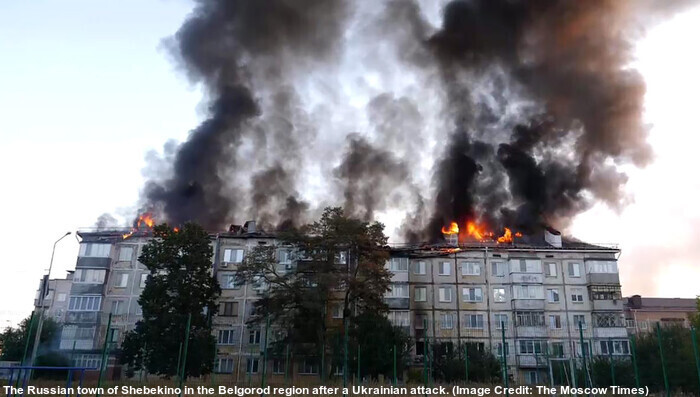
Once again, people across the world are suspicious of differences between them (or otherness) as antagonism in the 21st Century. Hence, skirmishes are taking place in different parts of the globe. Perhaps, it slips the minds of the global community that brutality cannot be stopped through brutality. Hence, the warmongers often say: “This war is needed to stop all future wars.” Yet war continues and also influences individual, as well as social, existence of human beings. When the brutality of the battlefield spills over into society, a US war veteran or a teenager indiscriminately kills school students or innocent civilians for no reason! That is why Mahatma Gandhi, Sigmund Freud, German-American social psychologist Erich Seligmann Fromm and others emphasised on the concept of Non-violence.
In Part V of his The Waste Land – titled What the Thunder Said, Eliot pointed out the essentials of living a peaceful life while standing in the wasteland of post-First World War London. According to the English poet, only desireless sympathy can save civilisation. Fromm, a German Jewish who became a member of the Frankfurt School (a group of Marxist thinkers) in his early days and was highly inspired by Freud, later realised that proper psychoanalysis (or treatment) would not be possible without understanding the social context of an individual. In his first major work Escape from Freedom (1941), Fromm charted the growth of freedom and self-awareness from the Middle Ages to Modern Times. He used psychoanalytic techniques to analyse the human tendency, brought on by modernisation. He came to the conclusion that human beings often take refuge from contemporary insecurities by turning to totalitarian movements, such as Nazism.
Psycho-analysts are of the opinion that empathy means to realise the depth and character of one’s suffering in a selfless manner. On the opposite side, there is brutality or cruelty. Psycho-analysts believe that human beings have an instinctive tendency towards brutality! With modern Western civilisation sowing the seeds of competition among aspiring nations mainly to fulfil their self-interests, formerly localised conflicts have become increasingly global. Yet brutality should not be considered as a gift of the West. One can find its roots in each and every country.
The Greek philosophers used to believe that a moral man is driven not by ego, but by empathy. Such a person can follow the path of Non-violence. Kindness, compassion, empathy, etc. help a person to overcome her/his ego. Then, the person can correct her/his own character on the basis of morality. Remaining silent about the pain of others is a different form of brutality or cruelty. However, many in this world still follow the policy of Eye for an Eye. Hence, bloodbath continues in different parts of the globe.
In such a situation, the concept of Capability becomes an important one. Capability certainly refers to the individual or group becoming powerful, but it also implies the quality of forgiveness. It may be noted that Mahatma Gandhi once said: “The weak can never forgive. Forgiveness is the attribute of the strong.“
The question arises here: How can one become compassionate and empathetic? The answer lies in Freudian concepts of Eros and Thanatos. While Eros is considered as the life instinct that includes sexual instincts, the drive to live and basic instinctual impulses, such as thirst and hunger; Thanatos is basically the instinct of death that includes negative feelings, like hate, anger and aggression.
If one can concentrate on Eros, then it could be possible for the person to break free from the prison of Freud’s so-called two-dimensional instinct!
Boundless Ocean of Politics on Facebook
Boundless Ocean of Politics on Twitter
Boundless Ocean of Politics on Linkedin
Contact: kousdas@gmail.com

 ISMC
ISMC Boundless Ocean Of Politics