

On Russia’s High…
Russia has emerged as a High-Income economy from an Upper-Middle Income economy despite being sanctioned in several ways by the US and its Western allies!
Russia invaded Ukraine on February 24, 2022, and the war between the two former Soviet Republics has been going on since then. So far, the armed conflict has claimed millions of lives in Europe. Meanwhile, another war began in West Asia on October 7, 2023. The Israel-Hamas War, too, has claimed lives of many innocent civilians (mainly Palestinians) in the past nine months. As expected, the two wars have a huge impact on Global Economy. There has been an increase in prices of essential commodities across the globe, with trade barriers causing various obstacles for different countries.
The Western World had strongly criticised Russia for declaring a war on Ukraine. Even the UN condemned the Russian aggression. Later, the US imposed economic sanctions on Russia, asking its Western allies to snap trade ties with Moscow. Although the US did not join the war (directly), it imposed a trade embargo to put Russia under pressure. A number of countries accepted the US’ request and snapped trade ties with the Kremlin. Their move hit the Russian Economy hard. However, some countries, like India, continue to maintain friendly ties with Russia.
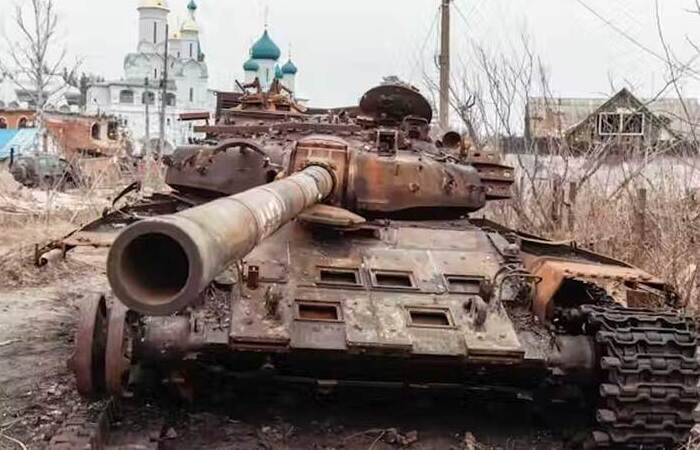
The war definitely has had a negative impact on Russia’s trade ties with various countries. Also, the country has to bear huge expenses of the war. The West assumed that Russia would face an acute economic crisis in such a situation. However, Moscow has bounced back strongly despite the setback! Vladimir Vladimirovich Putin‘s country recently transitioned from an Upper-Middle to a High-Income economy, according to the World Bank‘s latest rankings! This form of success of Russia has surprised everyone!
The World Bank assigns the world’s economies to four income groups: Low, Lower-Middle, Upper-Middle and High. The income classification of countries, which is updated every July 1 by the World Bank, is based on the Gross National Income (GNI) per capita of the previous calendar year. GNI measures are expressed in US Dollars using conversion factors derived according to the Atlas Method. In each country, factors, such as economic growth, inflation, exchange rates and population growth, can all influence the level of Atlas GNI per capita, as per a World Bank blog. Revisions to improve methods and data can also have an impact. For the current (2024-25) fiscal year, Low-Income economies are defined as those with a GNI per capita, calculated using the World Bank Atlas Method, of USD 1,145 or less in 2023; Lower Middle-Income economies are those with a GNI per capita between USD 1,146 and USD 4,515; Upper Middle-Income economies are those with a GNI per capita between USD 4,516 and USD 14,005; and High-Income economies are those with more than a GNI per capita of USD 14,005.
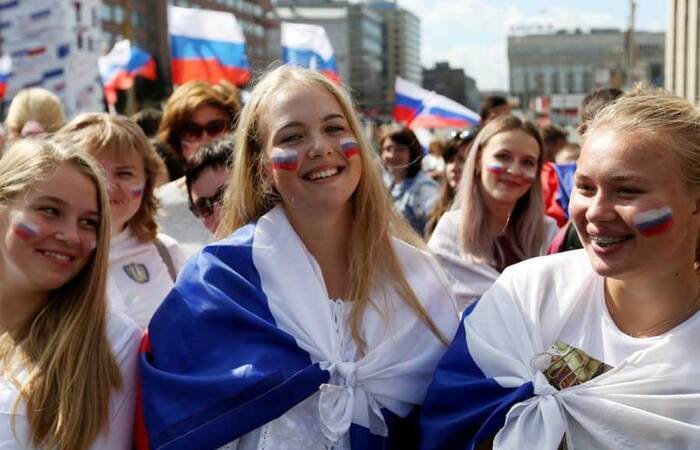
India still remains in the Lower-Middle income category. It may be noted that China, like India, was in the list of Low-Income countries in the 1990s. However, the Asian Giant secured its place in the list of Upper-Middle income countries within a few years. Russia has made similar progress in recent times. Experts are of the opinion that economic policies adopted by the Putin Administration have helped Russia to become a High-Income economy. The World Bank has mentioned in a statement that the economic activity in Russia was influenced by a large increase in military-related activity in 2023, while growth was also boosted by a rebound in trade (+6.8%), the financial sector (+8.7%) and the construction sector (+6.6%). These factors led to increases in both real (3.6%) and nominal (10.9%) GDP, as Russia’s Atlas GNI per capita grew by 11.2%!
There had been a lot of unemployed or low-income people in the Russian countryside for a long time. However, their lives changed after the beginning of the Russia-Ukraine War! After February 24, 2022, the Putin Government identified the poor or unemployed from different parts of the country and recruited the physically fit people among them in the Army. Moscow also increased budget for the defence sector. The increase in defence spending has boosted the Russian Economy. The move has also increased the income of common Russian citizens. The inclusion of common people in the Army has increased the per capita income notably, allowing Russia to become a High-Income economy.
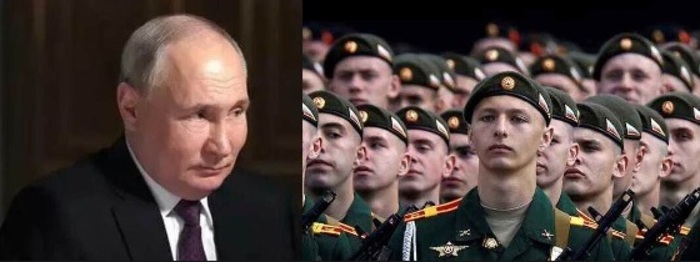
Talking to the media, Professor Alexander Dynkin, a noted Russian economist and President of Primakov National Research Institute of World Economy and International Relations, has said: “We are self-sufficient in energy resources, raw materials and food. We have a skilled labour market. Our fundamental science is world class. Our national innovation system is successfully solving the tasks of technological sovereignty and using the vacated market niches.” He has admitted that the main driver of Russia’s economic growth is the war in Ukraine. According to Professor Dynkin, the war has become important to the Kremlin not only politically, but also economically!
Meanwhile, many believe that a different situation would soon be created in Russia. After delivering the money to the citizens, President Putin would have to collect that amount by imposing taxes. For a long time, Russia has been known as a low-tax country. In the current situation, the Russian Government has to collect taxes at a higher rate. According to experts, even if the Government collects higher amounts of taxes, the burden of the tax will not be imposed on the middle class. Instead, higher taxes could be levied on the upper class people.
Experts have advised all the Developing Nations to learn from this policy of Russia.
Boundless Ocean of Politics on Facebook
Boundless Ocean of Politics on Twitter
Boundless Ocean of Politics on Linkedin
Contact: kousdas@gmail.com

 ISMC
ISMC Boundless Ocean Of Politics