

A Complex & Multifaceted Historical Development
The rise of Hezbollah, a Lebanese Shīʿite Islamist political party and militant group led by its Secretary-General Hassan Nasrallah since 1992, is a complex and multifaceted historical development. Hezbollah emerged in the early 1980s as a response to a confluence of factors and events in Lebanon and the wider Middle East. There were various developments that triggered the rise of this outfit.
The Lebanese Civil War, a protracted and brutal conflict, created a chaotic environment that allowed various militias and political groups to emerge. Shīʿite Muslims, a historically marginalised group in Lebanon, found themselves seeking political and social empowerment. Amid this turmoil, Hezbollah was born in the early 1980s. The Israeli invasion of Lebanon in 1982 played a pivotal role in Hezbollah’s emergence. The invasion aimed to eliminate Palestinian armed groups in Lebanon, but also inadvertently strengthened the Shīʿite resistance.
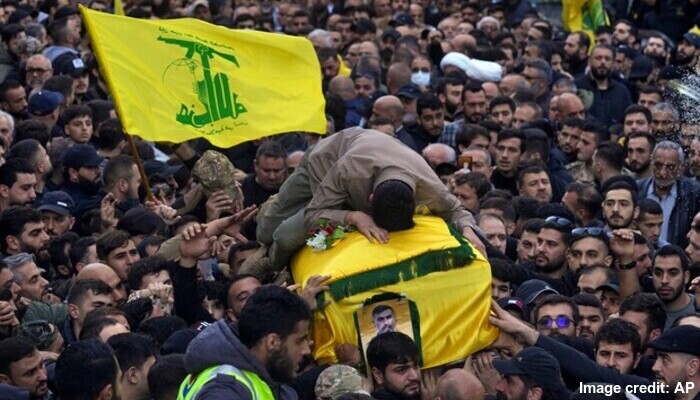
Hezbollah, with support from Iran, began to take root and gained popularity for resisting the Israeli forces. Iran has been a crucial sponsor of Hezbollah since its inception. The Iranian Revolutionary Guard Corps (IRGC) provided training, weapons and financial support to Hezbollah. This support allowed the group to build a strong military and political presence in Lebanon. Hezbollah’s ideology is rooted in Shīʿite Islam and the idea of resisting external influence and occupation. It seeks to promote Shīʿite empowerment in Lebanon and the broader region. It also aligns itself with the Axis of Resistance against Israel and Western influence, making it an important regional player. In addition to its military activities, Hezbollah has been engaged in Lebanese Politics since the early 1990s. It became a significant political force, representing Shīʿite interests and securing seats in the Lebanese Parliament.
Read: Who Is Hassan Nasrallah?
Hezbollah’s political and social services, such as healthcare and education, have garnered support among Shīʿite communities. Over the years, Hezbollah has developed a formidable military wing with an arsenal of rockets and missiles. It demonstrated its military prowess during the 2006 Israel-Hezbollah conflict, which further solidified its position as a regional actor.
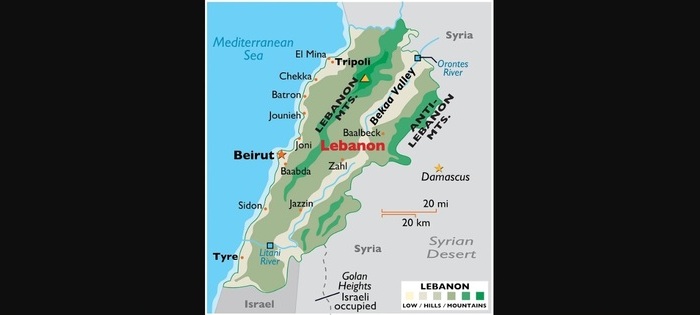
While Hezbollah enjoys considerable support in Lebanon and parts of the region, it is designated as a terrorist organisation by several Western countries, including the US and the European Union (EU). This has led to sanctions and restrictions on the group’s activities. Hezbollah’s rise represents a complex interplay of regional and domestic factors, and it continues to be a major player in Lebanese Politics and a significant actor in regional conflicts, particularly its involvement in the Syrian Civil War in support of the Bashar al-Assad Regime. Its influence and actions are a source of ongoing tension in West Asia.
Hezbollah and the Palestinian Hamas Movement are distinct entities, with Hezbollah predominantly focusing on Lebanon and having a closer relationship with Iran. Meanwhile, Hamas operates in the Gaza Strip. However, both organisations share common elements in their opposition to Israel.
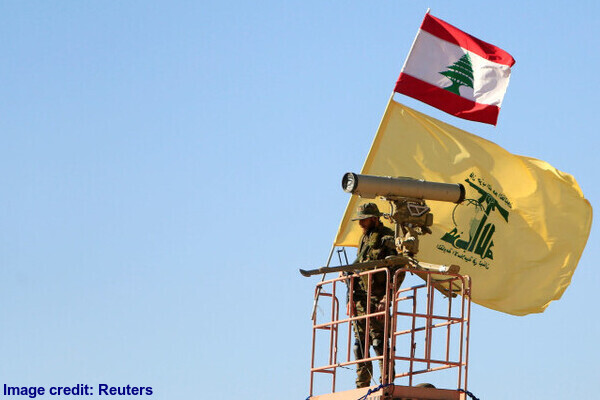
As of 2021, it is estimated that Hezbollah had 100,000 fighters. Either the entire organisation or only its military wing has been designated a terrorist organisation by several countries, including by the EU, and since 2017, also by most member states of the Arab League, with two exceptions – Lebanon, where Hezbollah is one of the country’s most influential political parties, and Iraq. Russia does not view Hezbollah as a terrorist organisation, but as a “legitimate socio-political force“.
This article was first published by Talk Diplomacy on Instagram on November 1, 2023.
Boundless Ocean of Politics on Facebook
Boundless Ocean of Politics on Twitter
Boundless Ocean of Politics on Linkedin
Contact: kousdas@gmail.com

 ISMC
ISMC
