

An Adversarial History, And…
Conflicts between the two neighbouring countries are going on in different parts of the globe. Belligerent relations between the two neighbouring countries affect other countries, as well. Saudi Arabia and Iran are two such rivals in West Asia. Although both Riyadh and Tehran recognised Islam as their Official Religion, they are engaged in a long-standing conflict!
The Saudi-Iran conflict has been going on for the past 44 years. Since 1979, the two West Asian nations have been involved in various conflicts. Their relationship has deteriorated over different issues, and other countries in the region have suffered a lot due to this. The main reason for Iran’s conflict with Saudi Arabia, popularly known as the birthplace of Islam, is religious differences. While Saudi Arabia is a predominantly a Sunni-majority (85-90%) country, most of Iran’s population (90-95%) is Shi’ites. Since Islam was spread from Saudi Arabia, Saudi supremacy in the Islamic World was universally recognised from the very beginning.
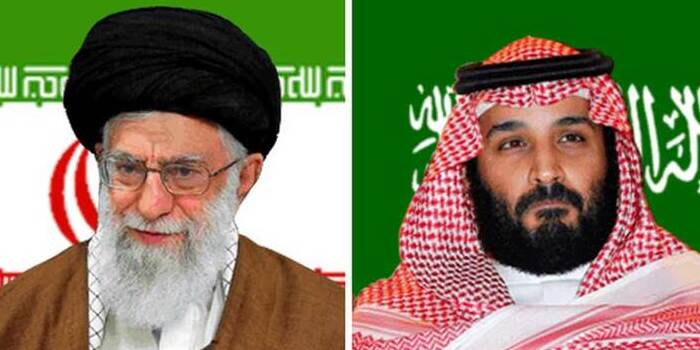
Saudi supremacy in the Islamic World faced a strong challenge in 1979 for the first time. After the Islamic Revolution, the Shi’ite Muslims in Iran became rebels, and made a serious attempt to spread the Shia ideology beyond the borders of their country. At that period of time, Saddam Hussein was the President of Iraq, the buffer state between Saudi Arabia and Iran. President Saddam, a Sunni Muslim, attacked Iran in 1980, triggering the eight-year-long Iraq-Iran War. As Riyadh backed Baghdad during the war, Tehran became somewhat isolated in West Asia.
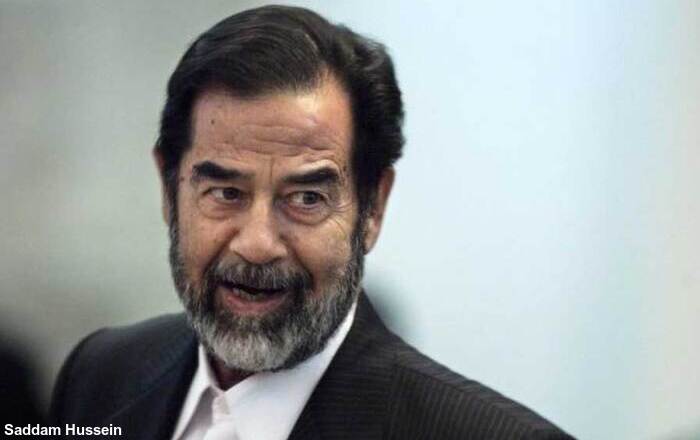
The US got involved in this religion-based West Asian Politics in 2003 by launching the Gulf War against Iraq. Since then, Iraq has been governed by pro-Shi’ite rulers. Iraq is currently one of the few Shia-dominated countries in the world. When the pro-Shi’ite government of Iraq ordered Saddam’s execution in 2006, Iranians celebrated his execution. However, the fall of President Saddam shocked Saudi Arabia. The Saudi-Iran relations have further deteriorated over the past 15 years (since the execution of Saddam).
As both Saudi and Iran are strong regional powers, they are desperate to influence other countries, like Syria, Yemen and Bahrain, in the region. According to a BBC report, the United Arab Emirates (UAE) and Bahrain maintain cordial ties with Saudi Arabia, while Iraq backs Iran. Meanwhile, Syria, Lebanon and Yemen maintain friendly ties with both Saudi and Iran.
At international level, Iran has always received support from Russia, while the US has backed Saudi Arabia. In other words, Russia and the US have fuelled the conflict between the two West Asian nations. China has got involved in Saudi-Iran conflicts in recent times. Beijing recently brokered a Peace Treaty between the two arch rivals. Riyadh, Tehran and Beijing signed a Tripartite Peace Treaty in the Chinese capital on March 10, 2023. As per the Treaty, Saudi Arabia and Iran would reopen their embassies in Tehran and Riyadh, respectively, in the next couple of months. This Treaty is highly significant, as far as the political equation in West Asia is concerned.
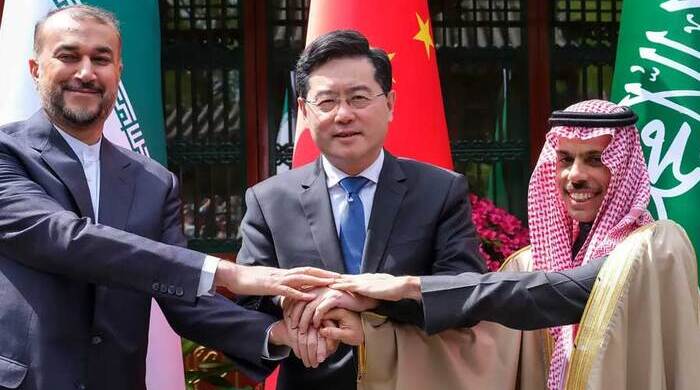
Saudi Arabia executed Nimr Baqir al-Nimr, a Shia cleric and critic of the Saudi government, on January 2, 2016. In protest, angry mobs ransacked the Saudi Embassy in Tehran. The embassy has remained closed since then. The two countries also snapped diplomatic ties after the beheading of al-Nimr. Now, China has convinced the two parties to reopen their embassies in each other’s country. Experts are of the opinion that Beijing has made temporary arrangements in order to defuse the tension between the two regional powerhouses. However, West Asia is actually burning like a cinder.
Boundless Ocean of Politics on Facebook
Boundless Ocean of Politics on Twitter
Boundless Ocean of Politics on Linkedin
Contact: kousdas@gmail.com

 ISMC
ISMC Boundless Ocean Of Politics