

German Wonder Weapons: Myth Vs Reality!
It is often said that Germany’s defeat in WWII was brought forth by some major mistakes by Adolf Hitler himself. One such mistake was the Führer’s foolhardy investment of scarce German resources in so-called Wonder Weapons or Vengeance Weapons. While some of those weapons were marvels of technology for their day, they did not bring Germany any closer to winning the war. Instead, they took away resources from more reliable weapons that could have done more to stave off eventual German defeat.
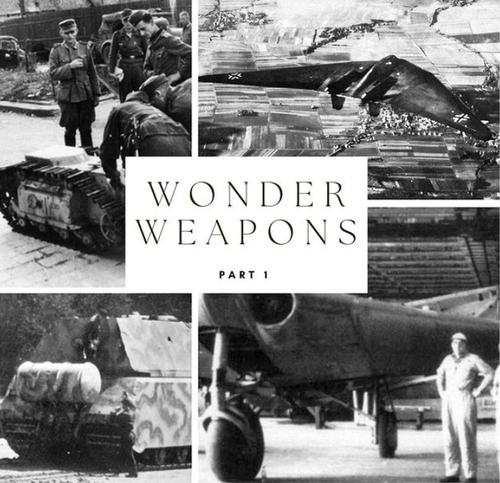
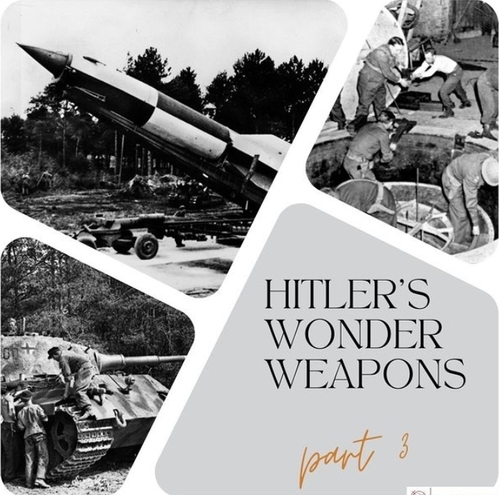
The German V2 rocket or Vengeance Weapon 2 was a prime example of Hitler’s misplaced priorities. It was the world’s first ballistic missile, which carried a tonne of explosives to the edge of space, then descended at unstoppable supersonic speeds to detonate on its target. It was a brilliant, advanced and revolutionary feat of technology. It was also one of history’s most wastefully expensive weapons. It inflicted relatively little damage, and thus did not justify the vast expenditure of resources that went into its production. It detracted from more effective weapons programmes or other uses that might have better served the German war effort.
From its first operational launch against enemy targets in September 1944, to Germany’s surrender nine months later, roughly 3000 V2s were fired. A significant percentage did not reach their targets. But even if they all had, at one tonne of explosives per V2 warhead, that would have been a total of 3,000 tonnes of explosives dropped on enemy cities over nine months. On the contrary, the Royal Air Force would routinely drop more than 3,000 tonnes of explosives on a German city in a single bombing raid during that same period. US bombers, too, frequently exceeded that 3,000-tonne total in single bombing raids. And the Allied explosive delivery tools, bombers, were reusable and thus far more economical.
Most Allied bombers returned to base, reloaded, and returned the next day or night to once again drop more than 3,000 tonnes of explosives on German cities. They repeated that process dozens of times.
Moreover, during its nine months of deployment, V2s killed 2,754 people. Most of them were not soldiers, but civilians whose deaths, while tragic, did not impede the Allied War effort by much. By contrast, it is estimated that over 20,000 workers, mostly slave labourers, died while manufacturing the V2. That gave the rocket the tragic distinction of being the only weapons system in history whose production cost more lives than did its actual use. Thus, when contrasting the cost with the results, the V2 literally produced little bang for the buck.
Another example was the Panzer VIII Maus super-heavy tank. It was the heaviest tank ever built, measuring about 33ft long, 12ft wide, 12ft high, and weighing nearly 200 tonnes. Its secondary armament was a 75mm coaxial gun instead of a machine gun, while its main gun was a 128mm monster capable of destroying any Allied tank at ranges of up to 2.2 miles. At Hitler’s insistence, the range was increased, using a 150mm gun (instead), as he thought that the 128mm looked like a toy gun on the Maus.
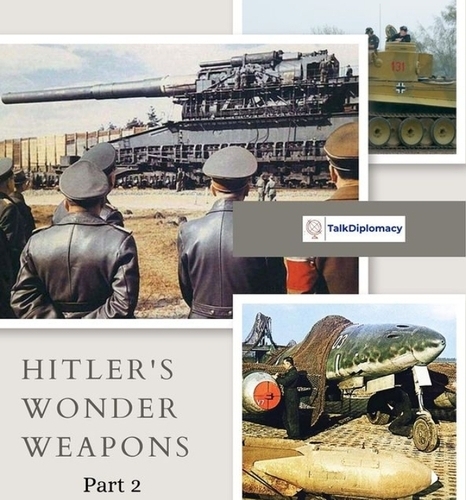
The huge size and heavyweight came at a correspondingly heavy price that made it nearly useless. The Maus was too heavy for most bridges, so it had to cross rivers either by wading through fords, or driving over the river’s bottom while using a snorkel for ventilation. Again, getting the Maus moving was a problem in itself. It was difficult to develop an engine and drive train powerful enough to propel 200 tonnes of metal on the ground at any appreciable speed, yet small enough to fit inside the tank. In the end, the maximum speed achieved during trials was 8mph on a hard surface.
The Maus was intended to spearhead German attacks by smashing through opposition and destroying all enemy armour it came across, while impervious to damage from enemy tanks. With 9.4inch of turret armour, 8inch of hull front armour, 7inch of hull side armour, and 6inch of rear armour, the Maus was immune from Allied tanks, whose shells would simply bounce off the behemoth. However, it was built in 1944, by which time the Allies had well nigh complete aerial supremacy over the battlefield. The Maus did not have sufficient armour up top to protect it from armour-piercing bombs or rockets from above.
Ultimately, the Maus was symptomatic of Hitler’s irrational obsession with big things and super weapons. He was indifferent, or unable to understand, the concept of relative cost-effectiveness compared to other normal weapons that could accomplish the same task at a fraction of the cost. Using such normal weapons instead would have freed up scarce resources for other uses that could have better served the German war effort. Although Nazi Germany was far ahead of the US, Britain, and the Soviet Union in terms of creating technologically advanced weapons of war, in the end those weapons failed to give Hitler the edge he needed to defeat his enemies.
Perhaps, given more time, the Axis Power could have been victorious. However, thankfully for civilisation, that is a what if that has no answer.
Source: Talk Diplomacy (Instagram)
Boundless Ocean of Politics on Facebook
Boundless Ocean of Politics on Twitter
Boundless Ocean of Politics on Linkedin
Contact: kousdas@gmail.com

 ISMC
ISMC Boundless Ocean Of Politics