

A Plot Twist In Israel
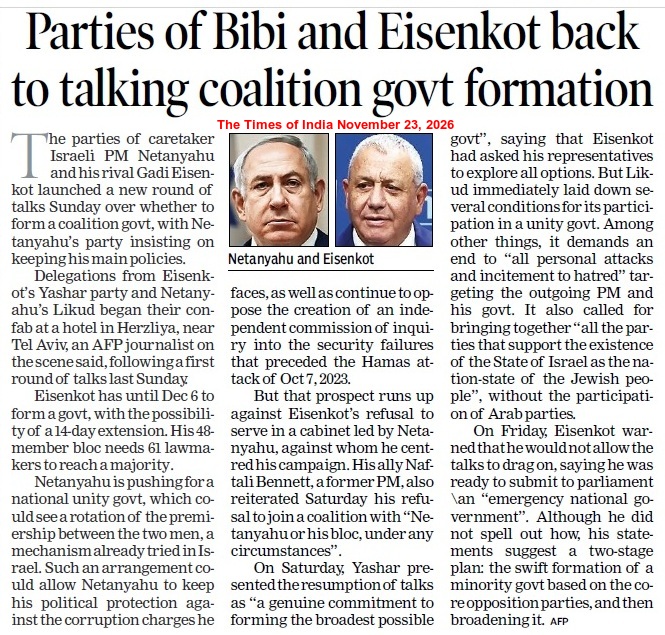
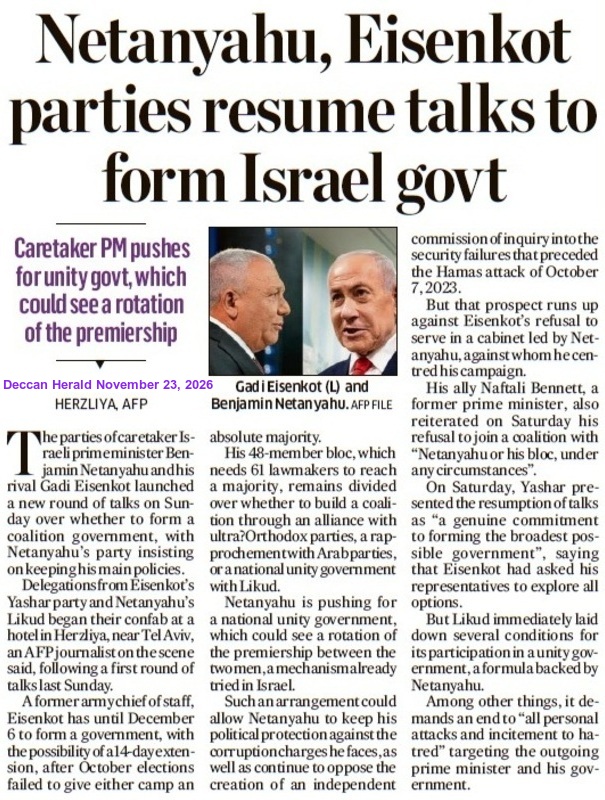
Gadi Eisenkot, the Chairperson of the Yashar Party, has invited Benjamin Netanyahu’s Likud Party to discuss the formation of a Unity Government. Israeli President Isaac Herzog formally tasked Eisenkot with forming the next government in early November 2026 after the October 27, 2026 Knesset (the Israeli Parliament) Election left no parties or alliances with a 61-seat majority. Time is running out for Eisenkot as the former Israeli military officer must prove he has a majority in the Knesset by December 6. President Herzog may grant an extension of up to 14 additional days, if necessary, for a maximum of 42 days. If Eisenkot fails to form a government by December 20, Netanyahu might be called upon to form one. In such a situation, Eisenkot formally sought to enter into discussions with the Likud Party.
Eisenkot reportedly instructed the negotiating team of his Yashar Party on November 21, 2026 to hold a meeting with Likud leaders. According to sources close to the Yashar Party, Eisenkot does not want to miss any opportunity and will continue to make every effort to form the Unity Government. Although the Yashar Party has no inherent objection to joining hands with the Likud Party, Eisenkot and his associates have made it clear that Bibi must step down from the position of Prime Minister and quit politics. The Yashar Party hinted that Netanyahu would have no place in the Unity Government. Earlier, Eisenkot had demanded the resignation of everyone who was at the helm of the outgoing government at the time of the attack by the Palestinian Hamas Movement on October 7, 2023.
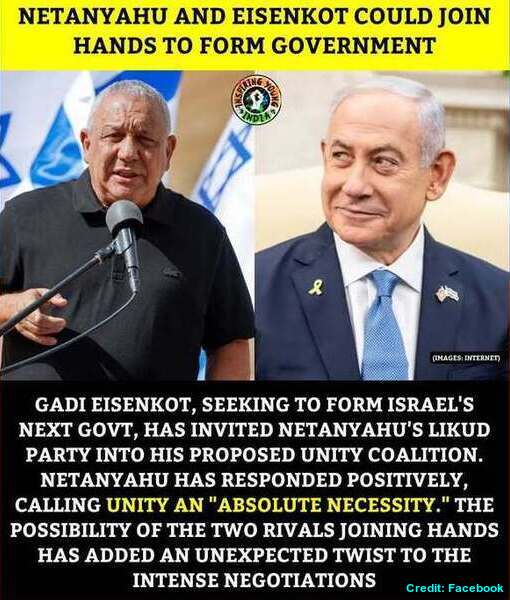
Meanwhile, the Likud Party issued a statement after receiving the invitation to hold discussions on forming the next government, publicly placing five conditions. Firstly, the Likud Party formally demanded an end to political boycotts of Netanyahu and his government as a condition for forming the national Unity Government. At the same time, there should be no personal attacks on him and fuelling of provocations.
The second condition set by the Likud is that Israel must be recognised as an exclusively Jewish State and there should not be any possibility of forming an alliance with Arab parties. Thirdly, the formation of a separate Palestinian State must be officially opposed. Fourthly, the Unity Government would have to maintain Israeli security zones in Gaza, Lebanon and Syria.
Netanyahu’s Likud Party also included the status of yeshiva students among its core conditions for forming the Unity Government with the bloc led by Eisenkot. It may be noted that yeshiva is a traditional Jewish educational institution focused on studying Rabbinic literature, primarily the Talmud and halacha (Jewish law), alongside the Torah and Jewish philosophy. According to the Likud Party, the Unity Government would have to reach a compromise with conservative leaders in order to exempt those students from mandatory military service. It seems that it would be difficult for the Yashar Party to accept these demands. Only time will tell whether Eisenkot accepts the strict conditions placed by the Likud leaders.
Israel On The Edge Between War & Peace
(Executive Intelligence Review) The October 27, 2026 General Election in Israel has delivered a seismic shock to the system, with shockwaves felt worldwide. While the votes have been counted, the business of choosing the next government remains unfinished, meaning that Netanyahu will continue to serve as Prime Minister of a Caretaker Government until one of the coalitions has the support of 61 of the 120 Members of the Knesset.
The shock came from a record number of Arab-Palestinians who voted, giving them 19 seats in the new Parliament. This turnout, more than 80% of the eligible Arab voters, raises an uncomfortable issue in the nation which promotes itself as the only democracy in the region, with neither of the coalitions having the number of seats needed to select a Prime Minister, will Arabs be allowed to serve in the next government?
This was posed by columnist Gideon Levy in a Haaretz article provocatively titled Israel’s Future Depends on Its Arab Citizens. He highlights the irony in the opening sentence: “Eighty years after the Nakba and the establishment of the Jewish State, Israel’s Palestinians may determine its fate. Is there greater historical justice than that?”
Netanyahu reacted with his usual fury to the deadlock, accusing the Arab parties of benefitting from election interference and fraud. The Shin Bet, tasked with the job of discovering fraud, has announced that it has found nothing yet. With Netanyahu’s coalition electing only 53 members and rejecting any Arabs in the government, his only chance to get to 61 seats is by pulling the Arabs from the bloc of his opponent, Eisenkot, who now has 48 seats, or by forming a Unity Government with him. Otherwise, Netanyahu will act to prevent Eisenkot from getting to 61, forcing President Herzog to call for a new election. He has used this route before, as Israel had five elections in four years prior to his election in 2022.
As rumours fly over which party is willing to drop its previously non-negotiable stance to make deals with opposing parties to reach the total of 61, the shock of the Arab vote offers the most obvious option – bring the 19 parliamentary members of the Arab parties into the Eisenkot bloc, and glide past the 61 hurdle.
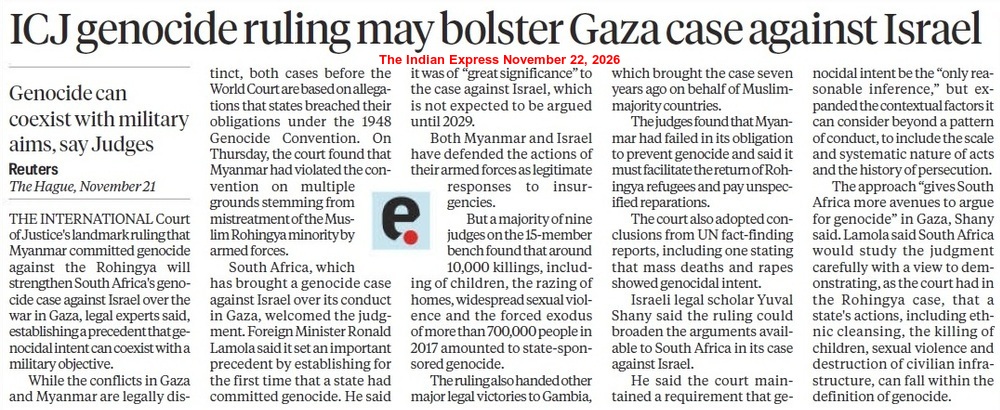
The leaders of the Arab parties have expressed enthusiasm for this, both Ahmad Tibi and Yousef Jabareen. The record Arab vote was driven by anger at the genocide in Gaza, settler violence and land annexation in the West Bank.
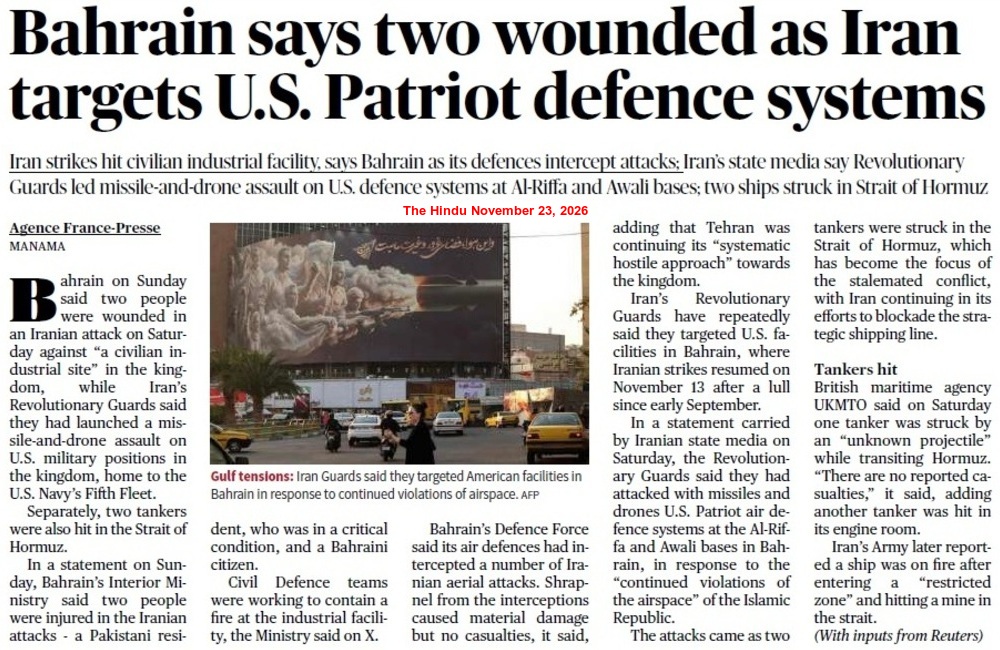
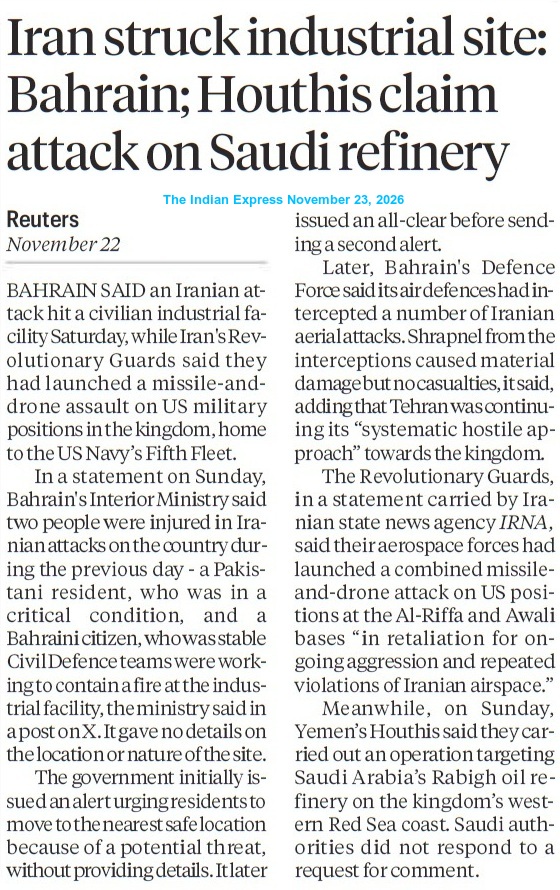
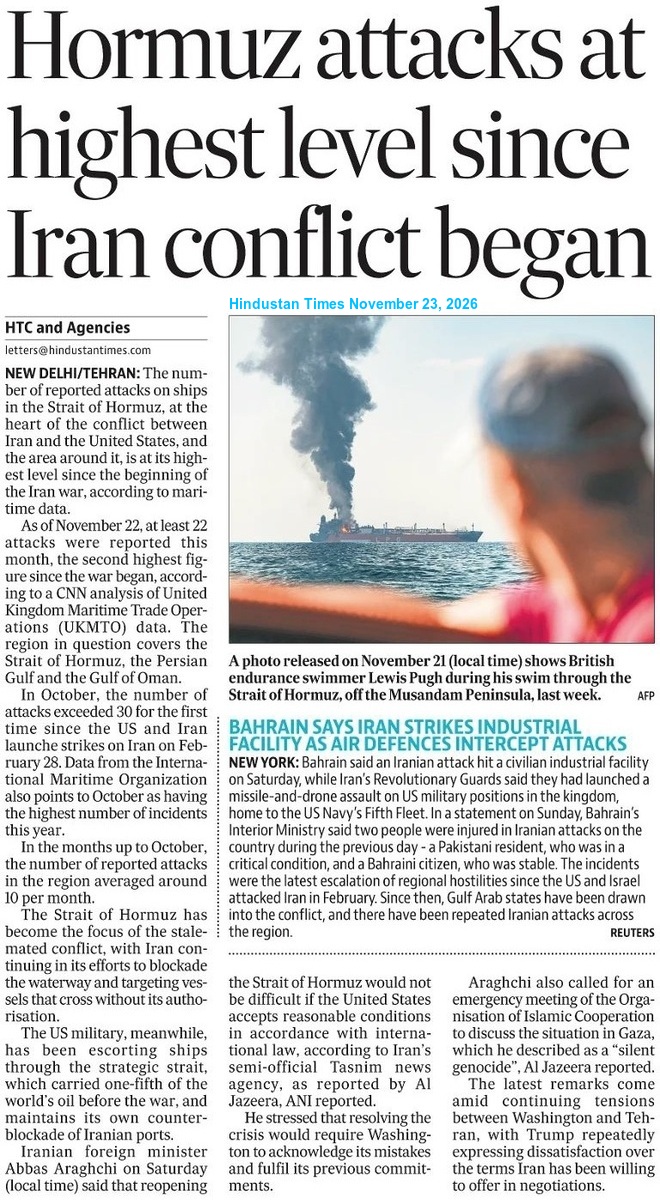
Meanwhile, Netanyahu is still in power. And his government is proceeding to destroy Hebron. Before the election, he received the endorsement of US President Donald John Trump, with both of them saying that it is necessary “to finish the job with Iran”. There are rumours that Netanyahu might have been given a green light by President Trump to use tactical nuclear weapons against the Islamic Republic, if necessary, to force regime change in Tehran.
In this dangerous moment, the courage to break axioms and bring members from the Arab electoral lists into the government may determine the outcome between peace and nuclear war.
Meanwhile,


Boundless Ocean of Politics on Facebook
Boundless Ocean of Politics on Twitter
Boundless Ocean of Politics on Linkedin
Contact us: kousdas@gmail.com

 ISMC

