

Study: Ancient Egyptians Performed Human Sacrifice
Archaeologists have an endless curiosity about the monarchy of ancient Egypt, the tombs of pharaohs, and the nooks and crannies of the pyramids. The country, linking northeast Africa with the Middle East, remains a central focus of global archaeology, as well as a treasure trove of history; as its dry desert climate has preserved monumental architecture, organic materials and artefacts spanning over 3,000 years of civilisation. A recent landmark forensic study published in the journal Frontiers in Environmental Archaeology has provided the strongest evidence yet of retainer sacrifice – the ritual killing of servants, artisans and court officials to serve pharaohs in the afterlife – during the First Dynasty (around 3100-2900 BCE) of Egypt.
British archaeologist Sir Flinders Petrie began his main excavations at Umm el-Qa’ab (Mother of the Pots), located in the present-day city of Abydos, around 1899-1903. He was particularly interested in the lifestyles of the pharaohs of First Dynasty and also in the Egyptian culture of that period. Petrie discovered the remains of many while conducting excavations around the royal tombs. In some instances, the tomb of a pharaoh was surrounded by hundreds of human remains.
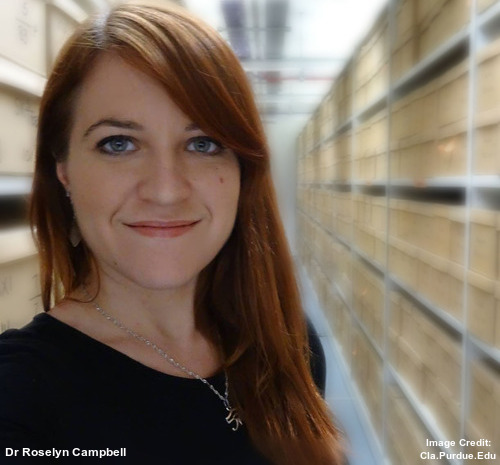
Although the British archaeologist suspected that Ancient Egyptians might have offered human sacrifices upon the death of a pharaoh, he could not find any concrete evidence to support it. As Petrie could not ascertain exactly how these people died, he failed to establish the theory of human sacrifice at that time. Archaeologist Dr Roselyn Campbell of Purdue University recently resumed work on Petrie’s unfinished projects. She not only thoroughly examined the remains, but also confirmed the cause of death with the help of modern forensic methods. Her efforts have further strengthened the theory of human sacrifice.
Petrie collected 46 skulls during his excavations in Egypt and brought them to Britain for craniometric, as well as anthropological, study. After analysing those skulls, Dr Campbell found that at least 18 of the skulls bore signs of some form of fatal injury. In an article published in Frontiers in Environmental Archaeology on October 5, 2026, she mentioned: “The injuries on the preserved crania are generally linear fractures, which would likely cause rapid unconsciousness, internal bleeding and death.” According to Dr Campbell, some of the 18 injured skulls also showed evidence of sharp-force trauma, including a chopping injury around the eye of an individual.
The recent study suggests that at least 39% of the people represented in this sample might have been deliberately killed by blows to the head. Dr Campbell explained: “Retainer sacrifice (state-sanctioned human sacrifice) is a type of human sacrifice where those close to a ruler are killed when the ruler dies. In many cultures, retainer sacrifice is practiced because of beliefs that the sacrificed individuals will continue to serve the ruler in some kind of afterlife, but retainer sacrifice can also be a visceral display of the ruler’s power. Some retainers might have volunteered to die to achieve eternal life or honour, others may have been chosen or even forced.”
Dr Campbell has claimed that Petrie appears to have interpreted some of these injuries as damage caused naturally after death. However, modern forensic methods help researchers to recognise them as perimortem injuries, meaning injuries that occurred around the time of death.
Dr Campbell has shown that the remains found beside the tomb of a pharaoh belonged to officials from the relatively lower or middle strata of the society of that period of time, although the primary takeaway of her study was not just identifying their social strata, but providing the first definitive forensic proof of retainer sacrifice. Some of the graves bore the names and titles of those interred within; allowing researchers to infer their social identity. Moreover, the nature of the burials was also different. There was no ostentation in those graves; as the individuals were interred in very simple chambers. Interestingly, no body belonging to someone of royal rank – either a pharaoh or a member of the Royal Family – was found there.
The ancient Egyptians used to believe that death was a transition to an eternal paradise, called the Field of Reeds (A’aru), which mirrored their earthly life along the Nile. They also believed the human soul had distinct parts, including the Ka (life force), the Ba (personality) and the Akh (the transformed spirit). Hence, they buried the deceased’s personal belongings, such as clothing, jewellery, furniture, cosmetics, weapons and food, along with their bodies so the deceased could maintain their earthly status and comfort even in the afterlife. Traces of that tradition can also be found in the tombs of the First Dynasty pharaohs and the remains discovered around them.
Dr Campbell’s observation highlights a common practice in ancient burials: the inclusion of grave goods. These specific items – earthenware, copper tools and ivory figurines – provide deep insights into the culture, economy and social structure of the population. “As far as we can tell, this particular type of retainer sacrifice seems to have ended with the close of the First Dynasty, which means it (lasted) around two centuries or possibly less,” stressed Dr Campbell. She also said that further examination of the bodies could provide more information about how these individuals died, adding: “If I had unlimited resources, I would love to figure out where the bodies of these individuals might be and analyse them.“
Meanwhile,








Boundless Ocean of Politics on Facebook
Boundless Ocean of Politics on Twitter
Boundless Ocean of Politics on Linkedin
Contact us: kousdas@gmail.com

 ISMC

