

An ‘Evil’ Strategic Partnership
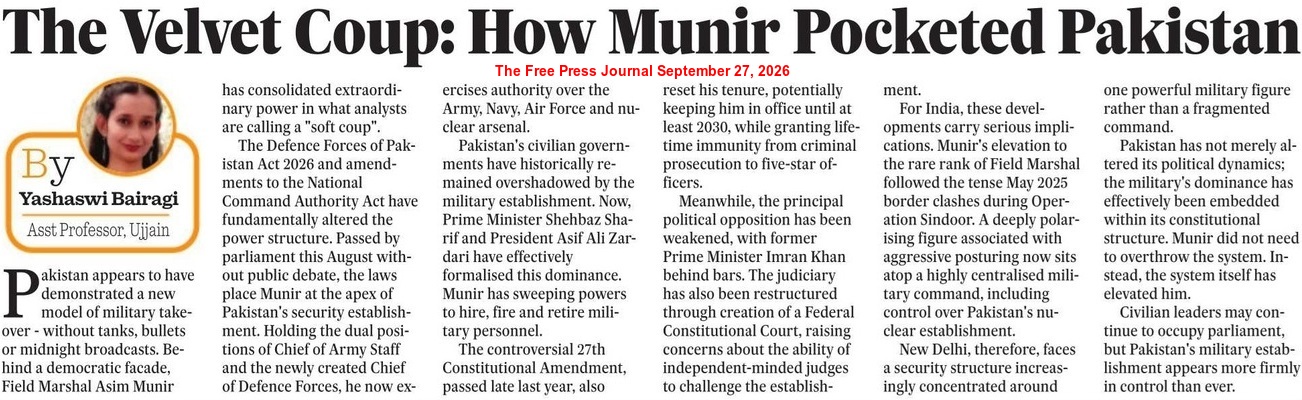
The close ties between China and Pakistan have consistently created new equations in South Asian geopolitics. Hence, the inaugural meeting of the Pakistan-China Boundary Joint Commission, held on September 16-17, 2026 in Islamabad, has raised concerns for India. The roots of this Boundary Joint Commission lie in the 2013 Agreement on the Boundary Management System (and also in the historic 1963 Bilateral Border Agreement). Against the backdrop of the geopolitics of that period of time, Islamabad handed over the strategic Shaksgam Valley, located in Pakistan-occupied Kashmir (PoK), to Beijing in order to put New Delhi under tremendous diplomatic pressure.
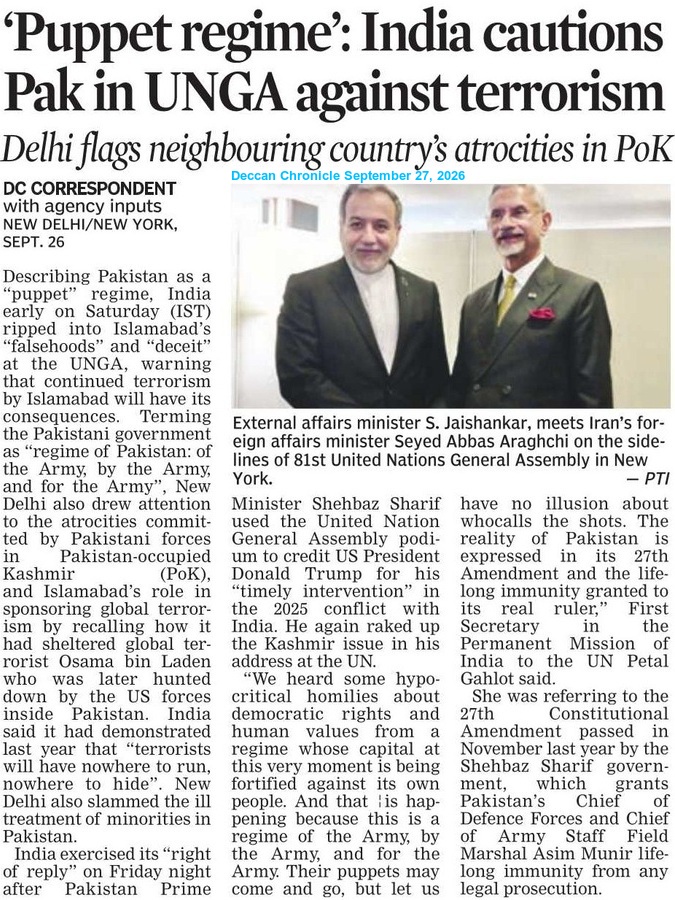
As expected, India strongly rejected the inaugural meeting of the Pakistan-China Boundary Joint Commission, stating that it had no legal basis over Indian territory under illegal occupation. According to New Delhi, there is no legitimate international border between Pakistan and China since Jammu and Kashmir, and Ladakh are integral parts of India. This region geographically separates these two countries. Naturally, Pakistan has no legal right to enter into a bilateral agreement regarding illegally occupied land. Therefore, India maintains that the so-called Commission cannot affect its sovereignty.
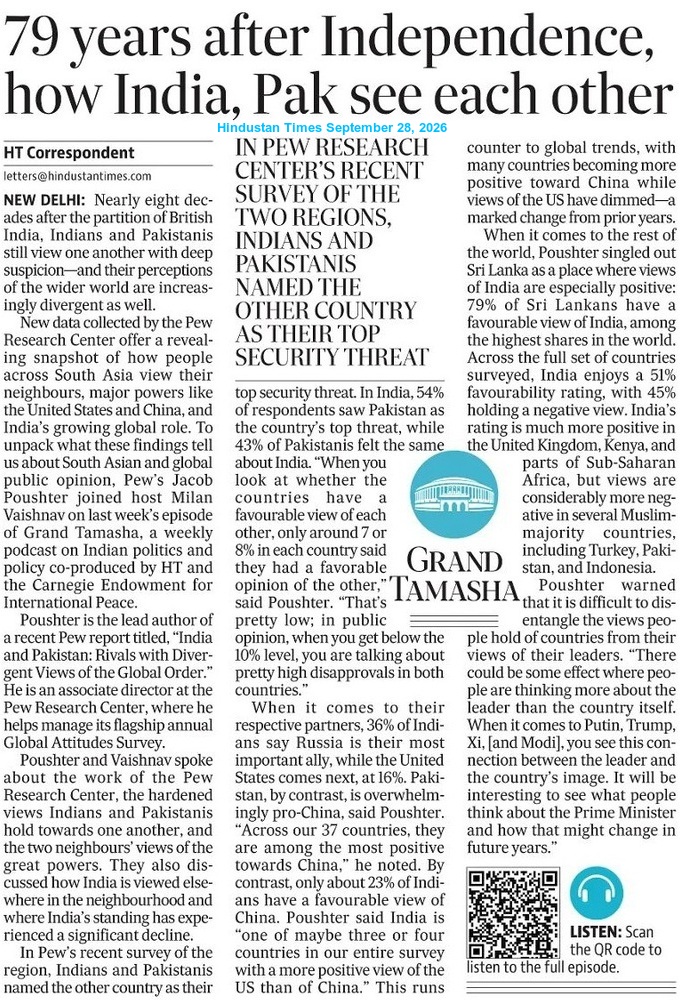
It may be noted that PoK holds immense geopolitical, as well as economic, significance, as it serves as a key hub for China’s ambitious Belt and Road Initiative (BRI). Beijing is developing the China-Pakistan Economic Corridor (CPEC) mainly to establish a direct route to the Pakistani port of Gwadar on the Arabian Sea, thereby reducing reliance on the Strait of Malacca. Consequently, China is now particularly interested in joint border management with Pakistan in order to safeguard its vast capital and strategic interests in the region. In fact, the specific timing chosen by China behind this move is quite significant.
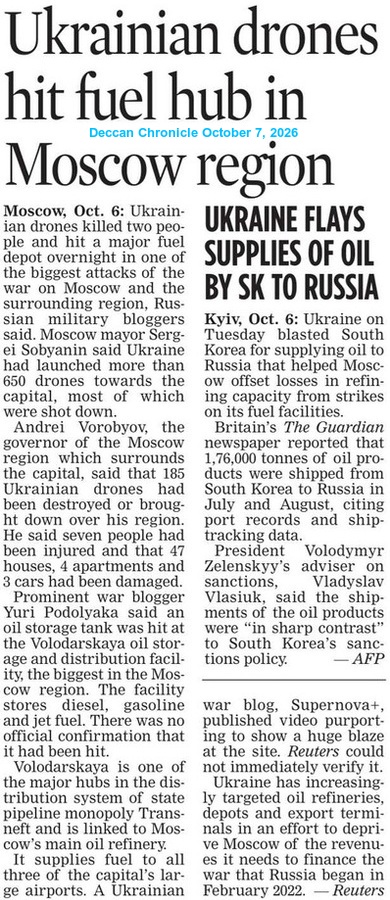
During his recent visit to India (to attend the 18th BRICS Summit), Chinese President Xi Jinping conveyed messages regarding bilateral trade and the easing of border tensions. At the same time, the Asian Giant established a Joint Commission with Pakistan. This dual approach is indicative of China’s two-pronged strategy. Clearly, there is no long-term plan behind this to respect India’s sovereignty. Instead, it is a long-term strategy of China to maintain psychological and strategic pressure on India. Firstly, the move challenges India’s sovereignty by indirectly granting international legitimacy to the illegal presence of Pakistan in PoK. Secondly, Beijing wants to trigger a two-front war along India’s northern and western borders through a joint presence (with Pakistan) near the Karakoram Pass.
Hence, China’s strategy of incremental and tactical actions to establish territorial and legal control – often termed grey-zone warfare or salami-slicing – has fundamentally altered the dynamics along the Line of Actual Control (LAC), posing a complex diplomatic test for India. As a permanent solution to this problem cannot be achieved through diplomatic objections alone, India must now build global public opinion against the CPEC. It is also necessary to adopt a more aggressive policy regarding the PoK on the international stage.
India’s strategy for handling the collusive threat from China and Pakistan relies heavily on rapidly upgrading its defence capabilities, the development of border infrastructure and frontier connectivity. Now, the primary task (of India) is to remain vigilant against the strategic traps lurking behind gestures of friendship at the diplomatic table.
Meanwhile,











Boundless Ocean of Politics on Facebook
Boundless Ocean of Politics on Twitter
Boundless Ocean of Politics on Linkedin
Contact us: kousdas@gmail.com

 ISMC
ISMC
