

US, Iran Engage In Fight, Yet Again
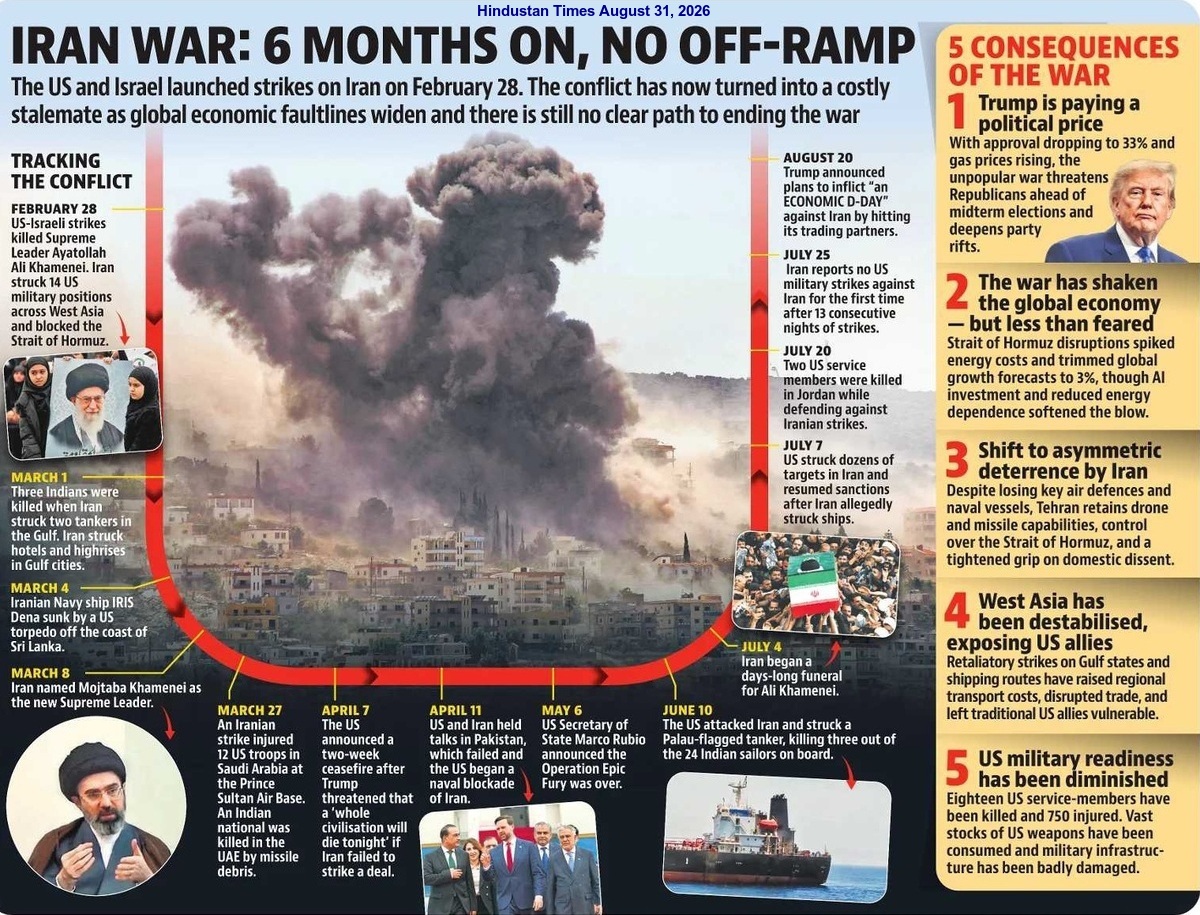
West Asia heats up again amidst the standoff between the US and Iran. Reports suggest that US forces destroyed two military launchers on Iran’s Larak Island on August 30, 2026 night, triggering a rapid wave of Iranian retaliatory strikes across West Asia on August 31 morning. Iran also carried out attacks on two US military bases in Jordan.
The US launched a direct attack on the Islamic Republic for the last time in July 2026. US forces became active yet again after nearly a month. The Donald Trump Administration has alleged that Iran was preparing to launch rocket attacks at Hormuz from Larak Island and sea mines were being mounted on the rocket launchers. After observing these manoeuvres by the Islamic Revolutionary Guard Corps (IRGC), US forces launched a direct attack targeting those very rocket launchers on Larak Island, destroying two of them. Tehran has claimed that many innocent civilians, as well as Iranian soldiers, were killed in this US attack and many others were seriously injured.
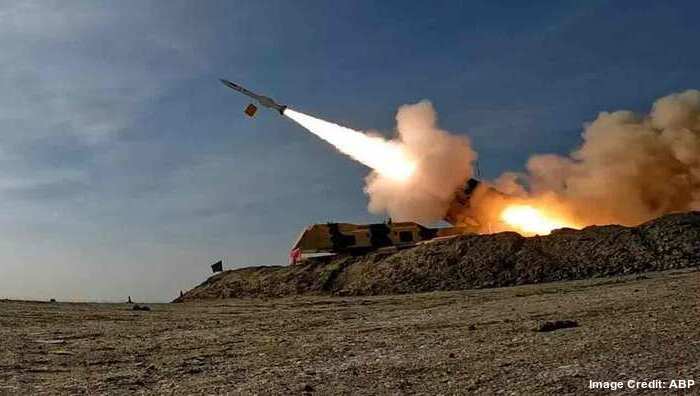
Iran has further claimed that it launched a combined missile and drone operation, codenamed Punishment of the Aggressor, targeting the King Hussein and Al-Azraq military bases in Jordan, and the Al Minhad Airbase in the UAE on August 31 morning. According to Tehran, American technical infrastructure in Jordan has been completely destroyed. Meanwhile, the IRGC has issued a statement, mentioning: “The Strait of Hormuz would remain closed as long as the US continued making threats and intervening in maritime movements in the region. Iran controlled the Strait of Hormuz and would punish the aggressor with an even more intense counter-attack.”
Meanwhile, former Israeli intelligence official Danny Citrinowicz has stressed that the latest attacks should be considered as a post-Khamenei doctrinal shift, as Tehran is fully prepared to initiate offensive operations rather than relying primarily on deterrence. “Today Iran is also prepared to initiate offensive moves and to rely deeply on its missile array, drones and regional proxies,” he wrote on X. Citrinowicz added: “The leadership in Tehran is prepared to take significant risks because it sees the current confrontation as a decisive battle over its regional status and its ability to shape the security reality in the Middle East.“
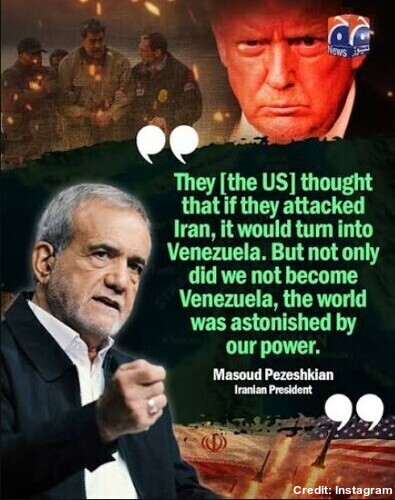
‘Trump Wanted To Turn Iran Into Venezuela’
Iranian President Masoud Pezeshkian recently claimed that the US failed to weaken and isolate the Islamic Republic, stressing that his country emerged as a stronger and more cohesive power from months of confrontation.
Speaking during a ceremony renewing allegiance to Grand Ayatollah Seyyed Ruhollah Mostafavi Khomeini – the founder of the Islamic Republic, Pezeshkian said that Iran was confronting a comprehensive war spanning the economic, military and security fields. “They wanted to turn Iran into Venezuela,” added the President. According to Pezeshkian, Iran, however, has emerged as a regional power and “astonished the world” through its resilience, solidarity and internal cohesion.
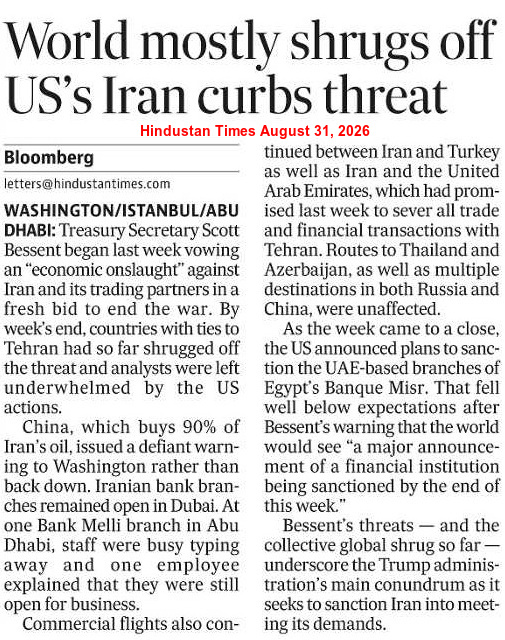
The Iranian President made the claim days after his US counterpart Donald John Trump announced the “most crushing economic operation” against Tehran, promising an unprecedented campaign of economic warfare and isolation against the West Asian nation. Meanwhile, Pezeshkian hinted that Tehran wanted a diplomatic path out of the present confrontation. IRNA news agency quoted the President as saying: “Iranian officials are discussing almost daily how to end the current condition of ‘no war, no peace’.” At the same time, he made it clear that Tehran would not make concessions in order to reach an agreement with Washington DC, stating that any understanding would have to preserve Iran’s “principles and values” while ensuring that its adversaries would not consider launching another attack.
According to Pezeshkian, war itself offers no solution. However, the continuing hostilities damages Iran’s economy. He claimed that Iran was facing difficulties in attracting investment because of the constant threat of renewed fighting. “Therefore, the challenge is to break the deadlock through ‘logic’ while preserving the military strength,” stated the President.
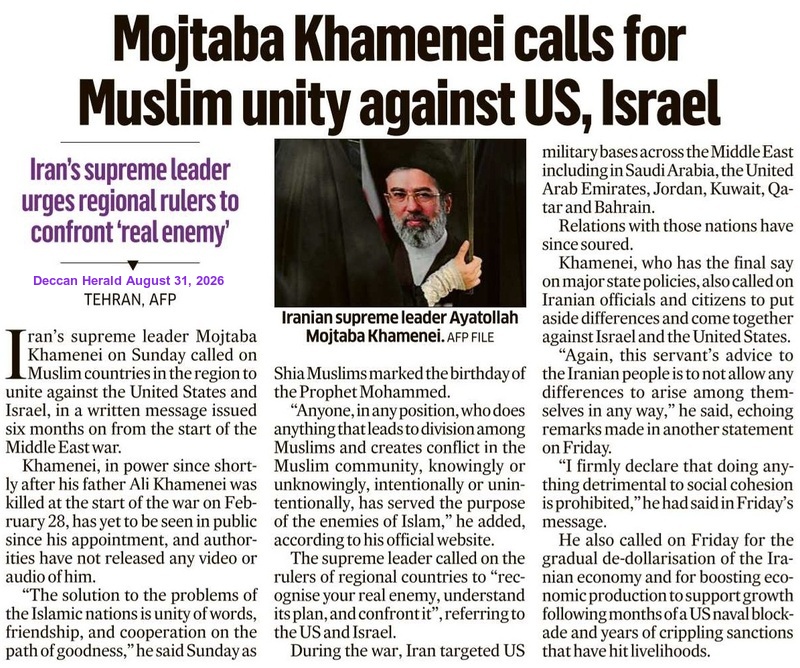
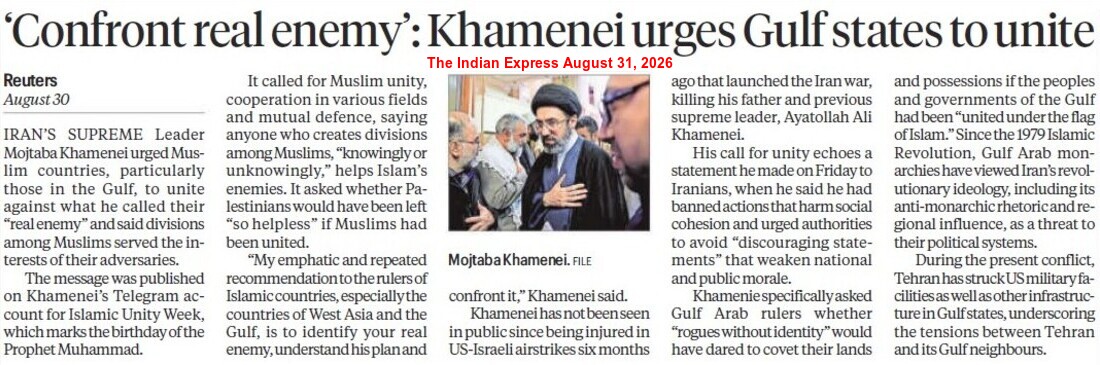
Interestingly, President Pezeshkian’s remarks echoed increasingly assertive statements from senior Iranian security officials. Earlier, Major General Mohsen Rezaei, the Secretary of the Supreme National Security Council, said that Iran’s defensive strategy evolved significantly during the conflict. “Iran today is not Iran before the war,” he added. Rezaei further said that perceptions of the US, too, changed after the confrontation.
For his part, Vice President Mohammad Reza Aref said that the Government of Iran would not allow the economic stability or livelihoods of Iranian people to become targets of the US’ “economic terrorism”. Hence, Tehran has amended its military doctrine, making it more “offensive” from a traditionally “defensive” one.
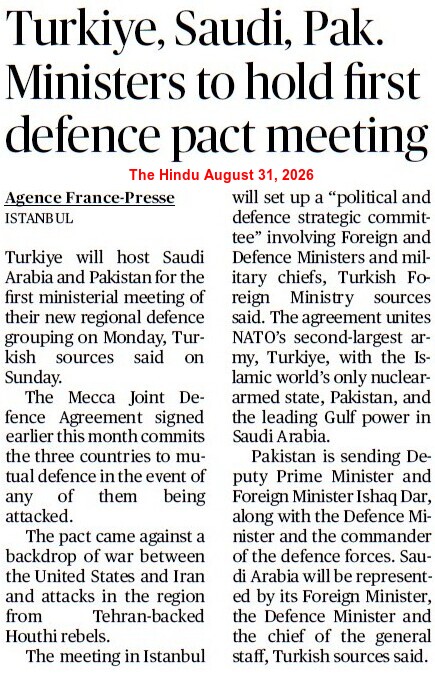
As far as the New Regional Security Order is concerned, Speaker of the Iranian Parliament Mohammad Bagher Ghalibaf said that Tehran received “numerous messages” from neighbouring countries in this regard. They are also ready to bolster economic cooperation with Tehran. “We’ve received numerous messages from neighbouring countries about shaping new security arrangements and economic cooperation in the region,” he wrote on X.
Meanwhile, Ghalibaf accused the US of putting the security of its own regional allies at risk through policies pursued primarily for Israel, stressing: “A homegrown, independent order is what will actually deliver peace and security.”
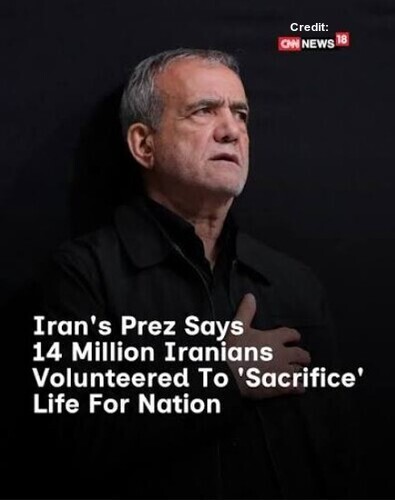
The top Iranian political leadership is of the opinion that the ongoing war accelerates a regional shift away from dependence on US security guarantees. They believe that the confrontation has exposed the vulnerability of countries hosting US military forces, apart from demonstrating the potential costs of allowing their territories to be used for launching attacks against Iran.
Meanwhile,
Boundless Ocean of Politics on Facebook
Boundless Ocean of Politics on Twitter
Boundless Ocean of Politics on Linkedin
Contact us: kousdas@gmail.com

 ISMC
ISMC
