

Forgotten Cows Survived 130 Years On Remote Island
In the late 19th Century, a small group of cattle was left behind on Amsterdam Island, a remote spot in the subantarctic region. Against the odds, the herd survived and adapted to the island’s harsh conditions, becoming a rare case of feralisation. A detailed genetic study later revealed their fascinating evolutionary journey. However, the cattle were wiped out in 2010, sparking ongoing debate over the ethical and scientific challenges of preserving domestic biodiversity.
The study of these island cows sheds light on several key questions: Where did they come from? How did they manage to survive and thrive on an island that seemed uninhabitable? But it also raises new concerns: Was it really necessary to wipe out this wild population in 2010?
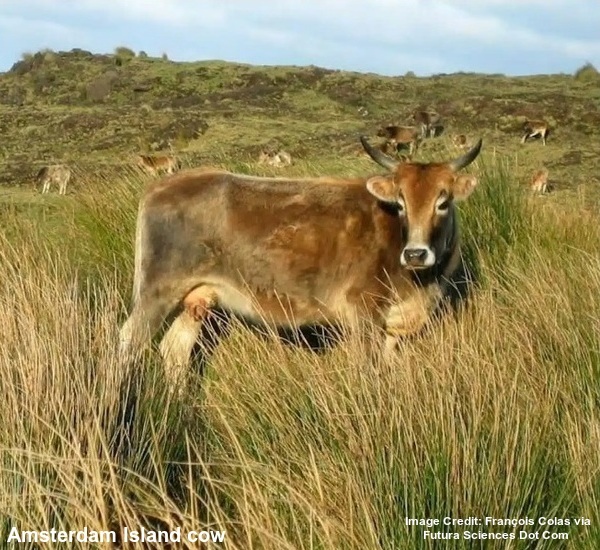
Some protected natural areas harbour unique animal populations that show an astonishing ability to adapt to unforeseen environments. One such example is the population of cows that was abandoned on Amsterdam Island in the southern Indian Ocean, part of a feralisation process. These cattle lived independently for over a century, becoming an unexpected part of the island’s ecosystem until 2010.
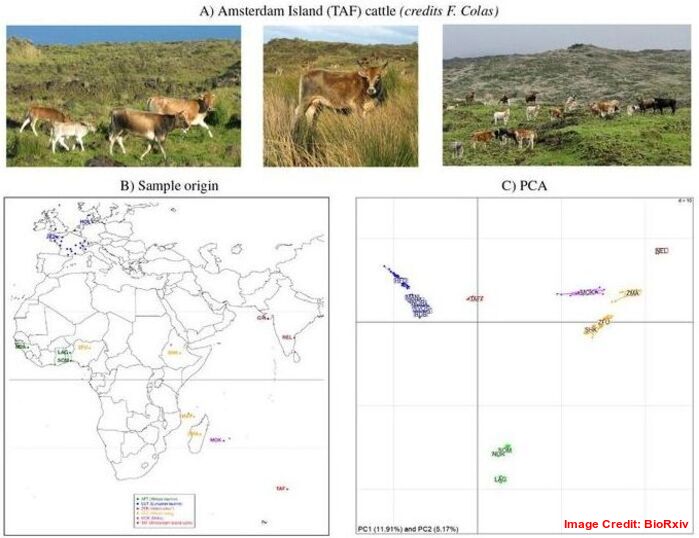
Amsterdam Island is located 4,440km southeast of Madagascar and is about the size of Noirmoutier. The island has a temperate oceanic climate, constantly battered by winds and subjected to frequent rainfall, particularly in winter. With no permanent water sources, it seemed almost impossible for cattle to survive there. The only human presence on the island was a scientific base set up in 1949. In 2006, the island became part of the French Southern and Antarctic Lands (TAAF) national nature reserve, a biodiversity sanctuary recognised as a UNESCO World Heritage site.
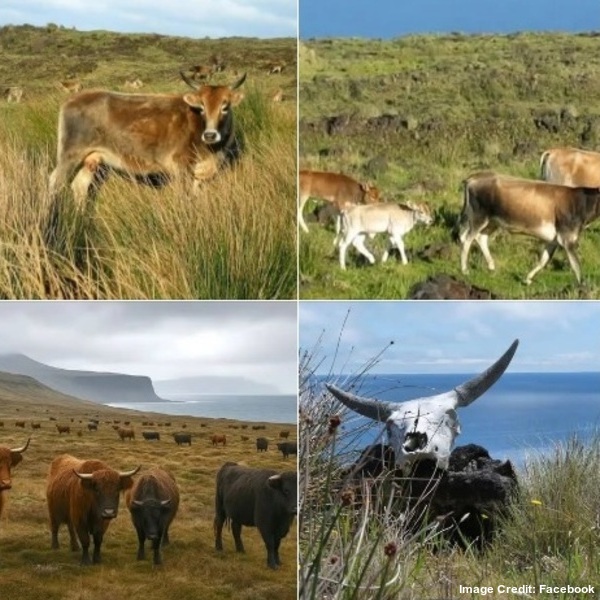
Historical records suggest that a small herd of cattle may have been abandoned there at the end of the 19th Century. To everyone’s surprise, these cattle not only survived, but thrived, growing to nearly 2,000 animals over just a few decades. However, how did these cows manage to adapt and become wild again in such an inhospitable environment? This story has been pieced together using genetic material from 18 animals, which was collected during two research expeditions in 1992 and 2006.
Collected from Futura. Futura Sciences published this article authored by Marie Pireddu, on February 10, 2026.
Meanwhile,












Boundless Ocean of Politics on Facebook
Boundless Ocean of Politics on Twitter
Boundless Ocean of Politics on Linkedin
Contact us: kousdas@gmail.com

 ISMC
ISMC
