

Pakistan Scrambles Fighter Jets To Middle East
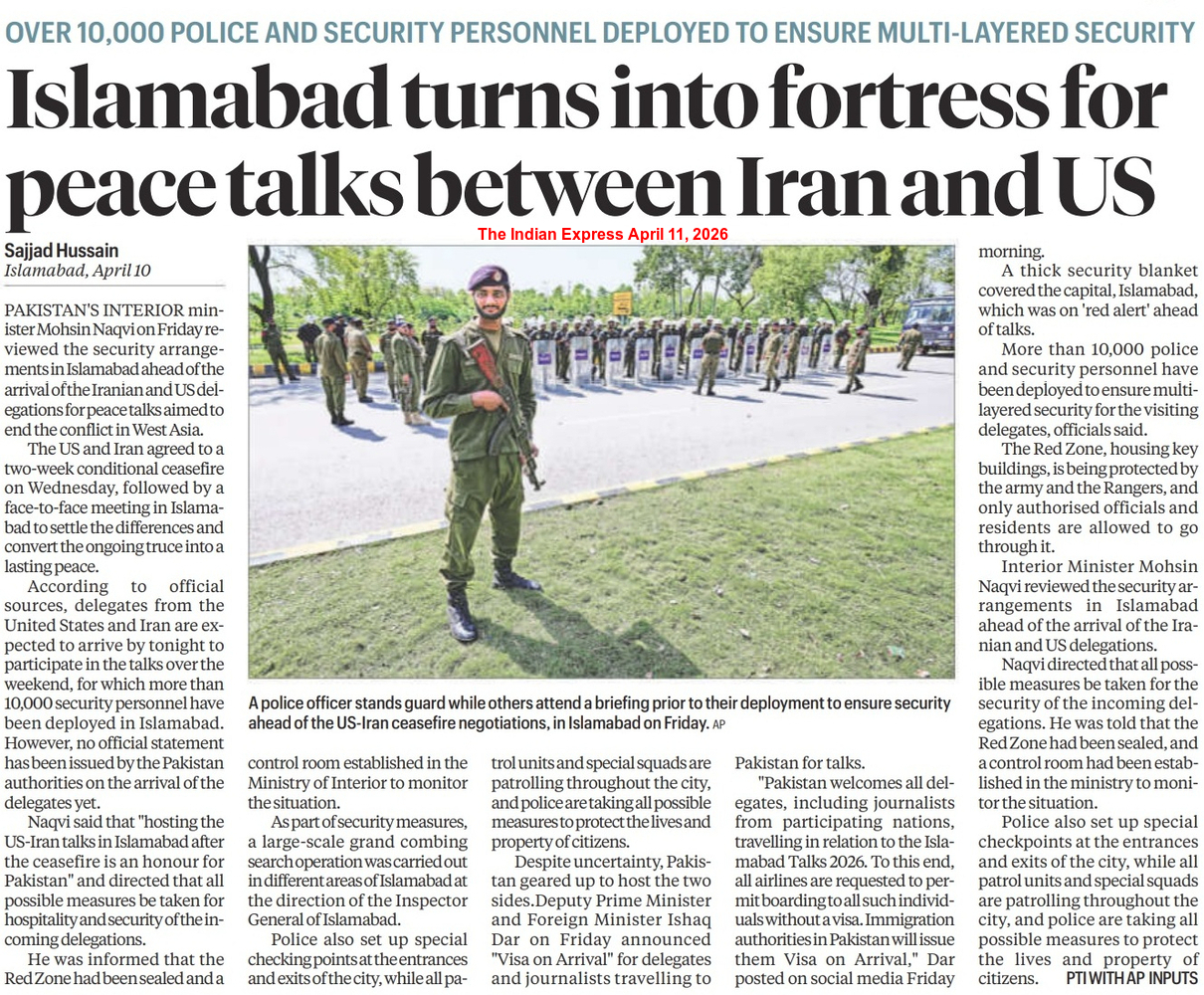
Pakistan sent a fleet of fighter jets to West Asia on April 10, 2026, ahead of the commencement of US-Iran talks on a ceasefire in Islamabad. The local media reported that Islamabad sent F-16 Fighting Falcon and JF-17 Thunder combat aircraft of the Pakistan Air Force (PAF), alongside C-130 Hercules military transport planes, IL-78 aerial tankers and an aircraft equipped with state-of-the-art airborne radar early warning system, the Airborne Early Warning and Control (AEW&C) system.
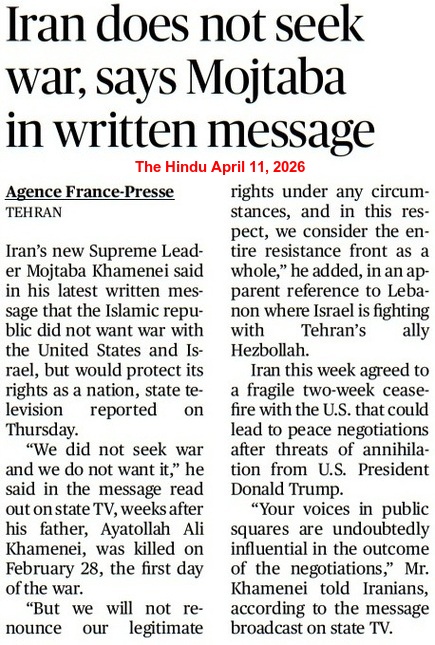
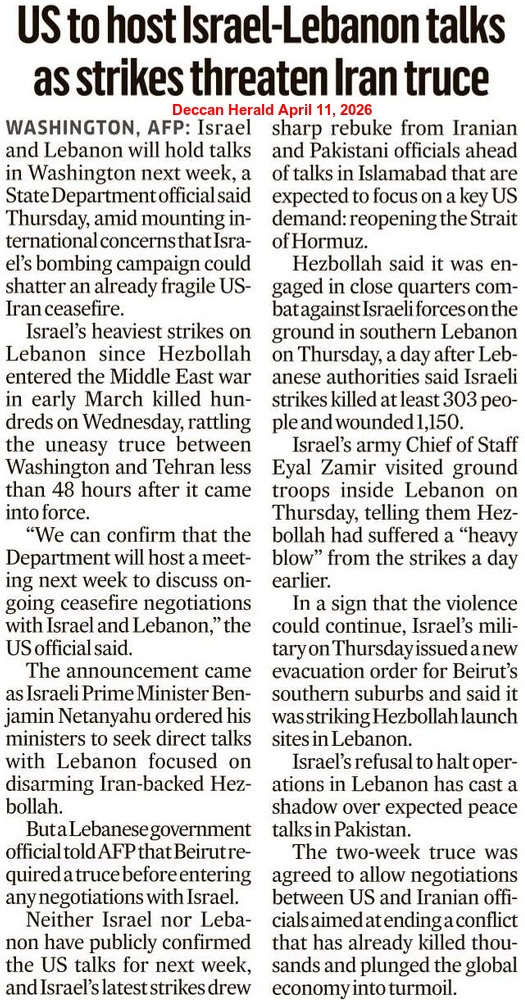
The Pakistani media also reported that the PAF carried out its one of the largest peacetime operations to secure the aircraft of the Iranian delegation from any Israeli “misadventures“. Pakistani Prime Minister Mian Muhammad Shehbaz Sharif and Army Chief Field Marshal Syed Asim Munir Ahmed Shah feared that Iranian representatives could fall victim to an Israeli attack while traveling from Tehran to Islamabad. Hence, they arranged an Iron Escort. The US and Iran agreed to a two-week temporary ceasefire, mediated by Pakistan with the assistance of China, on April 8, 2026. Meetings to finalise the terms and duration of the ceasefire are scheduled to begin in the Pakistani capital on April 11, 2026.
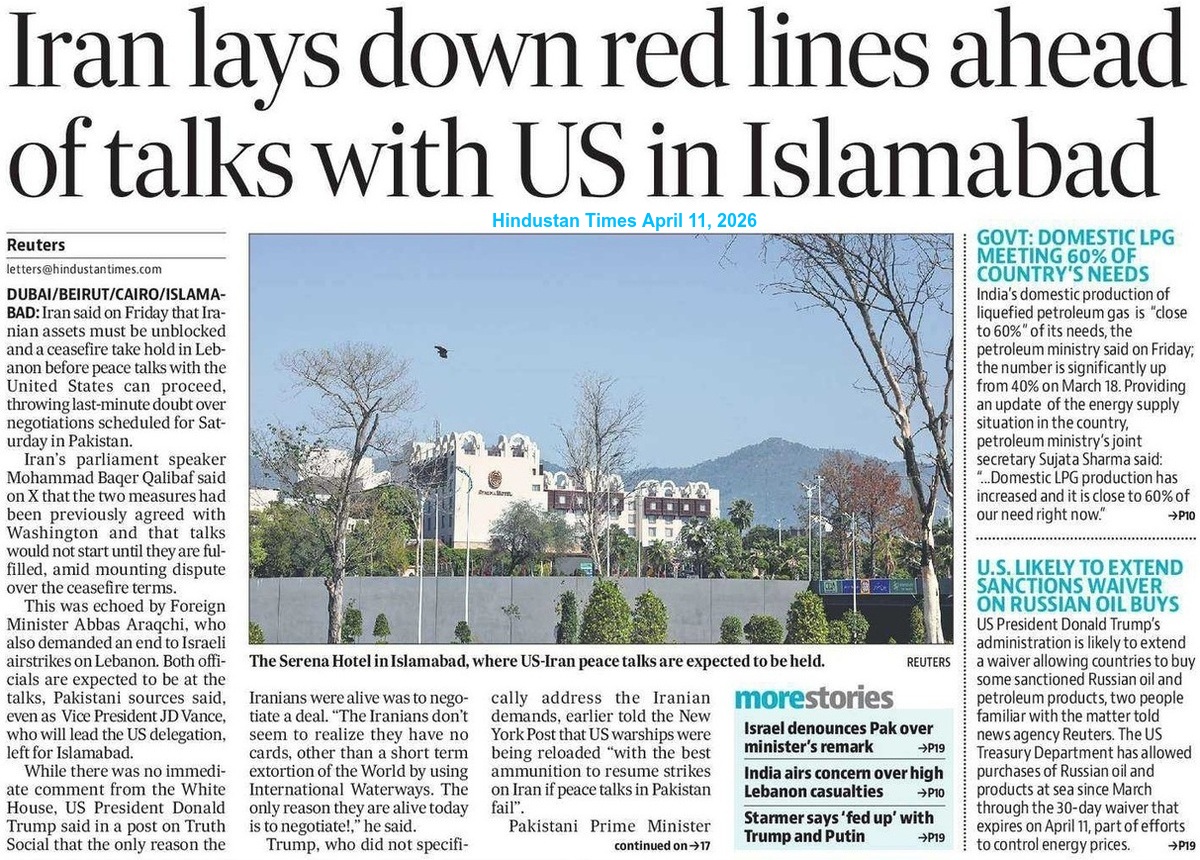
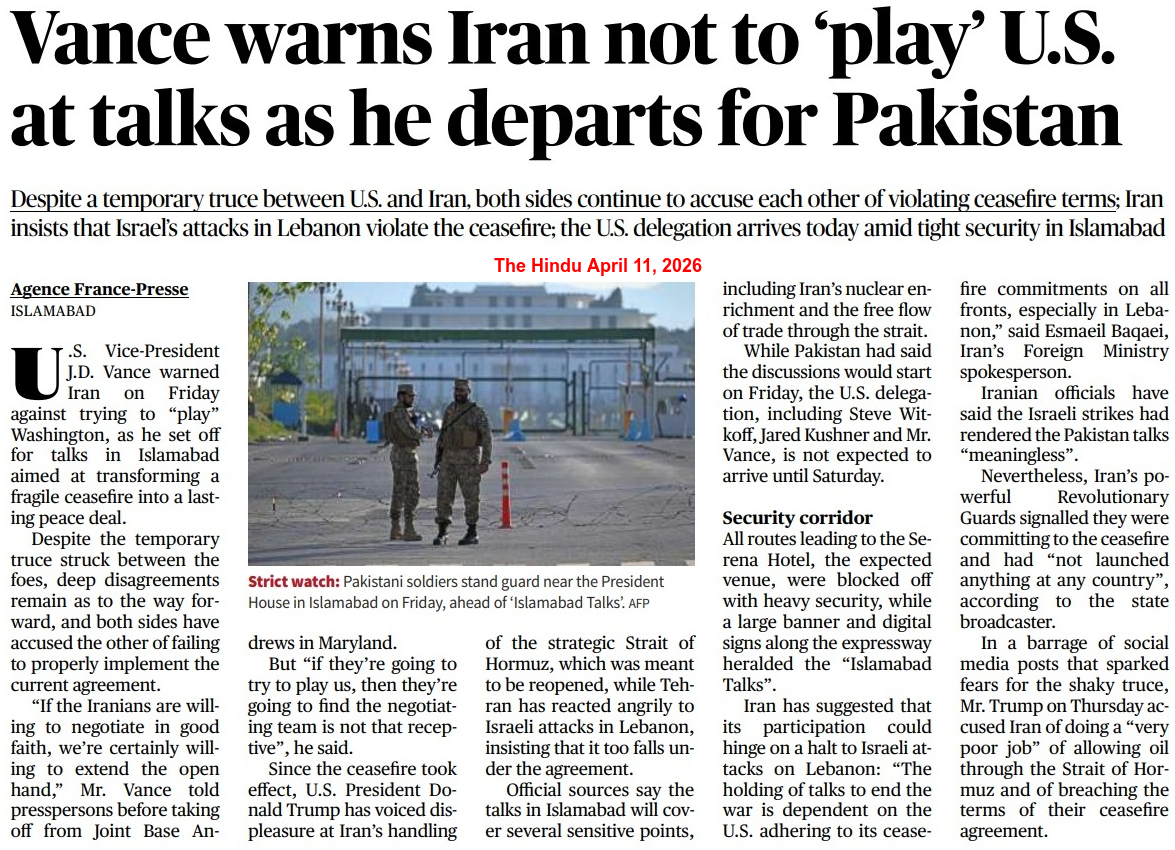
It may be noted that it is the first direct, high-level meeting between Washington DC and Tehran since the 1979 Islamic Revolution in Iran. While Vice President James David Vance is leading the US delegation that included Steven Charles Witkoff, the US Special Envoy to the Middle East, and Jared Corey Kushner, the son-in-law of President Donald John Trump and his former adviser; Parliament Speaker Mohammad Ghalibaf and Foreign Minister Abbas Araghchi are leading the 70-member Iranian side. Pakistani Prime Minister Shehbaz Sharif and Foreign Minister Muhammad Ishaq Dar are also scheduled to attend the peace talks.
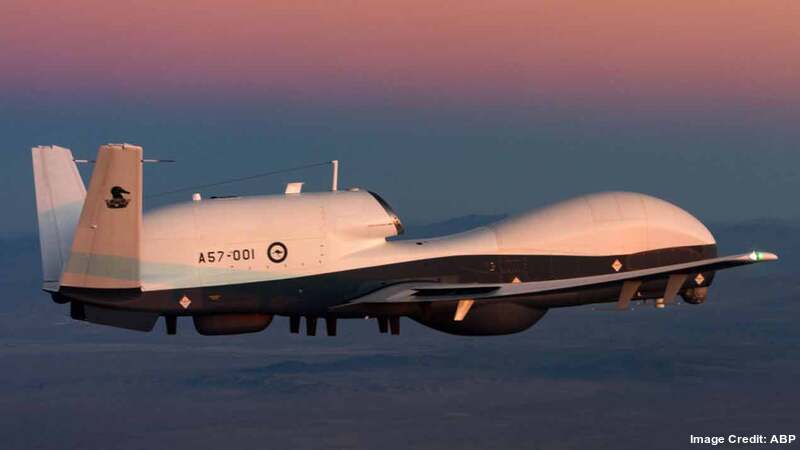
US’ MQ 4C Triton Drone Disappears Over Hormuz
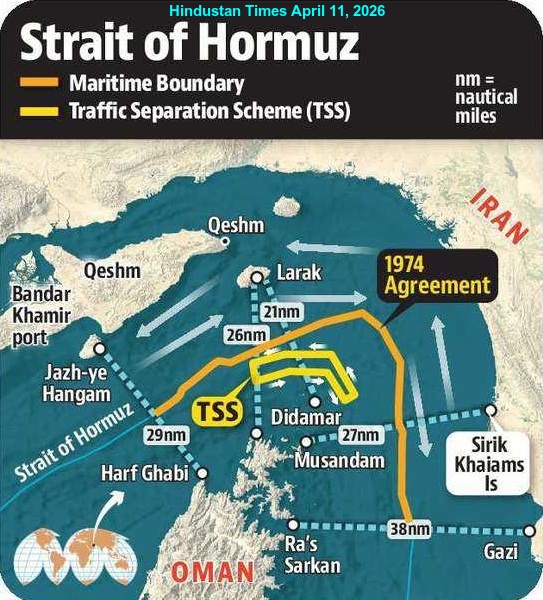
The MQ-4C Triton, a high-value US Navy surveillance drone worth over USD 200 million, went missing while conducting surveillance over the Persian Gulf and the Strait of Hormuz on April 10, 2026. The incident triggered questions across military and intelligence circles about whether it suffered a technical failure, was shot down or simply fell off tracking systems in a contested airspace.
Media reports suggest that the drone was returning toward the Naval Air Station Sigonella in Italy after completing roughly three hours of routine surveillance in one of the world’s most sensitive maritime corridors. Data from Flightradar24 has revealed that the drone made a slight turn toward Iran and rapidly lost altitude over the Strait of Hormuz before disappearing from radar. Just before its disappearance, the drone transmitted Code 7700 (the signal for an emergency landing). Shortly thereafter, contact with the MQ 4C Triton was lost.
The MQ-4C Triton is one of the most advanced unmanned aircraft in the US Navy’s fleet. Designed for high-altitude, long-endurance (HALE) surveillance, it can stay airborne for over 24 hours, operate above 50,000 feet, and monitor vast ocean regions with advanced radar and sensors. This drone is often described as the US Navy’s eyes over the ocean, supporting patrol aircraft and naval task forces across the Middle East and Indo-Pacific Region.
Meanwhile,






Boundless Ocean of Politics on Facebook
Boundless Ocean of Politics on Twitter
Boundless Ocean of Politics on Linkedin
Contact us: kousdas@gmail.com

 ISMC
ISMC Boundless Ocean Of Politics