

Killing Of Khamenei Marks Historic Escalation
The Assassination of Khamenei: A World-Altering Moment & A Dangerous One
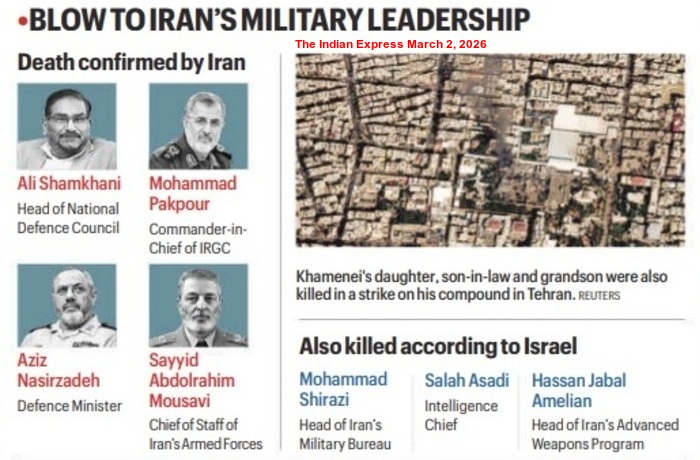
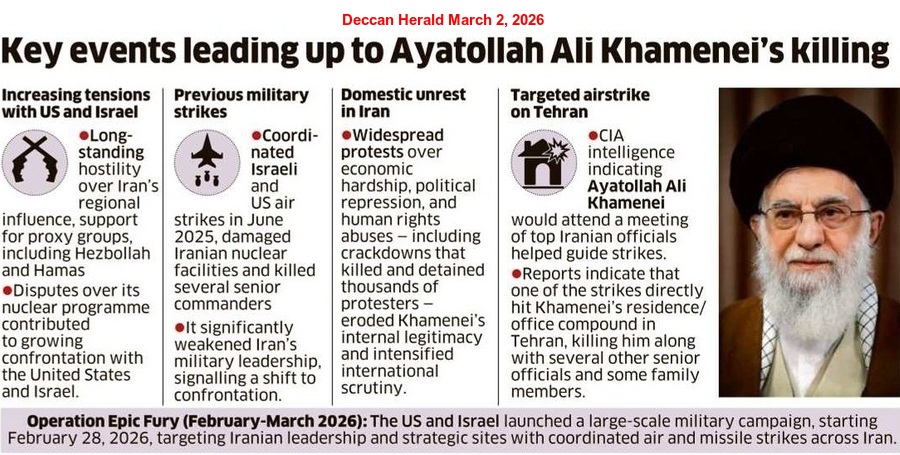
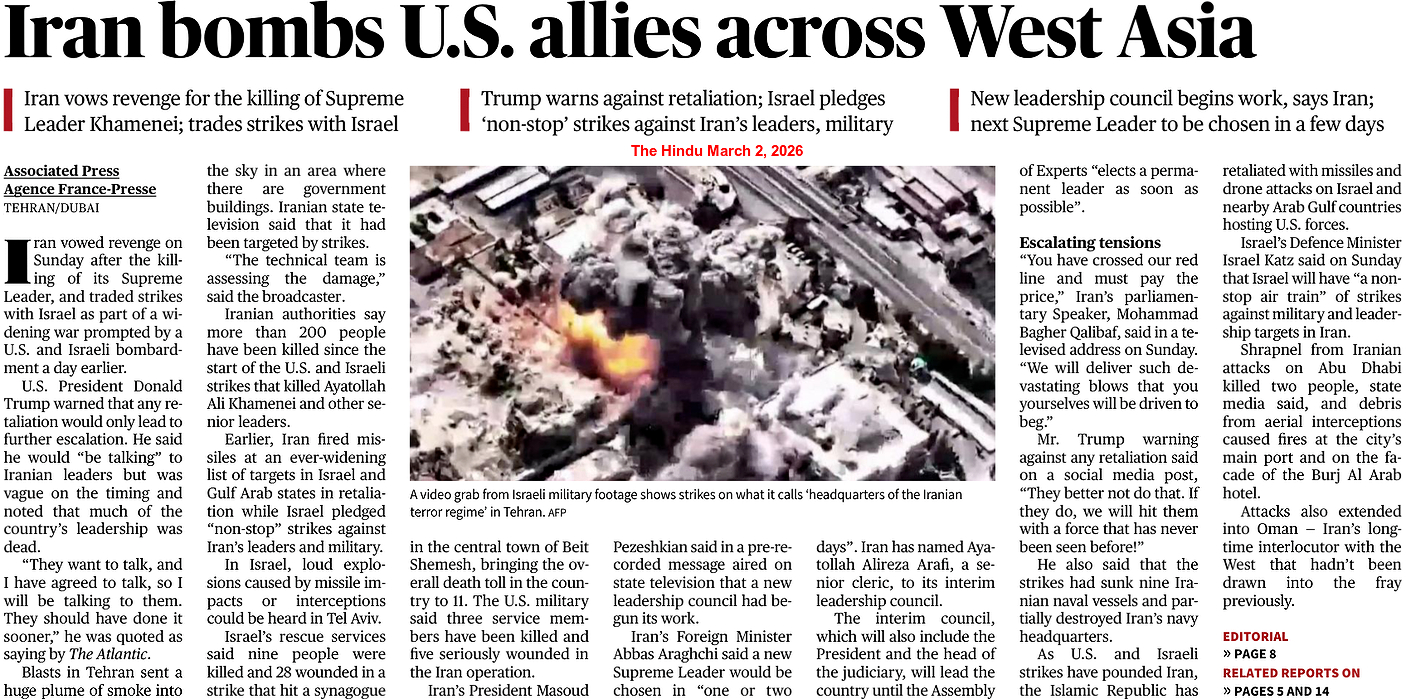
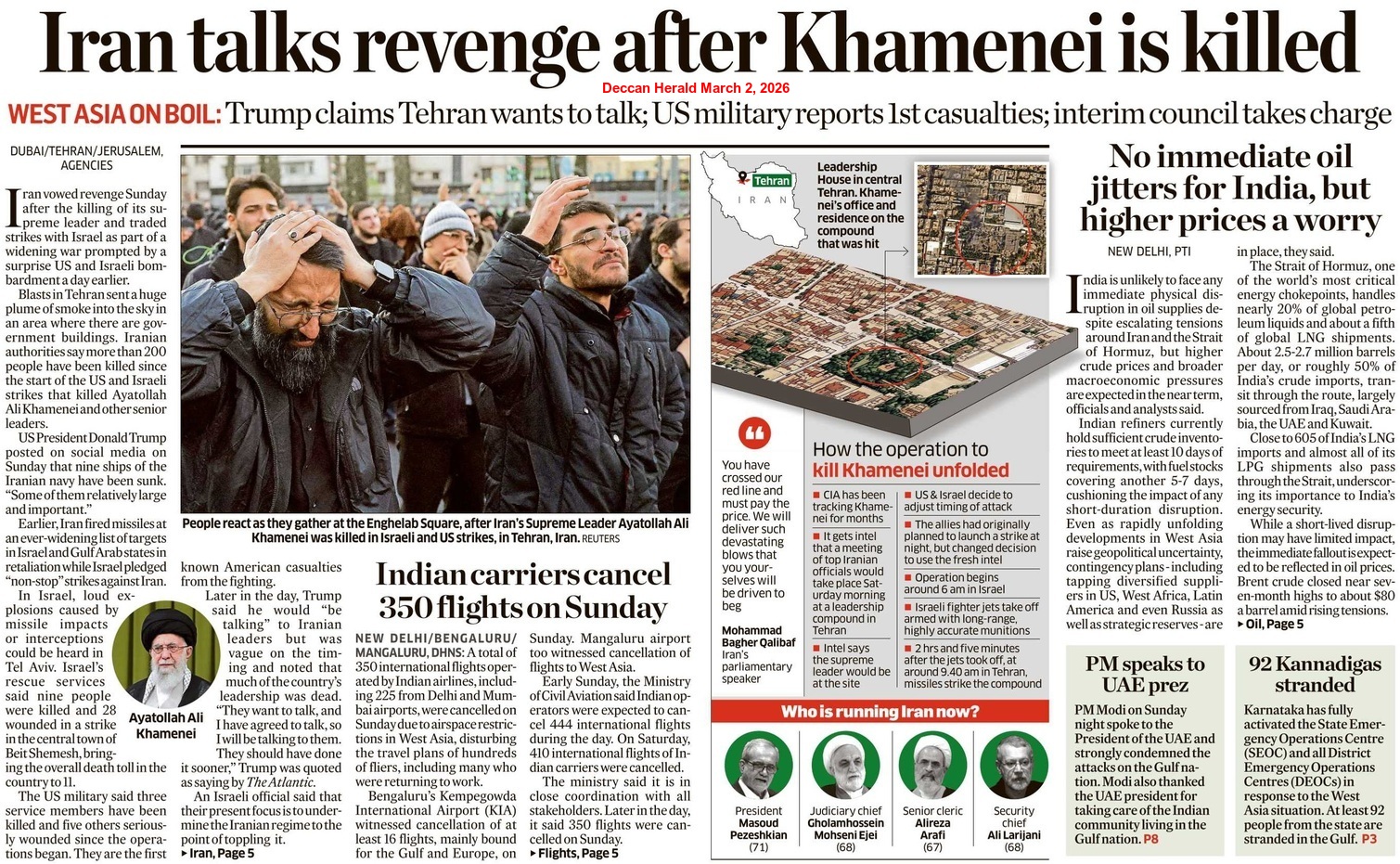
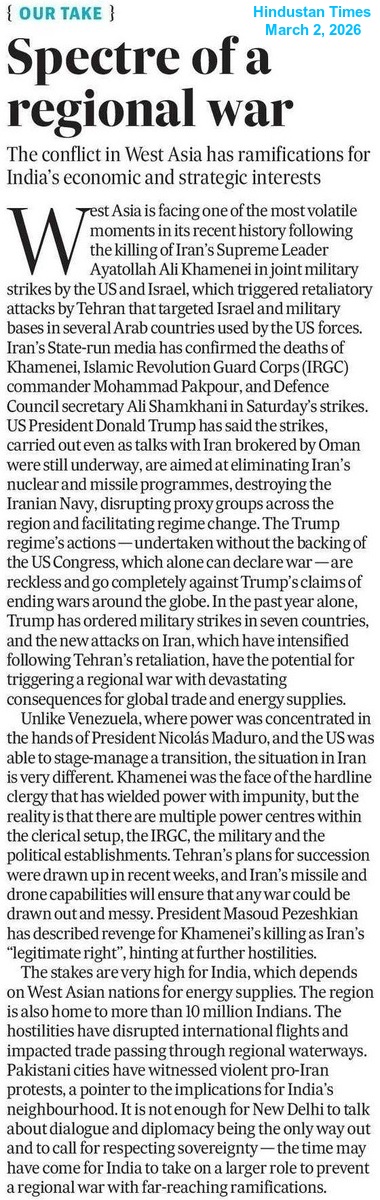
On the morning of February 28, 2026, the Middle East changed forever. Ayatollah Ali Hosseini Khamenei (April 19, 1939 – February 28, 2026), the Supreme Leader of Iran for 36 years who shaped the Islamic Republic’s identity and foreign policy more than anyone, was killed in a targeted Israeli airstrike on his compound in central Tehran. Hours later, US President Donald John Trump confirmed his death on social media. Iranian state television, after initially deflecting, eventually confirmed it too, declaring 40 days of national mourning.
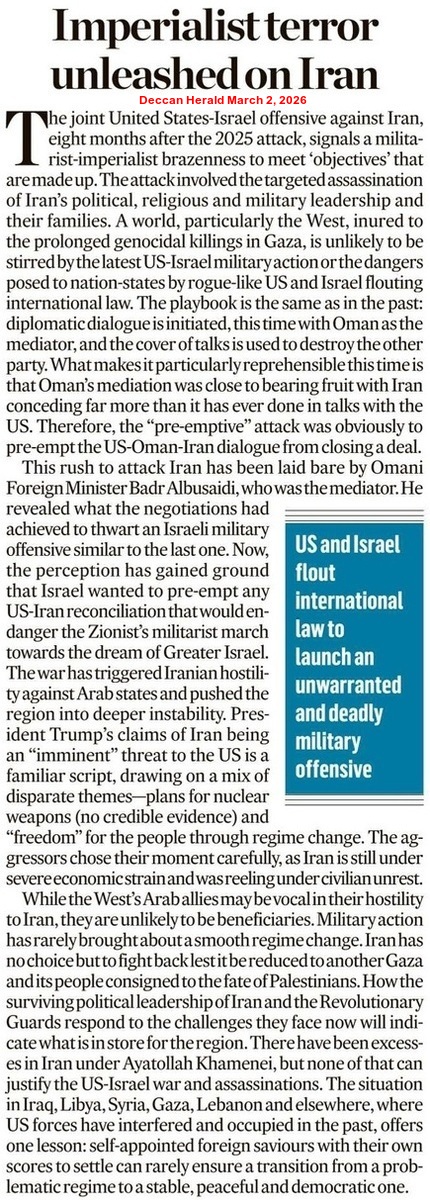
The operation, dubbed Epic Fury by the Pentagon and Lion’s Roar by the Israeli military, was months in the planning. It targeted not just Khamenei, but a sweeping network of Iran’s military and political elite IRGC commanders, intelligence chiefs, defence minister and other top officials. In the space of a few hours, Israel and the US effectively attempted to decapitate a government. The world is now monitoring what emerges from the rubble.
The End of a 36-Year Iron Rule
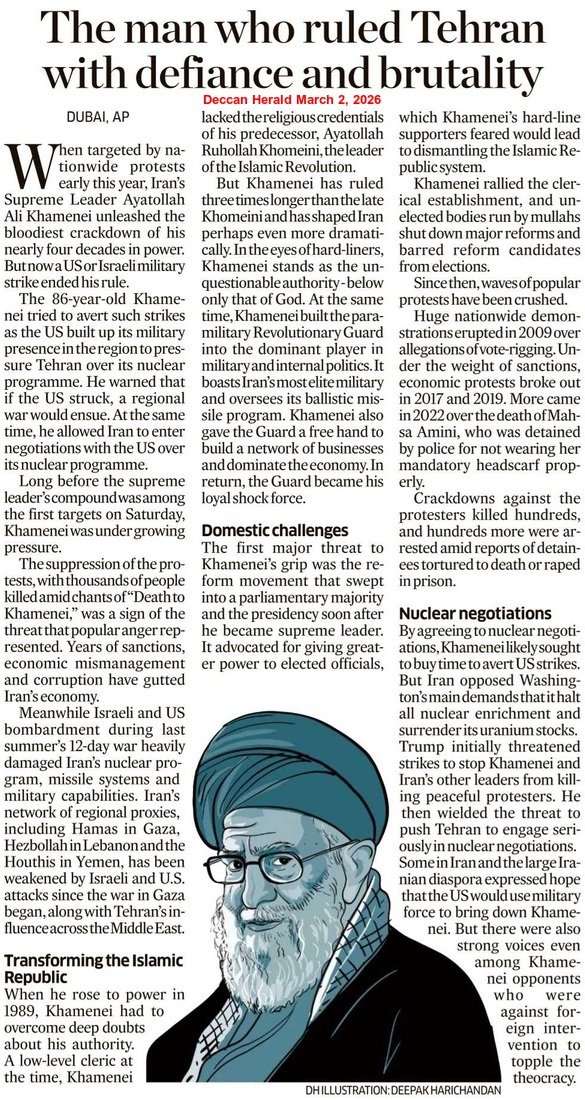
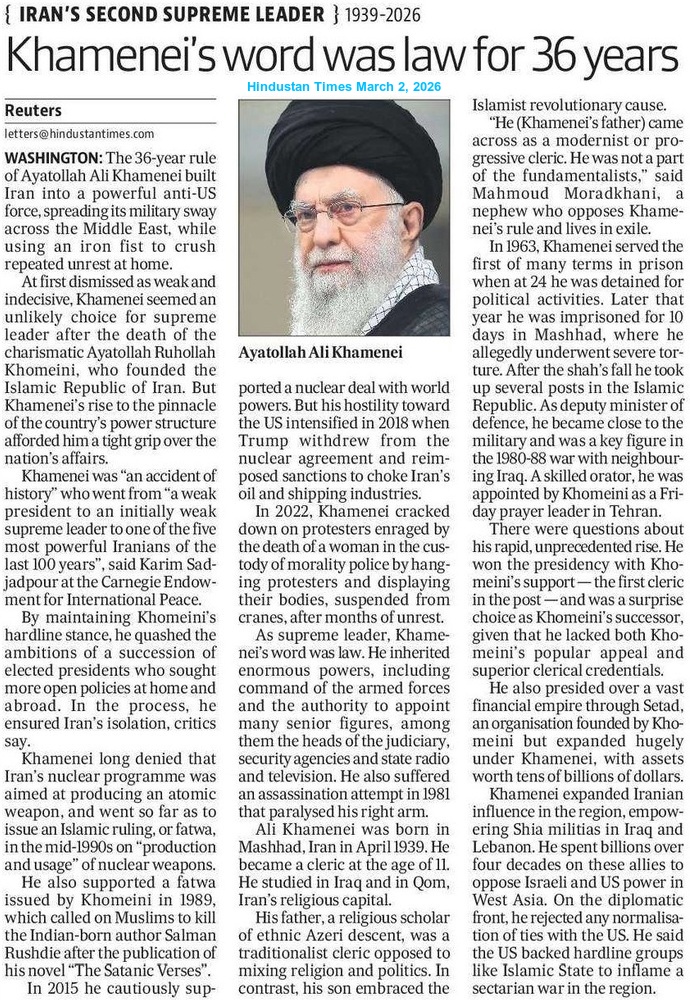
Khamenei came to power in 1989 after the death of Ayatollah Ruhollah Musavi Khomeini (May 17, 1900 – June 3, 1989), the founder of the Islamic Republic. Ayatollah Khamenei was not the obvious choice as he lacked Khomeini’s religious credentials. However, he proved to be a survivor and a strategist. Over nearly four decades, Khamenei steered Iran through wars, sanctions, internal uprisings and repeated crises with the West, always managing to preserve the regime’s core architecture.
His legacy, however, is deeply contradictory. Domestically, he oversaw the violent suppression of every major protest movement, including the Green Movement in 2009, the uprisings of 2019 and the Woman, Life, Freedom Protests of 2022. Tens of thousands were imprisoned, while many were killed. Free press, political pluralism and civil liberties were systematically dismantled under his watch.
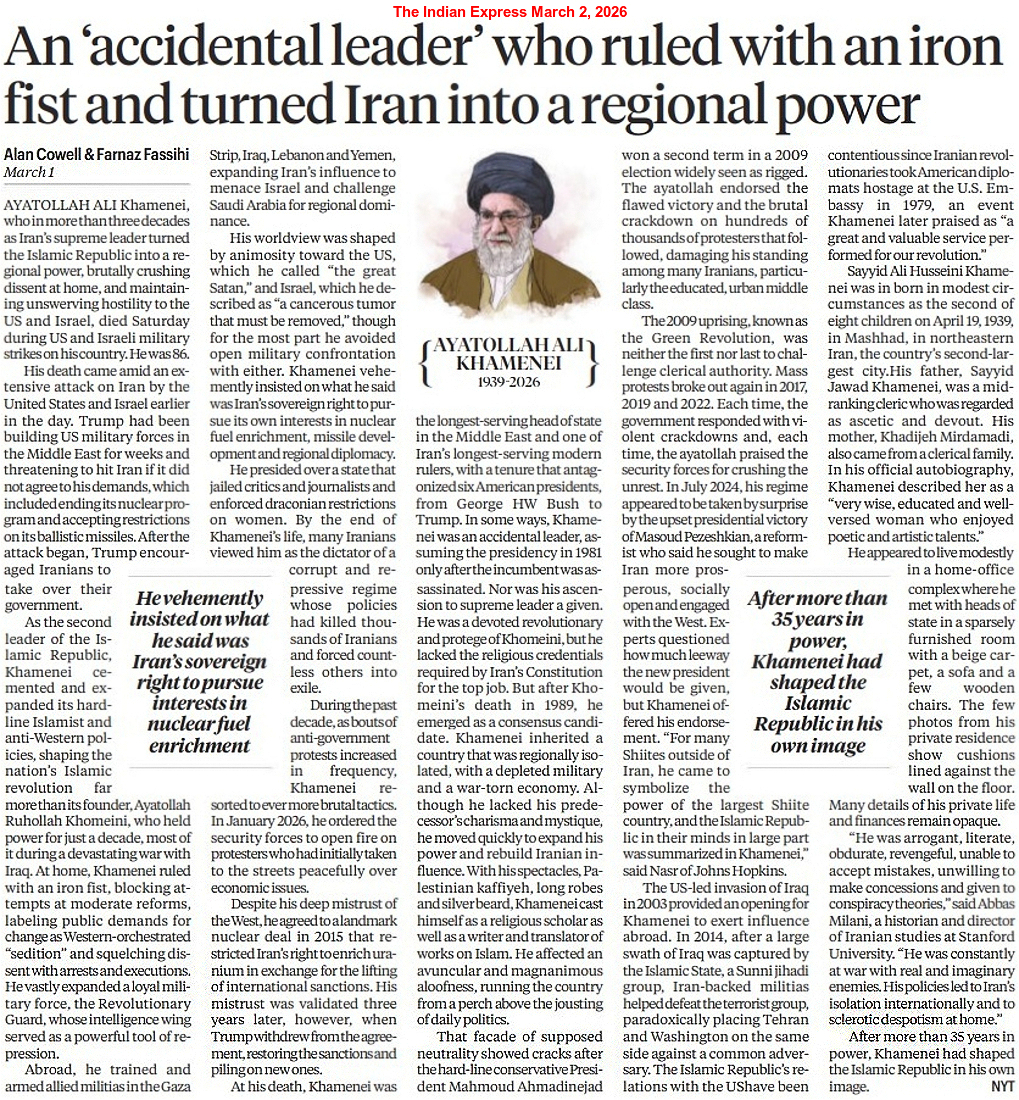
Internationally, Ayatollah Khamenei built a sprawling network of proxy forces – Hezbollah in Lebanon, Hamas in Gaza, the Houthis in Yemen, various Shia militias in Iraq and Syria – which became the primary instrument of Iranian regional power projection. This Axis of Resistance, as Tehran called it, destabilised multiple countries and repeatedly brought the region to the edge of wider war.
It was, ultimately, this strategy that led to his death. Hamas’ October 7, 2023 attack on Israel triggered a cascade: the decimation of Hezbollah’s leadership, direct Israeli-Iranian exchanges and the erosion of Iran’s air defences. By the time the strike came, Iran’s strategic shield had been steadily stripped away.
The Bold Strike, But At What Cost?
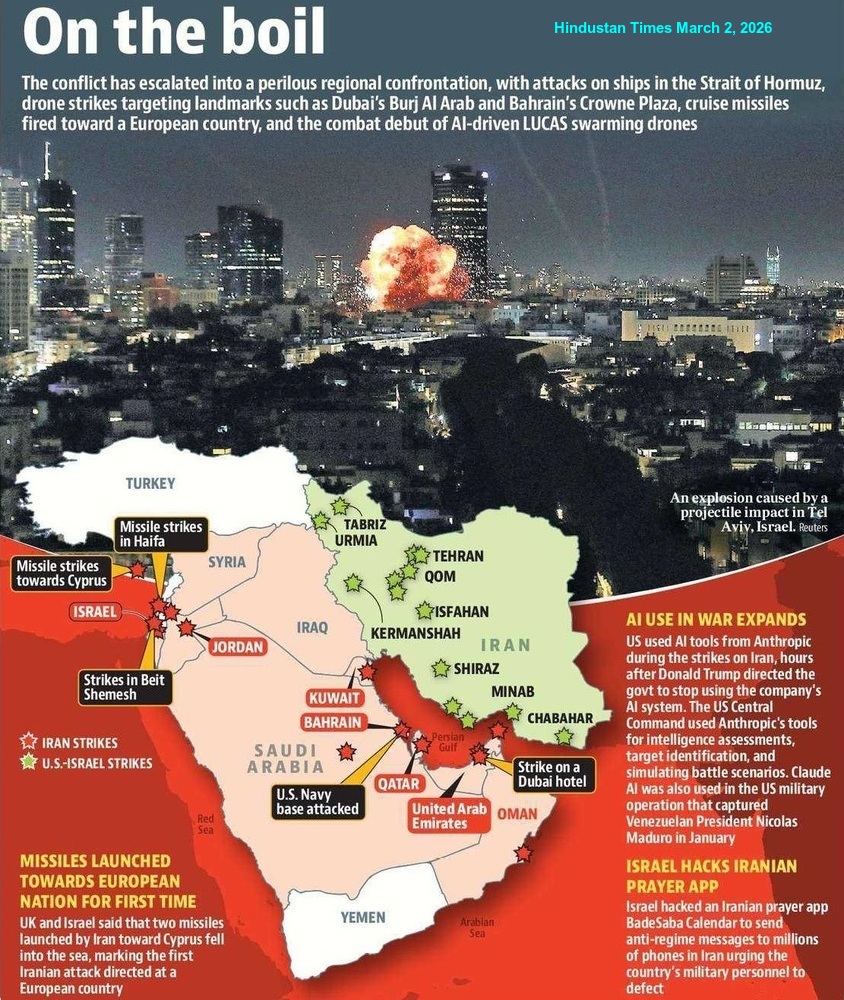
From a purely military standpoint, Operation Lion’s Roar was extraordinary. Roughly 200 Israeli fighter jets, coordinated with US naval and air assets, struck over 500 targets across Iran. Ballistic missile sites, air defence systems, nuclear-related infrastructure and leadership compounds were all hit. The level of intelligence and planning involved was remarkable.
Proponents of the strike argue that Khamenei’s Iran, as a near-nuclear state with a ballistic missile programme capable of reaching Europe and a track record of funding groups that have killed US soldiers and Israeli civilians alike, posed a genuine and growing existential threat to Israel. The failed negotiations earlier in 2026 and Iran’s persistent refusal to halt uranium enrichment (according to the US) left no diplomatic road left to travel.
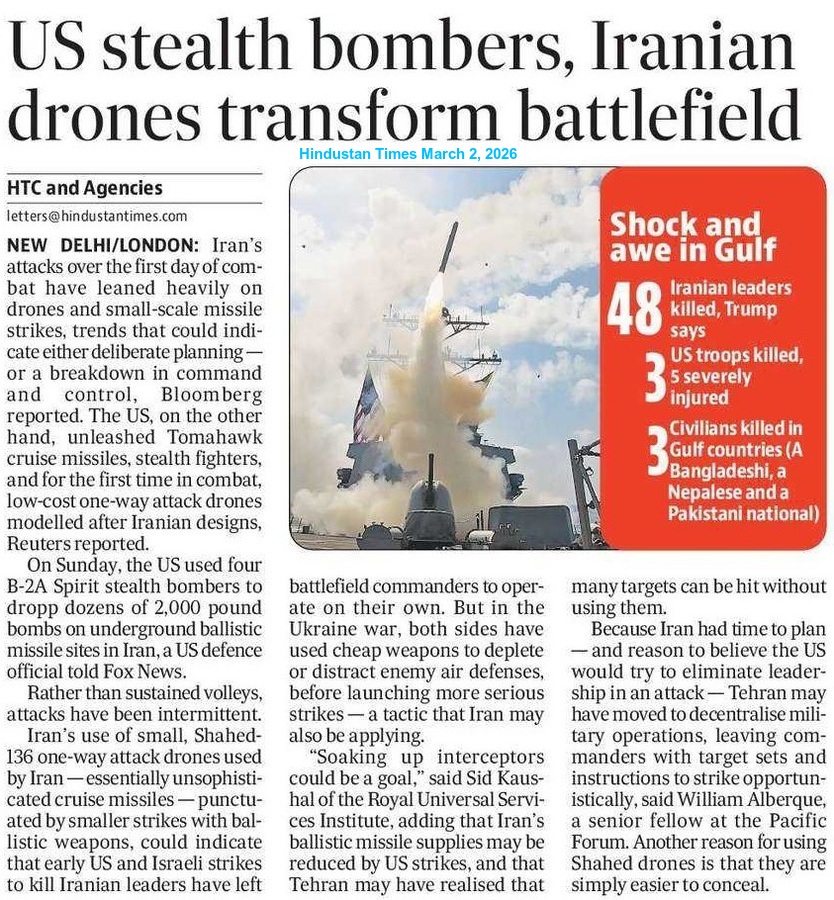
However, the costs are already becoming visible and they are severe. Iran retaliated almost immediately, launching missile and drone strikes against US military bases in Bahrain, Jordan, Kuwait, Qatar, Israel, Saudi Arabia and the UAE. Air raid sirens were heard in Dubai during Ramadan prayers. Jordan intercepted dozens of Iranian projectiles. The region is now experiencing a multi-front conflict.
More Troubles Ahead
One US-Israeli strike hit the Shajareh Tayyebeh girls’ elementary school in Minab in southern Iranian Province of Hormozgan. Tehran confirmed at least 153 students were killed, with dozens more injured. The victims were young girls between the ages of seven and 12. They were attending classes when the strike hit. Whatever the strategic rationale, the images coming out of Minab are a moral catastrophe, one that would shape how this operation is remembered for decades, and one that obliterates any claim to precision or restraint architects of the operation have made.
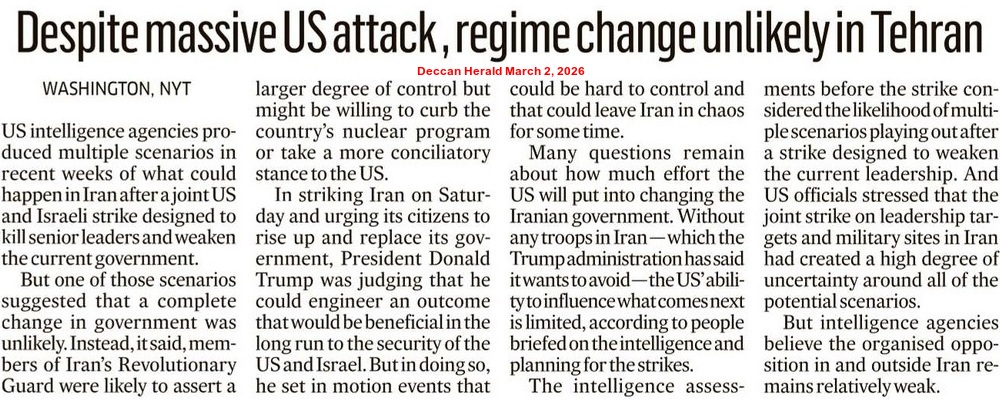
President Trump’s public framing of the strikes, calling Khamenei “one of the most-evil people in History” and urging Iranians to “take over your government“, raises a deeper question: What, exactly, is the endgame here? Calling for Regime Change from Washington DC while bombing a country of 90 million people is not a strategy. It is a provocation dressed as one.
What Comes Next?
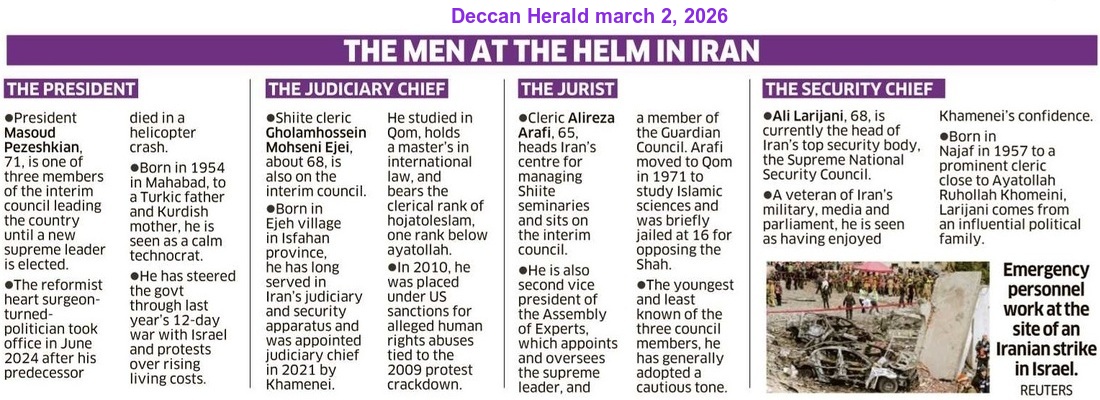
Iran is not leaderless chaos. Khamenei, reportedly anticipating this scenario, had put in place detailed succession plans. Ali Larijani, a longtime loyalist, appears positioned to manage the crisis. The IRGC, despite suffering significant losses, remains a formidable force with boots on the ground across the West Asian nation.
The path from here is genuinely uncertain and frightening. A fractured leadership in Tehran may be more unpredictable than a unified one. Iran’s ballistic missile programme, its most potent remaining weapon, is still intact. And Tehran knows, as one senior Arab diplomat noted, that the US wants this campaign to end quickly. It means Tehran has every incentive to drag it out and impose maximum cost.
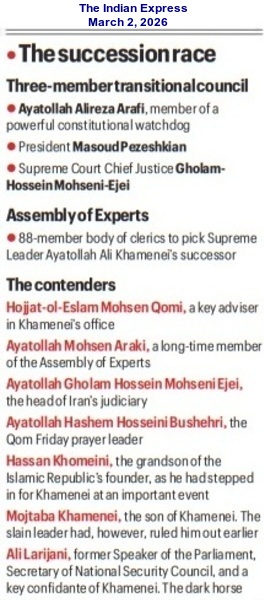
On March 1, 2026, Iran named cleric Alireza Arafi to its temporary Leadership Council following the killing of Supreme Leader Ayatollah Khamenei in US-Israeli strikes. Arafi has joined President Masoud Pezeshkian and Chief Justice Gholamhossein Mohseni Ejei in overseeing the Supreme Leader’s duties until a successor is chosen by the Assembly of Experts.
Across the region, Iran’s allies and sympathisers are mobilising. Protests have erupted in Iraq, Pakistan, Lebanon and beyond. The symbolic weight of a foreign power killing a Islamic nation’s Head of State during Ramadan would reverberate well beyond the Middle East.
Inside Iran, reactions are mixed as some Iranians, exhausted by decades of repression, celebrated in the streets, while others rallied around the flag. A wounded government under siege is still a government, and one that has proven brutally effective at suppressing internal dissent.
A Moment of Reckoning
The death of Khamenei is, undoubtedly, a historic event. The world is not mourning the man because of his authoritarian rule and legacy of repression at home and destabilisation abroad. However, history will ask harder questions about how this moment was handled. Was there truly no diplomatic path left? Was the collateral damage in lives, in regional stability, in international law proportionate to the objective? And most importantly, what comes next for the Iranian people who did not choose this government, but are now living through bombs falling on their cities?
The easiest thing right now is to declare victory. The harder, more honest work is to reckon with what has been unleashed.
By Ritam Paul Chowdhury. Collected from Facebook.
Meanwhile,
Boundless Ocean of Politics on Facebook
Boundless Ocean of Politics on Twitter
Boundless Ocean of Politics on Linkedin
Contact us: kousdas@gmail.com

 ISMC
ISMC Boundless Ocean Of Politics