

The Spectre Of East Pakistan Haunts India
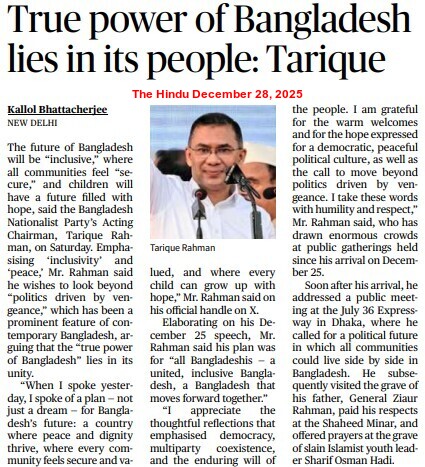
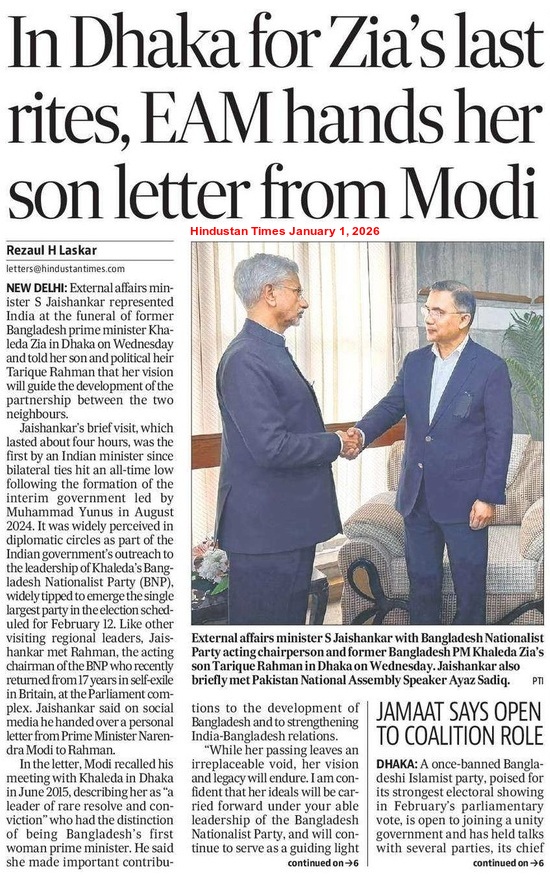
Once, New Delhi reportedly alleged that he raised anti-India slogans from a parallel office of the Government in Bangladesh. He and his mother, Begum Khaleda Zia (the former Prime Minister of Bangladesh; August 15, 1946 – December 30, 2025), were strong critics of India. Two decades later, the current political turmoil in the neighbouring country has prompted India to accept Tarique Rahman as the alternative leader of Bangladesh.
India is well aware of the fact that even if the Bangladesh Nationalist Party (BNP) comes to power, it would not be the same golden chapter of bilateral relations that New Delhi enjoyed during the Prime Ministership of Sheikh Hasina Wazed. The Narendra Modi Government in New Delhi is yet to make any comments on Tarique’s return to Bangladesh on December 25, 2025, after 17 years in exile. Rather, the Indian Ministry of External Affairs wants to reiterate the position taken by New Delhi by telling the BNP that it would be Tarique’s responsibility to help the concerned authorities in Dhaka to hold fair, free and inclusive Parliamentary Elections.
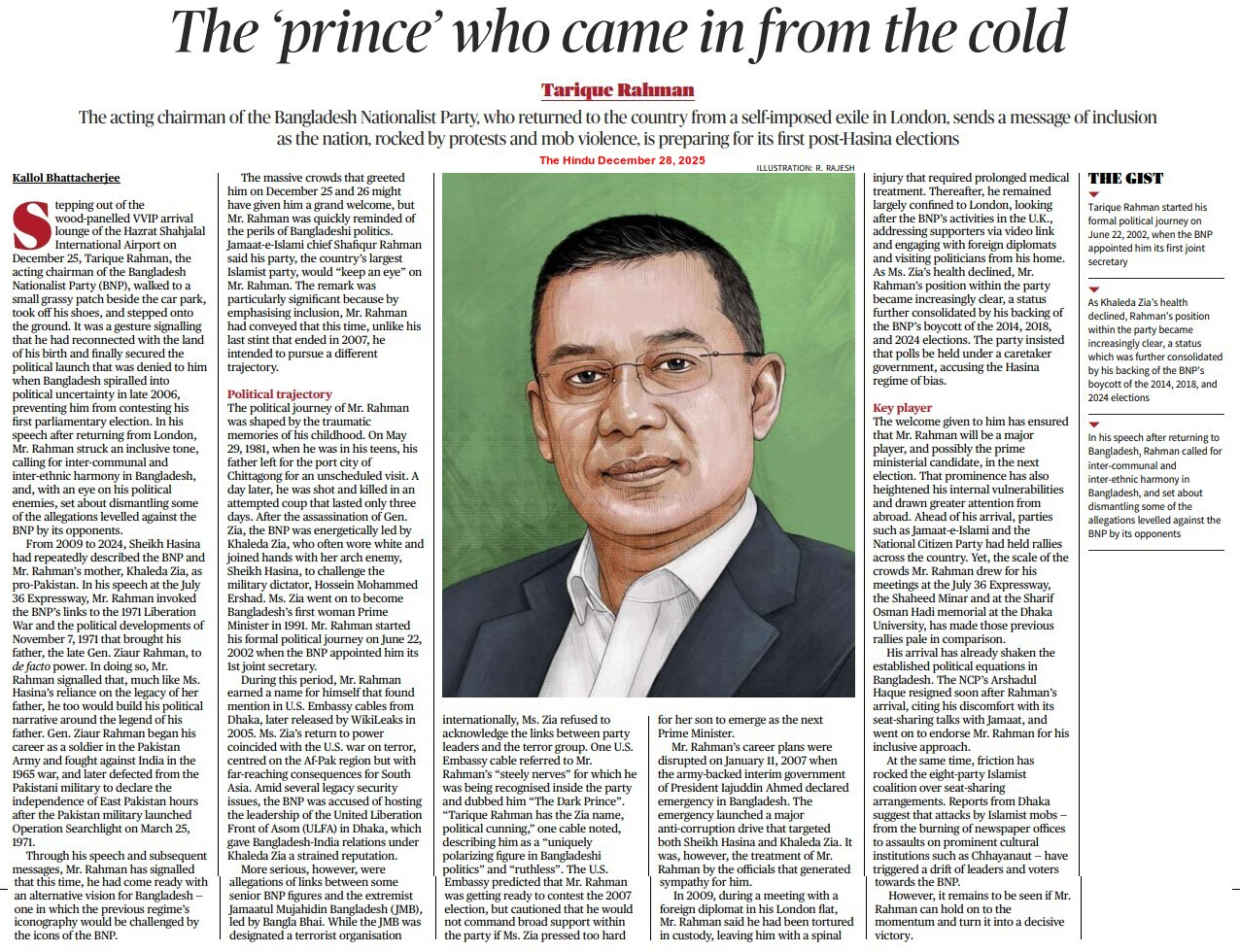
India has also noted that the Chairman of the BNP did not mention secularism in his statements after returning to Bangladesh. Instead, he has stressed on Islam. Interestingly, the 12-party alliance, led by the BNP, includes three extremist Islamist parties, which could create troubles for minorities (read Hindus) in Bangladesh in the future. However, India has no other option, but to accept the current situation and to wait for the elections.
You may also like: The Importance Of Democratically Elected Leaders
Political analysts are of the opinion that around 20% of the people of Bangladesh were anti-India even during the 1971 Liberation War of Bangladesh. The anti-India sentiment still exists in the neighbouring country, although the bilateral economic relationship and the ties between the people of the two South Asian nations have remained intact. Amidst intense anti-India violence, New Delhi is trying to maintain the fundamental essence of its relationship with Dhaka.
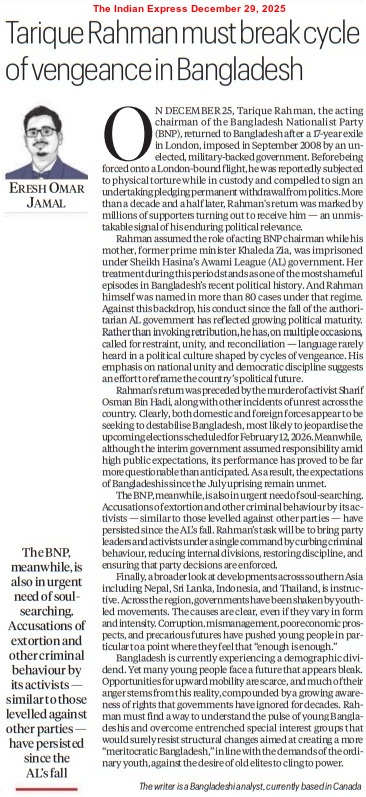
India believes that it would be relatively easier to maintain friendly ties with Bangladesh, if Tarique and his BNP come to power. On the other hand, if Jamaat-e-Islami, a conservative Islamist political party in Bangladesh that emerged from the East Pakistani wing of the Jamaat-e-Islami Pakistan in 1979, manages to form the government, then persecution of minorities would increase, along with infiltration across the border. Furthermore, the activities of various anti-India interest groups would sever the bilateral ties.
India is consistently conveying two messages to Bangladesh. Firstly, New Delhi is actively working for the welfare of the people of Bangladesh. Hence, New Delhi continues to export essential commodities to Dhaka, amidst the current diplomatic turmoil. The Government of India has decided to send 50,000 metric tonnes of rice to Bangladesh in a new consignment. Secondly, India is emphasising the need for fair, free and inclusive Parliamentary Elections. Without explicitly mentioning the Awami League Party of Sheikh Hasina, New Delhi has made clear that no political party should be banned and the support of at least 40% of the population should not be disregarded. In that case, it would not be considered a free and fair election internationally.
Although the concerned authorities in Bangladesh have decided to not allow the Awami League to contest elections scheduled to be held in February 2026, India is repeatedly sending the same message through various diplomatic channels. Significantly, some US lawmakers, too, have written to the chief adviser of the Interim Government of Bangladesh, stressing that it would be unfair to go to the polls after banning a political party.
Now, it is up to Tarique Rahman to save democracy in Bangladesh and to counter radicalisation of Islam.
Meanwhile,




Boundless Ocean of Politics on Facebook
Boundless Ocean of Politics on Twitter
Boundless Ocean of Politics on Linkedin
Contact us: kousdas@gmail.com

 ISMC
ISMC Boundless Ocean Of Politics
1 Comment »