

Revisiting The First Quarter Of The 21st Century
The first quarter of the 21st Century ended with the conclusion of the Year 2025. Twenty-five years (2001-25) is not a very long time, but merely a brief flicker when viewed against the backdrop of endless time (keeping in mind the vast difference between human perception of time and the concept of eternity in a philosophical sense). However, there are ample reasons to revisit this period precisely because it is the 21st Century. In fact, the conclusion of the Year 2025 marked 25 years of significant global shifts, including the rise of China, technological booms (like Artificial Intelligence) and major cultural moments.
Almost nothing that drives and controls our lives, as well as thoughts, today existed at the beginning of the 21st Century. While the dawn of this century (around the year 2000) featured early forms of many key technologies, their widespread adoption and advancement have dramatically transformed their impact on human civilisation in the past two and a half decades. The three byproducts of technological advancement – the internet, smartphones and social media – were unknown or inaccessible to us just 25 years ago. No one could understand their importance either. Now, life at every level, from the individual to the collective, is quite impossible without the existence of this trio. Previously, a person had to wait a number of days to receive a letter. The internet has revolutionised communication, allowing us to send or receive emails almost instantly, connecting people across the globe in a matter of seconds. Today, everything, from groceries to cabs, arrives at our doorstep within minutes. Hardly anyone could have imagined such a society at the beginning of the 21st Century.
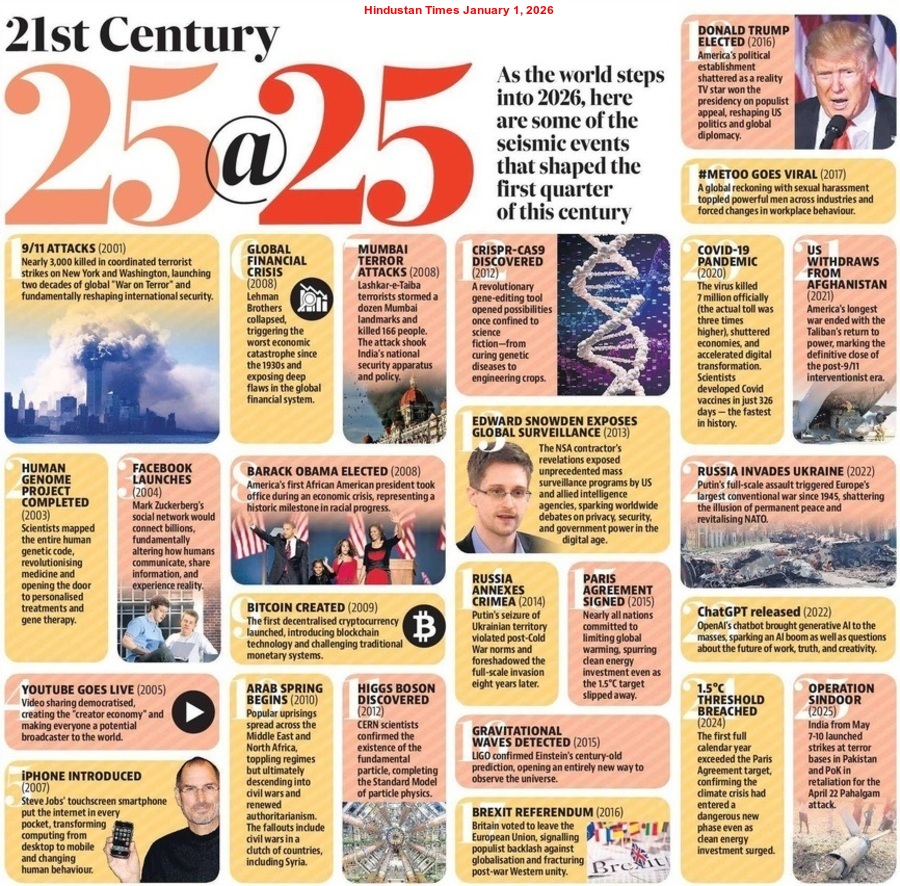
Technology has fundamentally transformed two basic needs of human life – communication and transportation – in the past 25 years. Moreover, the advent of social media has changed the equation between people, society and the state. It was unbelievable that a technology-based public relations system could do this.
Technology historians are of the opinion that the first quarter of the 20th Century, too, was a revolutionary one (in comparison to the past), as this period of time witnessed the emergence of relativity and quantum mechanics, with science changing the way people used to view the world. During those 25 years, the global community witnessed the discovery of vaccines that prevented common diseases, like tuberculosis; while communication and transportation systems were transformed with the invention of radio and aeroplanes in the field of technology. Politics, society and culture also underwent unprecedented changes. The First World War resulted in the restructuring of old power equations (or world order) and national boundaries, prompting the emergence of the League of Nations. At the same time, parallel technological revolution also fuelled modernism in art, literature, music and fashion in the first quarter of the 20th Century.
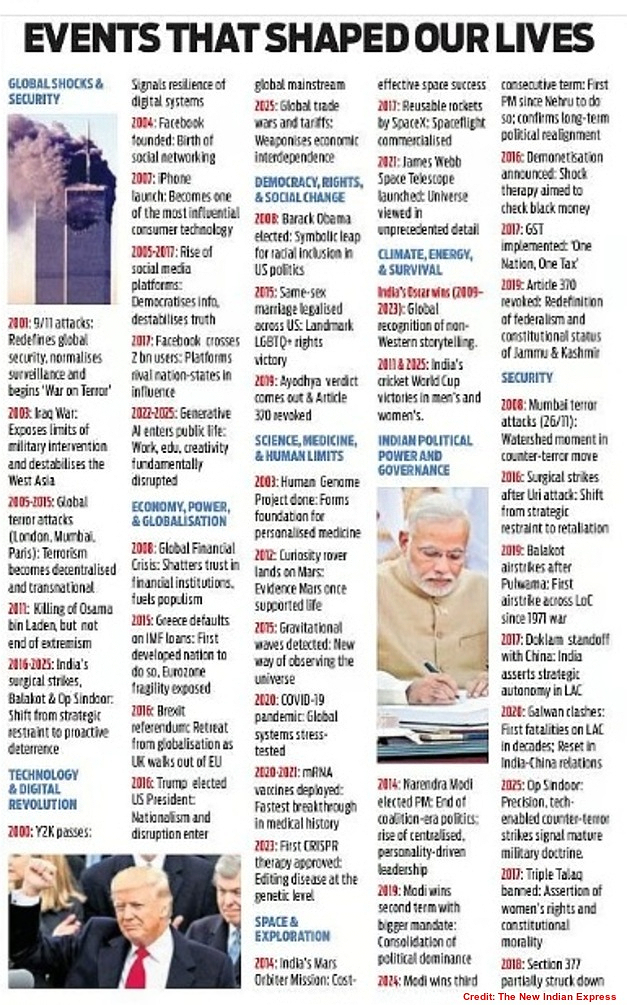
At least two events – the 9/11 and the COVID-19 Pandemic – have changed the lifestyle and thought process of people in the first quarter of the 21st Century. Both the events have a significant socio-political impact. They have also changed the trajectory of technology. While the security and surveillance system has been tightened with the help of modern technology (especially after 9/11), countless opportunities have opened up, thanks to AI, since the COVID-19 Pandemic. Although a stagnation has been noticed in social media in recent times, the usage of AI technology is just the beginning of a much greater journey.
Experts have opined that the second quarter (2026-50) of the 21st Century will be the period of expansion for Artificial General Intelligence (AGI) and Artificial Superintelligence (ASI). In other words, the AI, having acquired human-level intelligence, would eventually surpass human capabilities and humanity itself will witness this feat.
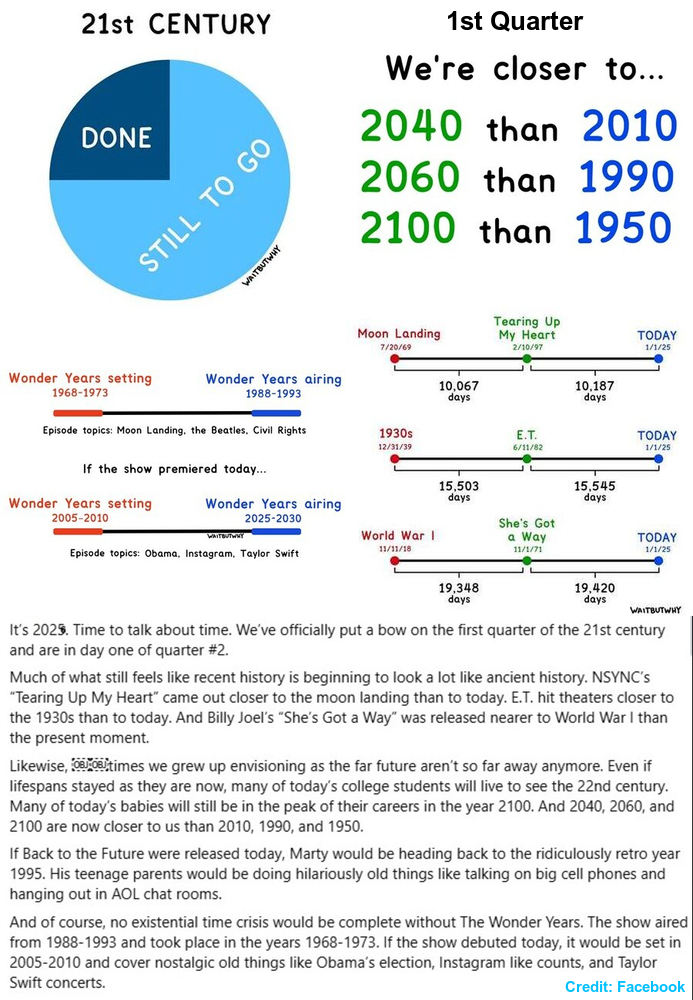
In a sense, the beginning of the Year 2026 also marks the beginning of a new era.
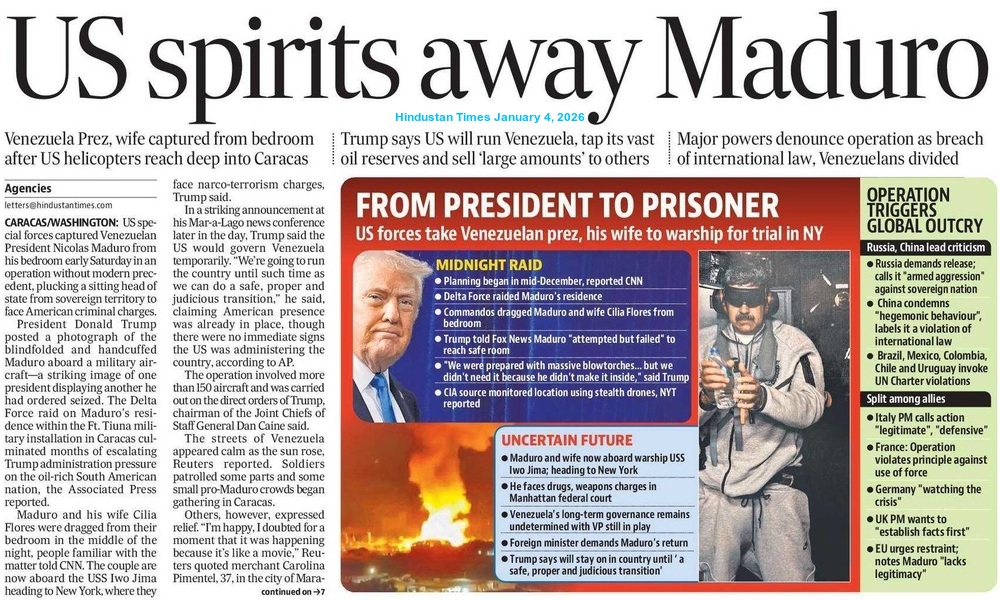
Meanwhile,
Boundless Ocean of Politics on Facebook
Boundless Ocean of Politics on Twitter
Boundless Ocean of Politics on Linkedin
Contact us: kousdas@gmail.com

 ISMC
ISMC Boundless Ocean Of Politics