

The Rasht-Astara Railway Project: A Game Changer
Russia and Iran have a strategic partnership marked by cooperation in areas, such as defence and economic cooperation, particularly since the signing of a Comprehensive Strategic Partnership Treaty in January 2025. The two friendly nations, cornered and isolated by Western sanctions, have decided to implement a joint project that could put the Western powers under tremendous pressure. Experts believe that the proposed 162km-long Rasht-Astara Railway Project could change the course of global trade forever.
The railway connectivity from Rasht, the largest Iranian city on Caspian Sea coast, to Astara, the capital of the Astara District of Azerbaijan, is basically a part of the International North-South Transport Corridor (INSTC) that is expected to reduce overall freight costs by approximately 30% compared to the traditional Suez Canal route. According to experts, the Rasht-Astara railway service would significantly reduce transit times from the current 30-45 days (or sometimes up to 60 days via the Suez Canal route) to approximately 15-24 days. Hence, the project could bring a huge relief to the two economies (Russia and Iran) that have been badly hit by Western sanctions.
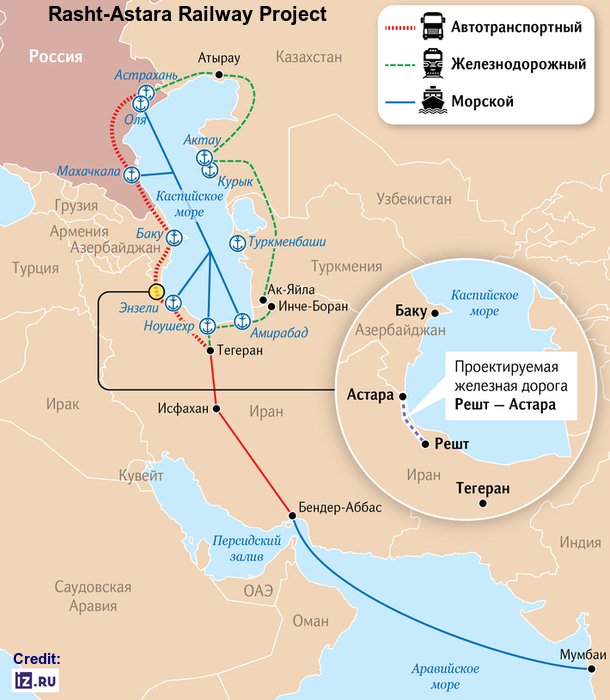
The USD 1.1 billion railway project from Rasht to Astara is part of the Iran-Russia Comprehensive Strategic Partnership Treaty signed in January 2025. According to sources, the Kremlin is funding and overseeing the construction of this project, with Russian engineers leading the construction efforts. Experts have claimed that the proposed railway corridor could transform both Russia and Iran into major players from isolated economies. Reports suggest that the Rasht-Astara Railway would increase the capacity of the INSTC to approximately 15 million tonnes of cargo, including oil, gas, steel, food and machinery, annually.
Most importantly, there would be no direct naval influence of Western powers on the physical Rasht-Astara railway route because it is a land-based corridor specifically designed to bypass traditional maritime chokepoints controlled or influenced by Western naval forces. Furthermore, the Belt and Road Initiative (BRI) of China is fully integrated with the INSTC, which would create a seamless trade network from the South China Sea to the Baltic. Just like the BRICS and the Shanghai Cooperation Organisation (SCO), Russia and Iran have accelerated their efforts to expand trade routes and deepen economic cooperation, specifically with the goal of creating transport systems and corridors which are resilient to Western sanctions.
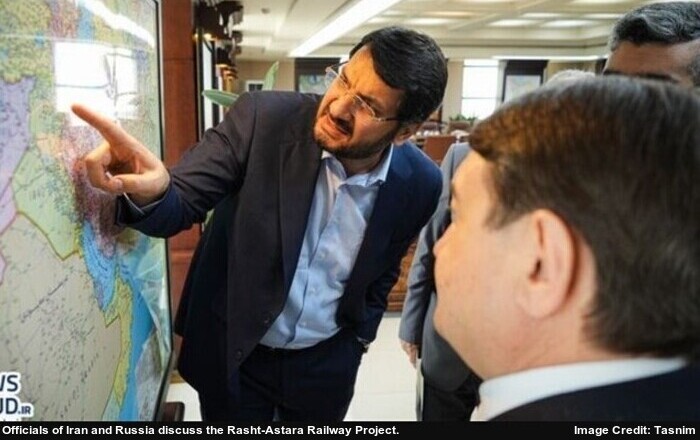
On October 26, 2025, Farzaneh Sadegh Malvajerd, the Iranian Minister of Roads and Urban Development, confirmed that Tehran and Moscow decided to complete this project as soon as possible. Speaking at a press conference, she stressed that the project would be a major step in taking the INSTC forward, adding: “The expansion of highways and railway infrastructure can play an effective role in facilitating Iran’s relations with neighbouring countries.”
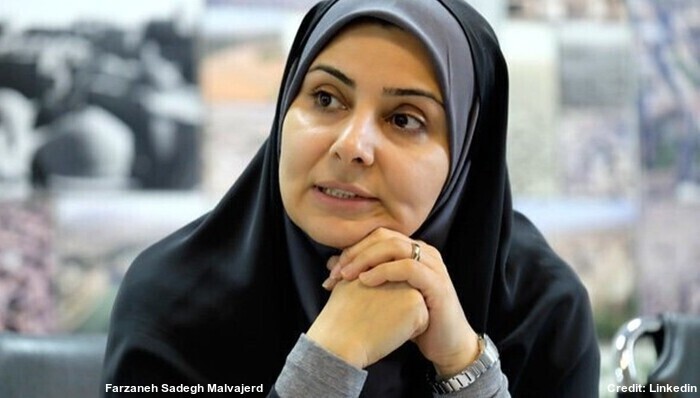
Sadegh, who recently visited Azerbaijan and Pakistan to hold talks on this project, further said that Islamabad agreed to establish a connection between Pakistan, Eurasian and Caucasian countries via Iran, and a connection between China and Iran through Pakistan mainly for transportation of goods (from Beijing to Tehran). Meanwhile, the Iranian minister confirmed that Tehran and Moscow would sign the long-awaited agreement for the implementation of the Rasht-Astara Railway Project in November 2025.
Meanwhile,


Boundless Ocean of Politics on Facebook
Boundless Ocean of Politics on Twitter
Boundless Ocean of Politics on Linkedin
Contact us: kousdas@gmail.com

 ISMC
ISMC
