

Trump’s Tariff War: China Backs Brazil, India
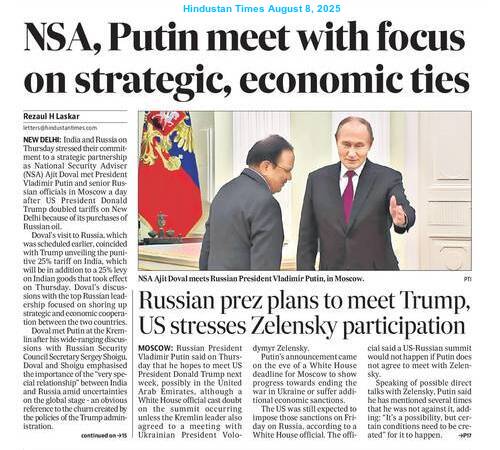
Russia strongly condemned the US’ Neocolonial Policy after President Donald John Trump imposed a 25% tariff on Indian goods (from August 1, 2025), alongside an additional 25% “penalty” for its defence and energy imports from Moscow. Now, Brazil and China (the two other members of BRICS, an intergovernmental organisation comprising 10 countries: Brazil, Russia, India, China, South Africa, Egypt, Ethiopia, Indonesia, Iran and the UAE.), too, have criticised the US President for launching the Tariff War against them in an attempt to exploit the Global South.
You may also like: Political Decisions Analysed By Game Theory
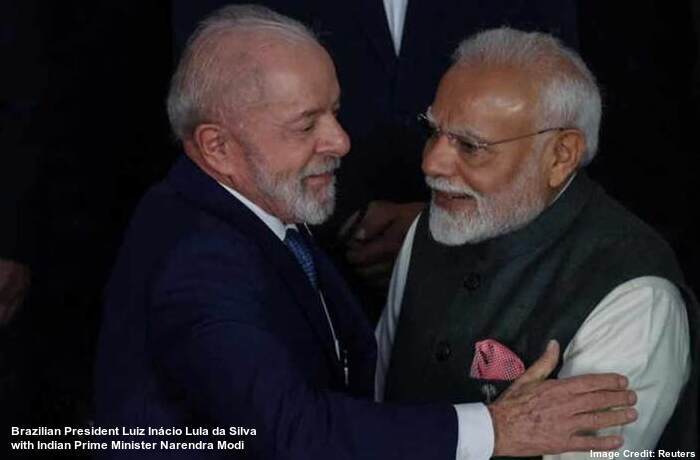
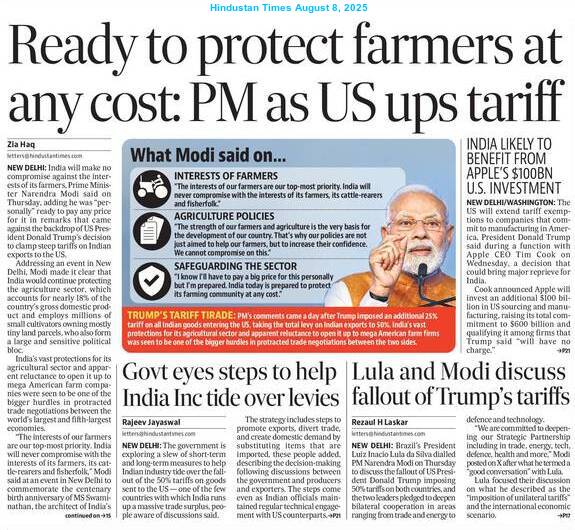
On social media, Prime Minister Modi said that he had previously met the Brazilian President at the BRICS Summit. They also had a ‘positive discussion’ over phone about ‘mutual cooperation’ on August 7. According to the PM, India and Brazil have committed to strategically supporting each other in various fields, including trade, agriculture, energy, health, technology and defence. Modi claimed that India-Brazil cooperation would also benefit the Global South.
It may be noted that President Trump has also set a whopping 50% tariff on Brazilian goods, one of the highest rates yet levied by the US. On August 7, 2025, Brazilian President Luiz Inácio Lula da Silva and Indian Prime Minister Narendra Modi held a telephonic conversation for about an hour on what to do in this situation. Reports suggest that the two leaders decided to strengthen bilateral cooperation in an attempt to overcome the crisis.
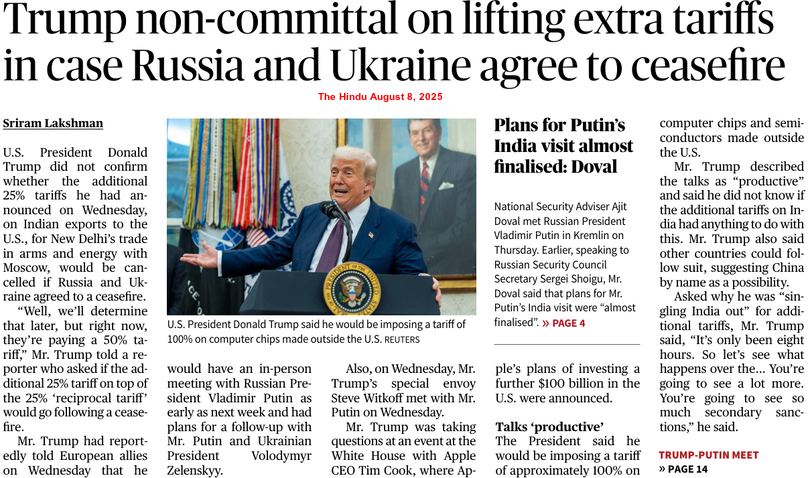
The Indian media reported that President Lula made the phone call to discuss various bilateral and global issues, with a special focus on the tariff war triggered by the US President, with Prime Minister Modi. The Brazilian President stressed that he discussed the current global economic situation with the Indian Prime Minister, and also expressed hope that India and Brazil, the two affected countries, would be able to show the greatest solidarity to deal with the situation. Lula revealed that he, along with his Vice President Geraldo José Rodrigues de Alckmin Filho, would visit India in 2026 to hold trade talks with the Indian Prime Minister in the presence of some Brazilian ministers and business leaders. He informed the press that discussions would also focus on issues related to minerals, energy, health and the digital economy. Interestingly, President Lula claimed that India and Brazil set a target to increase bilateral trade to over USD 20 billion by 2030.
The Brazilian President previously said that he would not negotiate with President Trump after the US imposed 50% tariffs on Brazilian imports, adding that he would discuss the issue with BRICS leaders first. Later, he dialled the Indian Prime Minister to discuss next steps. India, too, made it clear that it would stand firm on its national interests after President Trump imposed 50% tariffs on Indian goods over the import of Russian oil, stating that the extra tariff was “unfair, unjustified and unreasonable“.

Meanwhile, China has welcomed Brazil and India’s decision to boost mutual cooperation, saying that “Give the bully (President Trump) an inch, he will take a mile.” Chinese Ambassador to India Xu Feihong made this comment in a post on X, a day after US President Trump slapped an additional 25% tariff on India for its trade with Russia. Some consider the remark of the Chinese envoy as an expression of solidarity with countries, like India and Brazil, at the receiving end of Trump’s trade war.
Earlier, Chinese Foreign Minister Wang Yi held talks with Celso Amorim, the Chief Adviser of President Lula, to discuss strategies for countering the US’ tariff policy. According to the minister, Beijing believes that using tariffs as a weapon to suppress other countries clearly violates the UN Charter and also undermines WTO rules. Wang assured Amorim that China would “strongly support” Brazil’s decision to counter President Trump’s “arbitrary tariff threats“. One may recall that when Washington DC escalated tariffs on Chinese imports in March 2025, the Chinese Foreign Minister reportedly called for stronger cooperation between New Delhi and Beijing to push back against hegemonism and power politics, stating: “Making the (Chinese) dragon and (Indian) elephant dance is the only choice.“
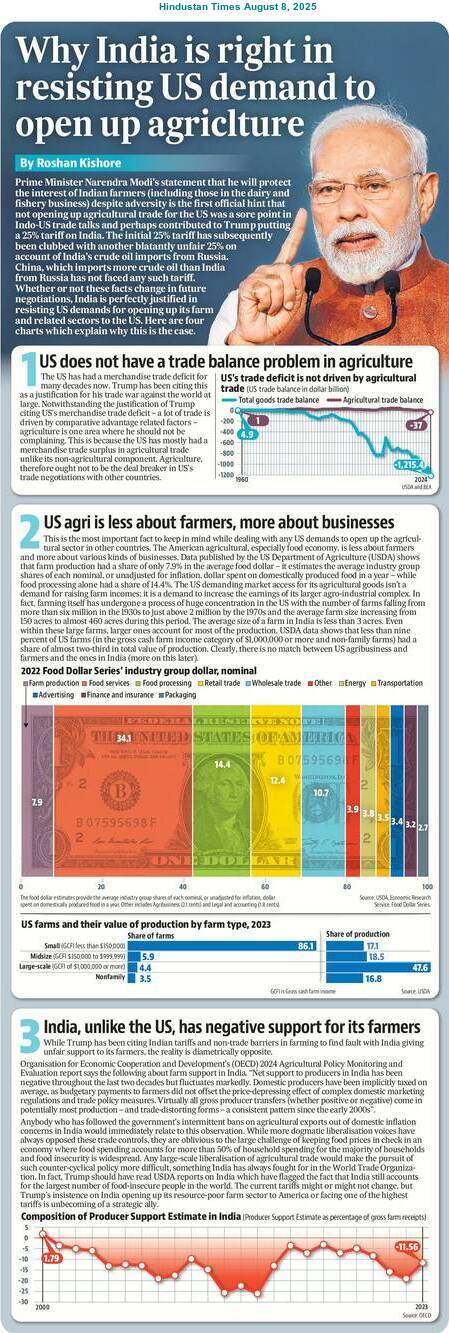
With India and the US getting involved in a trade standoff, Prime Minister Modi is all set to visit China later in August (2025) to attend the Shanghai Cooperation Organisation (SCO) Summit where he would hold separate meetings with Chinese President Xi Jinping and Russian President Vladimir Vladimirovich Putin. This will be his first visit to China after 2019. The upcoming visit of the Indian PM has assumed greater significance as he would arrive in the neighbouring country amid the heightened tension between India and the US over Trump’s decision to increase tariffs on Indian products.
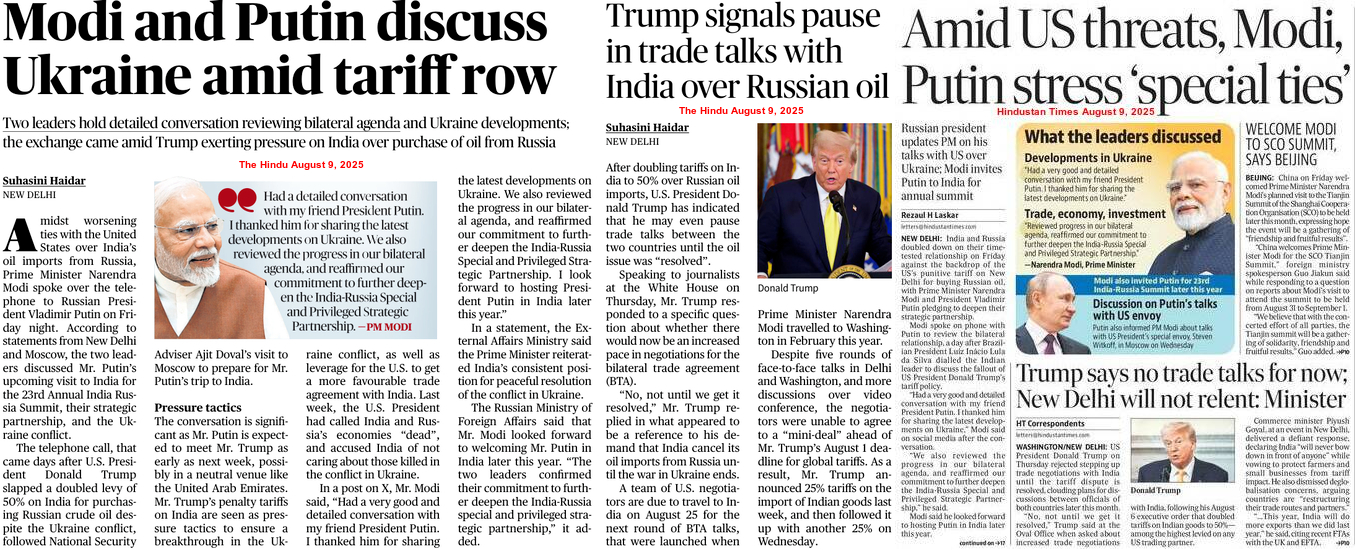
Among the BRICS nations, which President Trump criticised for “anti-US” policies“, China currently faces 30% US tariffs, while Brazil and India are subject to 50%, and South Africa to 30%. Although no BRICS leader has publicly backed President Lula’s proposal for a joint BRICS response against the US actions so far, a series of phone calls in the past few days suggests that the matter is under discussion and any member-country of this intergovernmental organisation would soon come out with an official statement.
Political analysts are of the opinion that President Trump’s tariff war has brought the BRICS nations closer as they are planning to jointly counter the US trade policy. Such a move could help them to corner the US after overcoming the initial setback. Analysts believe that it would be difficult for the US to resist the BRICS’ strategic awakening in the coming days.
Boundless Ocean of Politics on Facebook
Boundless Ocean of Politics on Twitter
Boundless Ocean of Politics on Linkedin
Contact us: kousdas@gmail.com

 ISMC
ISMC Boundless Ocean Of Politics