

Central Asia On The US Radar
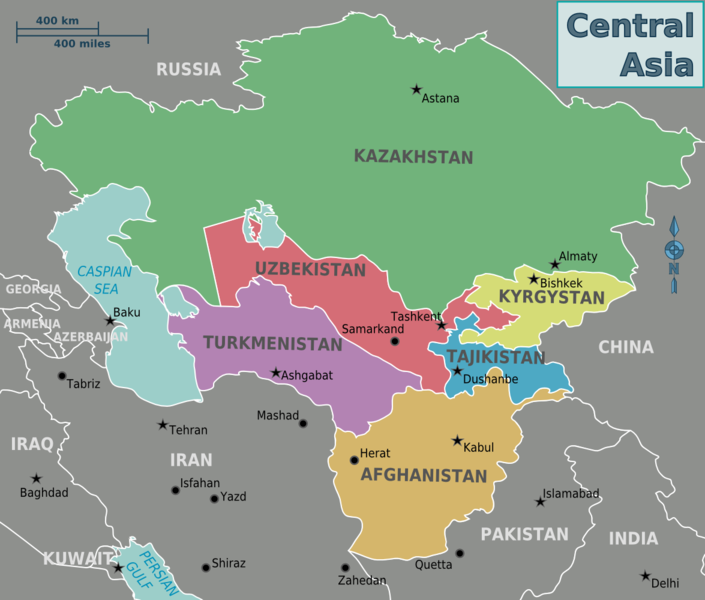
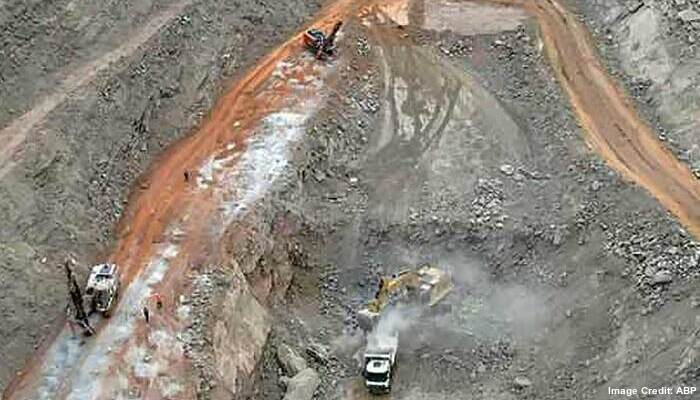
The US is plotting to strategically seize critical minerals and rare earth elements from Central Asia. Hence, the Donald Trump Administration has decided to strengthen ties with Uzbekistan. Experts believe that the US’ move could change the equation of global geopolitics as Uzbekistan is a mineral-rich country. Washington DC and Tashkent have already signed a Memorandum of Understanding (MoU) regarding the exploration, as well as extraction, of minerals, apart from holding high-level talks on future cooperation.
Omonullo Nasritdinkhodjaev, the First Deputy Minister of Mining Industry and Geology of Uzbekistan, and US Ambassador to the Central Asian country Jonathan Henick signed the MoU on September 16, 2024. The MoU mentioned that the accord would play an important role in bringing order and diversity to the global mineral supply, apart from protecting the unique ecosystems of the region. The Uzbek Government claimed that Washington DC would help Tashkent to develop mineral resources and natural gas infrastructure. As per the MoU, joint exploration of mineral resources in new areas would also be carried out as the two countries held positive talks on strategic partnership in November 2024.
Uzbekistan and the European Union (EU) are members of the Mineral Security Partnership (MSP), a US-led initiative launched in June 2022 that aims to secure diverse and sustainable critical minerals supply chains, focusing on minerals crucial for clean energy technologies and other advanced technologies, by fostering public and private investment. The global community has turned to green energy in order to tackle pollution. At the same time, the world has undergone a digital transformation. The role of critical mineral elements is immense in both cases. Analysts are of the opinion that the EU would benefit a lot if the US manages to take control of Uzbekistan’s vast mineral resources. Then, the US would supply those minerals to its Western partners.
Neighbouring Kazakhstan, too, is a mineral-rich country in Central Asia. The US has also decided to invest there. Senior US officials discussed extracting critical minerals, such as C5+1, with the Government of Kazakhstan in February 2024. Reports suggest that the US plans to bolster ties with at least five Central Asian countries. Washington DC has argued that the move would greatly strengthen the critical mineral supply chain across the globe. Simultaneously, the usage of green energy could be increased several times, apart from strengthening the regional economy.
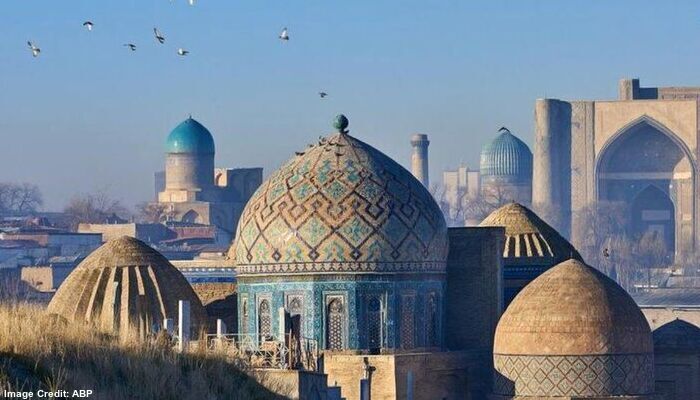
It may be noted that the EU, too, signed a MoU on strategic partnerships regarding raw materials with Uzbekistan in April 2024. Analysts have opined that the equation between the EU and Uzbekistan has changed a lot since then. Uzbekistan, the country with a diverse topography, has vast reserves of natural gas, crude oil and minerals, including germanium and silicon. Uzbekistan has also secured its place among the top 10 countries in the world rich in uranium, rhenium and tellurium.
The US Geological Survey published a report on Uzbekistan’s critical minerals and rare earth elements in 2018, mentioning that the Central Asian nation had vast deposits of copper, molybdenum and cadmium beneath its soil. The US geologists have also identified at least 87 sites, rich in critical minerals and rare earth elements, in Uzbekistan. Tashkent received USD 1.1 million as foreign investment in the geological sector in 2023 and the amount is expected to increase in the coming months.
However, it would be difficult for the US to easily influence Uzbekistan which is heavily dependent on China and Russia. The erstwhile Soviet Union conquered the country in 1920 and established socialism there on October 27, 1924. Uzbekistan emerged as an independent nation only after the collapse of the Soviet Union in 1991. Since then, Russia has continued to influence Uzbekistan. Moscow and Tashkent still maintain cordial ties.
India, too, is interested in importing valuable minerals from Uzbekistan. However, India has failed to boost trade ties with Central Asia because of its rivalry with neighbouring Pakistan. Currently, India is exporting trade items to the region via Iran. In fact, the South Asian country recently developed the Chabahar port of Iran in an attempt to strengthen trade ties with Central Asia. As both India and Uzbekistan are members of the Shanghai Cooperation Organisation (SCO), New Delhi is using this Eurasian intergovernmental organisation (founded by China, Russia, Kazakhstan, Kyrgyzstan, Tajikistan and Uzbekistan in 2001) to reach out to Central Asia.

The geographical location of mineral-rich Central Asia has made it easier for Russia, China and India to counter the Western influence on Uzbekistan, Kazakhstan, Kyrgyzstan and Tajikistan.
Boundless Ocean of Politics on Facebook
Boundless Ocean of Politics on Twitter
Boundless Ocean of Politics on Linkedin
Contact us: kousdas@gmail.com

 ISMC
ISMC Boundless Ocean Of Politics