

The ‘Illiberal’ Liberal Arts
If we must turn to AI for answers to any and every question, can we not get AI to help us ask the right question? That was the first thought that crossed my mind as I read Sanjeev Bikhchandani’s now-public letter to the Ashoka University community.
I read him with sympathy, notwithstanding sharp differences with his public utterances. Ashoka founders who gave time, energy and money to build a first-rate liberal arts university that is truly not-for-profit deserve respect, especially from parents like me whose children have benefited from it. Building and sustaining an institution is a painful and thankless task in the best of times. The challenge is even more difficult under the current dispensation.
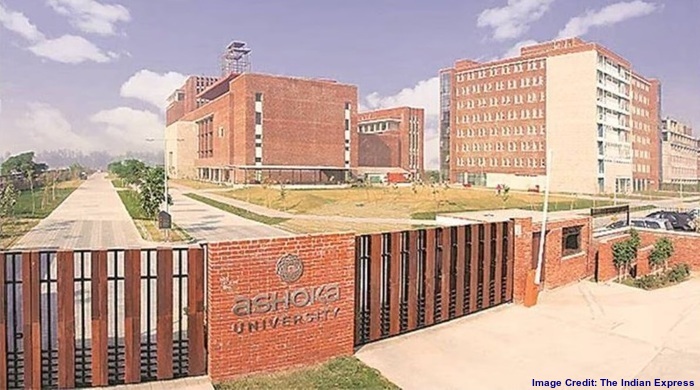
I was sad, therefore, that Bikhchandani chose to ask a poor, strawman question: “Are all liberal arts universities activist in nature?” The only possible answer can be no. How can all the universities be alike? Why should the way other universities are be the norm for Ashoka? At any rate, what does it mean for the university to be activist in nature? Would it not be ridiculous to expect the university as an institution to turn activist? I was also embarrassed that Bikhchandani chose to ask this question of a chatbot and not the hundreds of teachers – among the best in the country – at the university of which he is a trustee.
The questions Bikhchandani should have asked are: Does liberal arts education by its very nature foster some form of activism? If so, how should a university that imparts liberal arts education deal with it? Should an active engagement with issues of our time be emphasised in the syllabi and pedagogy of the university? Should this be encouraged in the campus culture? And should such an engagement by the faculty, students and staff – on campus and off campus – be allowed, if not respected?
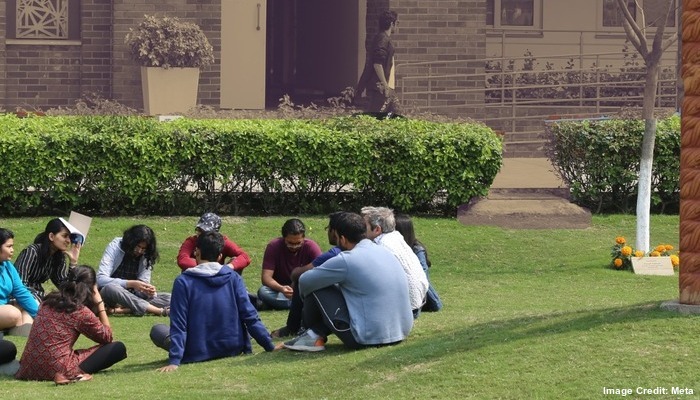
Many of these are general questions for any institution, certainly for any educational institution. Any good education – arts, science or whatever – must inculcate among the students a spirit of inquiry. It must develop critical thinking by training the students to interrogate received wisdom and question authority. As Paulo Freire reminded us, education is inherently subversive.
Liberal arts takes it a step further. It invites the students to apply this critical thinking to their own society and their lives. This leads them to question their prejudices and privileges. Even more so for teachers and students of Political Science (such as Professor Ali Khan Mahmudabad), who must interrogate the claims of political authority all the time. As Kartikeya Bhatotia, an alumnus of Ashoka, puts it in a sharp indictment (published in The Print) of the university’s role in the recent episode: “Liberal arts education – by its very structure – cultivates critical thinking, dissent, and moral inquiry. So yes, activism may not be mandatory, but it is certainly not alien to the tradition.”

In a sense, the question for a liberal arts university boils down to this: How should it deal with the preconditions and consequences of what it teaches? Quality liberal education requires that those who impart this education should be able to think critically and that the institution should foster a culture of free exchange of ideas. The outcome of a good “humanities” education should be that it produces humans capable of independent judgement, who would wish to act on their convictions in real life. So, can any university, least of all a liberal arts university, fulfil its educational mission without permitting, respecting and fostering active engagement with real-life questions of its time? Such active engagement deserves to be celebrated as a civic virtue. If this is activism, then liberal arts education and activism are connected by an umbilical cord.
This is not to say that a university should get into the business of promoting one kind of partisanship or another. It must ensure that all competing visions and ideologies get a fair space. The political convictions of a teacher like Mahmudabad do not impede education, as long as they are known and up for discussion. The real danger of indoctrination comes from partisanship that remains unacknowledged or passed off as common sense. And yes, there is a need for rules for any such engagement. The university may need to draw some boundaries on what types and modes of action may not be encouraged or permitted within the institutional spaces. But a fiat that seeks to decouple critical thinking and civic action would frustrate the very point of liberal arts education.

This foundational debate must not distract from the rather narrow question in Mahmudabad’s case, a question Bikhchandani does not address. No one asked the university to own up to every social media post, or academic article for that matter, written by the faculty or students and defend it in a court of law. The real question was simply this: Should an institution, university or otherwise, stand by a member of its community in the face of a politically motivated witch-hunt? Or abandon and virtually disown him at the first hint of a controversy? Even if the institution could not offer legal support, could it not offer moral support? Or at the very least, have kept quiet?
Sadly, on this score, Ashoka University’s response left a lot to be desired. The very first response, even before Mahmudabad’s arrest, gave in to the insinuation that his post was against the armed forces. Post his arrest, like the media and the government, the university, too, presumed that he was in the dock. And now Bikhchandani’s letter leaves nothing to the imagination. Mahmudabad stands accused of “institutional capture and selfishness” and hijacking Ashoka’s platform for his political agenda, something the university should guard against by framing a policy against a “Politically Exposed Person”.

This is not the first time Ashoka has faced issues of how liberal it is in dealing with dissenting faculty. With every instance (including that of freedom to publish academic research as in the case of Sabyasachi Das), the university seems to be leaning in the illiberal direction. If Bikhchandani’s letter is to be read as a message from the founders, there is a finality about the signals: The message is loud and chilling.
We do not know the constraints under which the university administrators function. Running a liberal university under an illiberal regime may be a contradiction in terms. The founders might just feel that they cannot take it anymore, that they cannot defend their dream without endangering the very existence of the institution, or their business interests. That would be understandable. But then it need not be couched in high moral terms. The victim you cannot defend need not be put in the dock.

One final thought. Should this debate not move beyond Ashoka’s administrators and its founders, to the Ashoka community, including the faculty, students, parents and alumni? After all, the defence of liberal education in that institution must involve them all. And should this debate not cast its net wider than the best-known and elite institutions like Ashoka? After all, the real tragedy of liberal education in the country is not what has happened at Ashoka, but the manner in which all the major public universities known for liberal education – Jawaharlal Nehru University, Central University of Hyderabad, University of Delhi and Tata Institute of Social Science, to name a few – have been dismantled. In the last instance, activism will not be defended by elite institutions and their well-heeled donors. Activism must be defended by the public. We don’t need a chatbot to tell us that.
by Yogendra Yadav
Boundless Ocean of Politics has received this article, first published in The Indian Express on June 10, 2025, from Yogendra Yadav. The author (born September 5, 1963) is an Indian activist, psephologist and politician whose primary interests are in Political and Social Sciences. He was a Senior Fellow at the Centre for the Study of Developing Societies (CSDS), New Delhi from 2004 to 2016. Yadav is a former member of University Grants Commission (UGC) and National Advisory Council on the Right to Education Act (NAC-RTE) constituted by the Indian Ministry of Human Resources and Development in 2010. He was also a member of the National Executive of the Aam Aadmi Party until 2015. Yadav is a founding member of Swaraj Abhiyan and Jai Kisan Andolan. He is the founding National President of Swaraj India, a registered political party, and the National Convener of Bharat Jodo Abhiyan.

Boundless Ocean of Politics on Facebook
Boundless Ocean of Politics on Twitter
Boundless Ocean of Politics on Linkedin
Contact us: kousdas@gmail.com

 ISMC
ISMC Boundless Ocean Of Politics