

The Girl From Iran
A young lady intern recently joined a hospital in Australia where one could find doctors from all over the world. However, the beautiful intern, with deep eyes, a distinctively sharp nose and thick black hair, remains depressed all the time!
When asked about her nationality by one of her Indian colleagues one day, the intern said that she is from Iran. Nei Alipur recalled that a political change had taken place in her country a few years before her birth. The 1979 Islamic Revolution replaced the Monarchy, as well as the Persian Constitution (which had been in place since 1906). She told Debanjali Roy, an Indian doctor, that her motherland witnessed land reform, redistribution of lands, equal rights for farmers, women marching in front of the Senate in a literacy campaign, their success in the Women’s World Football Championship, women casting their votes and participating in tennis tournaments (wearing skirts) during the reign of Mohammad Reza Shah Pahlavi (October 26, 1919 – July 27, 1980), the last Monarch of Iran.
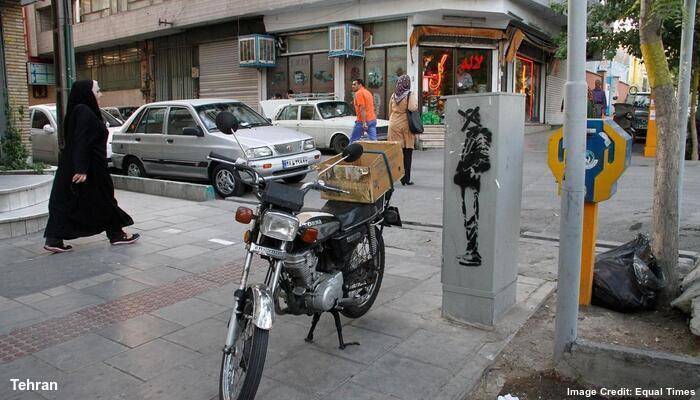
However, the scenario changed dramatically after Ayatollah Ruhollah Musavi Khomeini (May 17, 1900/September 24, 1902 – June 3, 1989) came to power. Immediately after Ayatollah Khomeini became the Supreme Leader, followers of Shi’ite Islam started arriving in Iran from different parts of the globe. Nei stressed that the Islamic rulers restricted women’s freedoms, apart from forcing girls to get married at an early age. She continued that a devastating earthquake, the Iran-Iraq War, the long siege of the US Embassy by the supporters of Khomeini, the US embargo on Iranian oil and the uprising of educated Iranians against Khomeini contributed to a rapid decline in Iran’s socio-economic situation and oil stocks.
Nei was born to a liberal schoolteacher father and a librarian mother in 1992. She has an elder brother who was born in 1986. Nei revealed that her father was a leader of an anti-Khomeini protest group and her mother lost her job as she refused to wear a hijab. She told the Indian doctor that the Islamists attacked their residence multiple times. Her father, too, lost his job a few years later and the family decided to move to Turkey. Nei’s father had to work as a labourer for a few months in Turkey in order to run the family. As they failed to get permanent citizenship in the neighbouring country, her father applied for an Australian humanitarian visa. According to Nei, she arrived in Australia at the age of four.

Nei told Debanjali: “Actually, I miss Haft-sin very much.” Haft-sin or Nowruz is the Iranian New Year that is celebrated on the day of the vernal equinox, marking the beginning of spring in the Northern Hemisphere. She explained that Haft-sin or Seven Ss is an arrangement of seven symbolic items which are traditionally displayed at Nowruz in Iran. Those items are Sabzeh (wheat or barley), Samanu (wheat germ sweet pudding), Senjed (oleaster), Serkeh (vinegar), Seeb (apple), Seer (garlic) and Somagh (sumac). In fact, seven is a sacred number to the Iranians.

Nei further claimed that Nowruz would always be a memorable day for her, stressing that her grandparents brought a doll, dressed in red, for her when they visited their place in the evening the last time they celebrated Nowruz in Iran. Suddenly, they came to know that Ayatollah Khomeini’s supporters were approaching their house. The family hurriedly fled to another place in the darkness of the night and then left the country for Turkey. In a bid to save themselves, Nei and her family members had to leave a lot of things, including that doll, in their home. “Every Nowruz brings back painful memories,” she told her Indian colleague.
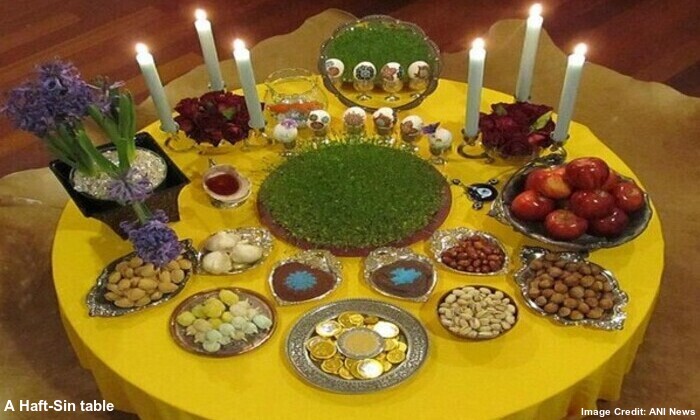
Some other Iranian families, including Nei’s, celebrate Nowruz in Australia, but not for seven days. The Iranian intern knows that she could never be able to return to Iran. Meanwhile, Debanjali informed Nei that her husband, Koushik, once went to Iran by car. A Persian couple took him to their residence as a guest after they came to know that he was from India. Koushik enjoyed their hospitality for a week and also visited different cities of the beautiful country. Unfortunately, the condition of people of such a country is not so good.
In this unfathomably vast universe, one is so insignificant. Yet, one tries to find the meaning of life in this world.
Boundless Ocean of Politics on Facebook
Boundless Ocean of Politics on Twitter
Boundless Ocean of Politics on Linkedin
Contact: kousdas@gmail.com

 ISMC
ISMC Boundless Ocean Of Politics