

The Importance Of Dialogue In The 21st Century
When animosity between two conflicting parties escalates beyond rhetoric to the threat of war, rational persons remind them of the importance of dialogue in order to restore normalcy. However, a number of conditions need to be fulfilled for holding a successful dialogue. Looking at the contemporary world, one may recall those conditions.
Relevance of dialogue: Historical, geographical and cultural aspects are quite important for holding peaceful negotiations. In a larger context, it can be said that the West has become such a strong and aggressive civilisation in the last five centuries that people living in any part of the world, irrespective of their language, religion, civilisation and culture, have to interact with the West on any given issue. On the other hand, the dialogue between an Asian country and a Latin American country shall be based mainly on curiosity and goodwill.

Willingness to hold a dialogue: Dialogue requires willingness or warmth. In the era of fake news, people often prefer to get involved in an armed conflict with their enemies, instead of resolving the issue through peaceful negotiation.
Types of dialogue: It is necessary to have some knowledge about whom to talk to and how the words should be used. In other words, one has to be aware of the other’s culture, knowledge, politeness and mannerism in order to exchange ideas. The outcome of discussions depends on the style of conversation.
Dialogue is basically based on trust and credibility. If the two parties cannot trust each other, the dialogue would not progress. Hence, it is important to gain others’ trust before holding talks. And, it is quite difficult to gain trust in an atmosphere of hatred. It is also not possible to hold talks with a person (or group) having vested interest or a particular motive. In fact, gaining trust is a process and there is no guarantee that the process would be a successful one. Anyone willing to engage in dialogue even in hostile conditions must keep in mind that there would always be a possibility of misunderstanding. Therefore, starting a dialogue means taking a risk without which there would be no dialogue. Diplomats are well aware of the fact that dialogue is not a safe process.
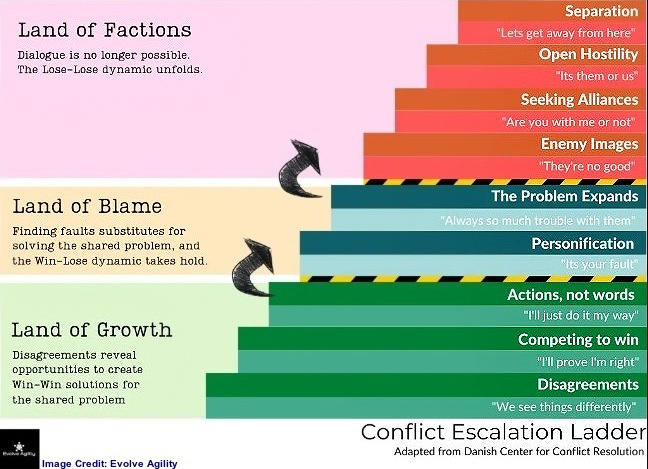
Dialogue also requires open mindedness, as well as mutual respect. However, it is difficult to keep our mind open. Once, Martin Heidegger (September 26, 1889 – May 26, 1976) stated: “Both talking and hearing are based upon understanding. And understanding arises neither through talking at length (vieles Reden) nor through busily hearing something ‘all around’. Only he who already understands can listen (zuhören).” (Being and Time; 1927) According to the German philosopher, it is important “to hear that which I do not already understand“. Unfortunately, Heidegger did not explain how one could prepare her/himself to hear something which seems familiar to her/him, but is actually unfamiliar.
Hatred is another factor that could be responsible for communication failure. There may be grievances towards one another, but hatred can destroy the atmosphere of discussions. The most difficult condition for effective dialogue is to overcome hatred and very few people can do that.

As these conditions are not met, conflicts are going on in different parts of the globe. The international community has failed to address a number of important, as well as sensitive, issues because of their arrogant attitude in the 21st Century. From diplomats to leaders of World Powers, decision-makers would have to understand the importance of dialogue and to use the right words at the right place and at the right time.
Boundless Ocean of Politics on Facebook
Boundless Ocean of Politics on Twitter
Boundless Ocean of Politics on Linkedin
Contact: kousdas@gmail.com

 ISMC
ISMC Boundless Ocean Of Politics