

Where Democracy Co-exists With Diversity
Emperor Ashoka (BCE 304 – BCE 232), the third ruler from the Mauryan Dynasty who is popularly known as Ashoka the Great, used to rule a large part of the Indian Subcontinent, stretching from present-day Afghanistan in the west to present-day Bangladesh in the east, with its capital at Pataliputra (the modern-day Patna in India), nearly 2,500 years ago. Although personally a follower of Buddhism, Ashoka’s epitaphs show sympathy towards Brahmins (the highest caste in the Hindu caste system) and Śramaṇas (a person “who labours, toils or exerts themselves for some higher or religious purpose“). Brahmins and Śramaṇas stand at two extremes in terms of religious philosophies. However, Ashoka did not show hostility to the followers of other religions, as he performed his duty as a ruler.
Akbar the Great (born Abu’l-Fath Jalal-ud-din Muhammad Akbar; October 15, 1542 – October 27, 1605), the third Mughal Emperor who reigned from 1556 to 1605, followed the policy of Ashoka nearly 2,000 years later. In spite of being a follower of Islam himself, Akbar had always maintained cordial ties with the leaders of other religions. During his reign, the Indian State maintained a principled distance from all religions.
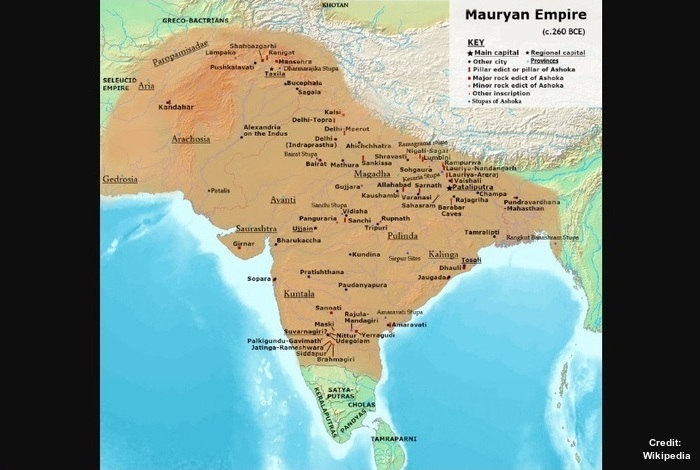
No particular opinion or belief has influenced the (political) decision-making process in India, one of the world’s oldest and greatest civilisations, with a unique culture. The Indian State has been continuously active by creating space for debates between different opinions. Historian Romila Thapar has highlighted the relevance of these opposite voices from ancient times in her publication Voices of Dissent: An Essay. She has mentioned that the people of India have disagreed since time immemorial. In other words, they have argued or agreed to disagree, or eventually arrived at an agreement, on various issues. According to the author, all these are a part of life, of living.
However, there was no democracy in India long ago as the concept of modern democracy came to India from the West much later. It may be noted that democracy does not mean the formation of a government through election, but free communication between the State and its citizens. Controversies and conflicts between different opinions create a space for that communication. This space used to exist in India a thousand years ago. Not only the State, but religions and the Indian society, too, have always accepted different views on any particular issue. Independent India incorporated this culture into the democratic system in 1947. Hence, the Rightists, Centrists, Leftists, followers of the Hindutva ideology, atheists, etc. became a part of the Parliamentary Democracy in India! The debates in the Parliament and attacks of the Oppositions on the ruling party on various issues during the tenure of first Prime Minister Pandit Jawaharlal Nehru (November 14, 1889 – May 27, 1964) are still part of the rich parliamentary history of the South Asian country.

In his 2005 publication The Argumentative Indian, Nobel Prize-winning Indian economist Amartya Sen elaborated on the recognition of opposing views and the range of arguments in the subcontinent. He mentioned that the importance of religion, Puranas (a collection of Hindu religious texts that contain stories about the history of the universe, Hindu mythology and traditions) and epics in Indian culture is immense. Most importantly, the Muslim rulers (of India) did not ignore that importance! At the same time, the idea of scepticism is also deeply rooted in Indian culture. Hence, it would be a mistake to try to understand Indian culture by excluding the Puranas, epics, as well as the philosophy of scepticism.
As described in the Mahābhārata (one of the two major Sanskrit epics of ancient India revered in Hinduism, with the other being the Rāmāyaṇa), Arjuna was bewildered at the beginning of the war in the desert of Kurukshetra as he had to fight with members of his own family. He looked around and saw several people who had always been his genuine well-wishers, teachers and family members. Then, Lord Krishna got involved in a debate with Arjuna and convinced the latter to take part in the war. The debate was compiled as Bhagavad Gita, a Hindu scripture, dated to the 2nd or 1st Century BCE. Gita is basically a synthesis of various strands of Indian religious thought, including the Vedic concept of Dharma (duty or rightful action), Samkhya-based Yoga and Jnana (knowledge), and Bhakti (devotion).
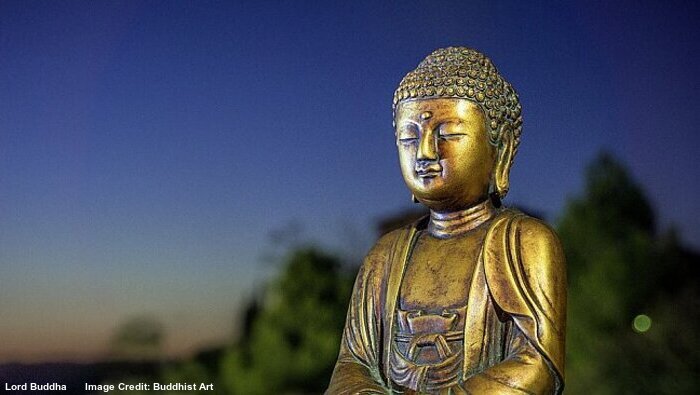
Lord Buddha (BCE 563/480 – BCE 483/400), too, stressed on the importance of debate, saying that one could find new avenues through conflicts only. After the demise of Lord Buddha, Buddhism found its new form mainly through music. In fact, the Indian Subcontinent has always given equal importance to Vedic Philosophy and to Atheistic Philosophy! Hence, the Charvaka Philosophy, an ancient school of Indian materialism that is considered as one of the fine examples of the atheistic schools in the Ancient Indian philosophies, did not disappear even during the Mughal Period! Charvaka philosophers, despite being minority, used to participate in debates organised by Mughal Emperor Akbar.
Keeping in mind the recent rise of fundamentalism in Pakistan and Bangladesh, it has become important to trace the real character of the Indian Subcontinent. Pakistan was founded as an Islamic Nation on August 14, 1947. In a sense, Pakistan denied the rich cultural heritage of the Indian Subcontinent that has been a meeting place of various religions and cultures for thousands of years. As the State defined its religious character during the formation of Pakistan, the scope for cultural diversity and showing dissent also disappeared. Bangladesh, too, could not get rid of the legacy of the Pakistani culture or the dominance of the majority. Both Pakistan and Bangladesh lack a democratic environment due to the absence of free communication between the State and the citizens. It is unfortunate that Bangladesh, which carries the legacy of the War of Liberation, has failed to build a solid foundation for democracy.
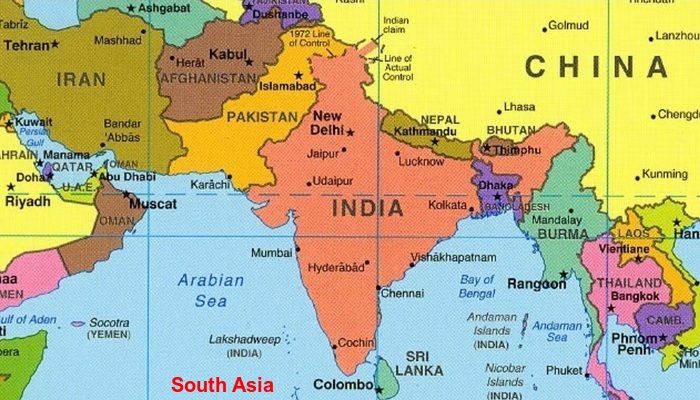
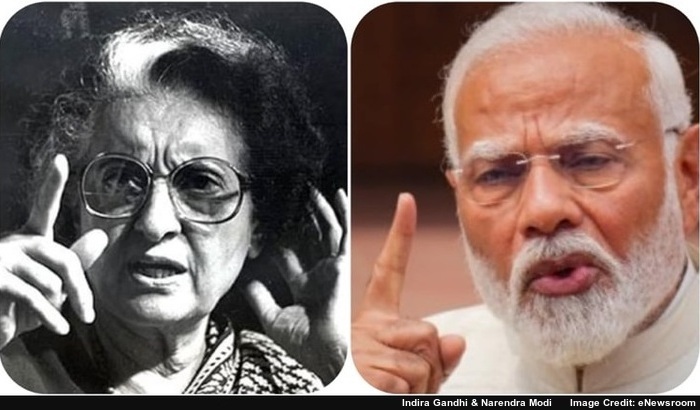
India stands in contrast to this. Attempts have been made to undermine the democratic values and to establish the supremacy of the majority in India, too. It experienced an Emergency Period in 1975-77 when Indira Gandhi, the then Prime Minister of India, sent almost all the leaders of Opposition parties to jail. The Emergency is widely considered as Dark Days of Free India. However, the people of India trusted in democracy to respond to the ruler even in extreme crises. Gandhi’s Indian National Congress party suffered a humiliating defeat across the country in the 1977 Parliamentary Elections because of its brazen misuse and abuse of power during the Period of Emergency Rule.
Indians have raised their voices, yet again, in order to stop the Hindutva propaganda that is going on in this country today. The Narendra Modi Government made an attempt to suppress those voices in 2019-24, but Prime Minister Modi’s Bharatiya Janata Party (BJP) failed to perform well in the 2024 Parliamentary Polls. Hence, the BJP did not get an absolute majority and Modi had to form a Coalition Government with the support of other parties.
The recognition of opposing views or opinions (which is the most important part of ancient Indian culture) is the only ray of hope during this crisis period.
Boundless Ocean of Politics on Facebook
Boundless Ocean of Politics on Twitter
Boundless Ocean of Politics on Linkedin
Contact: kousdas@gmail.com

 ISMC
ISMC Boundless Ocean Of Politics