

A Greek Spy In Ancient India!
Greek Spy in Ancient India in 300 BC? Book reveals Secrets!
Imagine a Greek diplomat living in India centuries ago, secretly sending reports back home about this amazing civilisation! That is the story of Megasthenes (died in 290 BCE), a visitor to the Mauryan Empire. Megasthenes, the ancient Greek historian, diplomat, ethnographer and explorer of the Hellenistic Period, penned a book, titled Indica, which gives us a rare look at how people used to live in ancient India. We do not know exactly when he wrote the book, but it was probably around the time when Chandragupta Maurya ruled India (BCE 322-298).
Indica is lost now. However, it gave the Western World a glimpse into a faraway and mysterious land.
Megasthenes was not just a random tourist; he was a diplomat sent by Seleucus Nicator, a successor of Alexander the Great, to strengthen ties with the powerful Mauryan Empire.

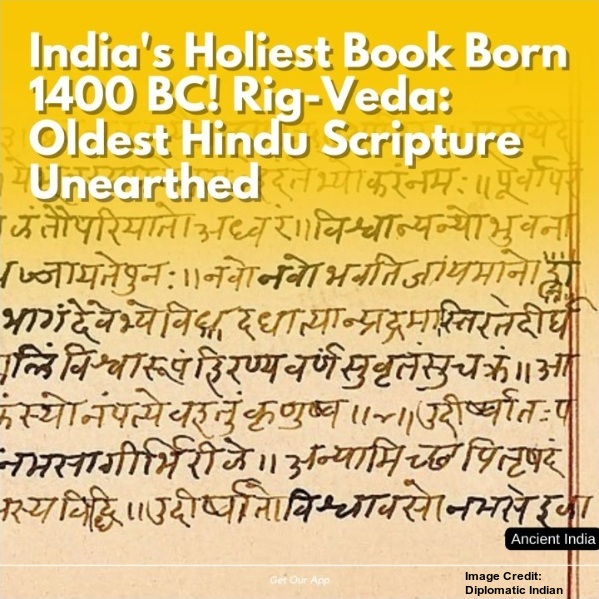
Imagine a time thousands of years ago when religious traditions were passed down by words of mouth. That all changed around BCE 1400 with the Rig-Veda, the oldest surviving Hindu scripture and one of the earliest Indo-European texts ever written!
More Than Just Prayers: The Rig-Veda is not just a book of chants and poems. Surely, it praises Hindu gods, like Indra, Agni (Fire) and Surya (Sun); but it also offers a fascinating glimpse into the lives, beliefs and social structures of the Vedic people. Think of it as a window into an ancient world. One learns about rituals, sacrifices and the concept of Dharma, a core Hindu principle about following the moral duty of human beings.
A Society Takes Shape: The Vedic Period was not just about writing down religious ideas. This era also saw the beginnings of Indian Philosophy, with people pondering big questions about life and the universe. Society also began to organise itself into different classes, laying the groundwork for the caste system that would become a feature of Indian life for centuries.
Let’s see what Megasthenes wrote about:
Geography and Landscape: He saw vast, fertile lands full of diverse plants and animals, and the Ganges River stood out to him as a major lifeline, essential for agriculture and transportation.
Religion and Philosophy: The ascetic practices of the sadhus (holy men) especially caught his attention, as they devoted themselves to spiritual pursuits.
Administration and Governance: The empire was divided into provinces, each managed by officials appointed by the emperor. He also noted a Council of Ministers who advised the emperor, making governance smooth and effective.

Chandragupta Maurya: Megasthenes got to see Chandragupta Maurya up close. He described him as a dynamic and capable ruler who established a strong Central Government.
Urban Life: Megasthenes mentioned about the bustling urban centres, especially Pataliputra (modern-day Patna), the capital. He described it as a magnificent city with grand palaces, strong fortifications and lively markets. The eastern Indian city’s layout and infrastructure, especially its drainage and sanitation systems, left him impressed.
Even though the original copy of Indica is lost, one can still learn about it from references in other Greek and Roman writings.
Diplomatic Indian published this article on July 3, 2024.
Boundless Ocean of Politics on Facebook
Boundless Ocean of Politics on Twitter
Boundless Ocean of Politics on Linkedin
Contact: kousdas@gmail.com

 ISMC
ISMC Boundless Ocean Of Politics