

Tracing The Roots Of Animal Cruelty
The Sociology-oriented concept of Post-Humanism and recent developments in Evolution, Biology, Neuroscience, etc. have changed human understanding of nature in recent times. Today, one knows that the source of oppression of men by men and animals by men is the same! In fact, the demarcation between humans and the animals is deeply rooted in the structure of repression (by the human species). Therefore, the well-being of human beings cannot (and should not) be discussed without talking about animals.
Although the Ancient Indian Philosophy recognised animal souls, it used to believe that they were inferior to human souls. On the other hand, the Western Philosophy believes in the non-existence of animal souls! René Descartes (March 31, 1596 – February 11, 1650), the French philosopher, scientist and mathematician who is widely considered a seminal figure in the emergence of Modern Philosophy and Science, declared that only humans have emotions while animal minds are just like machines! This suggests that human ideas about other species or animals can be considered as a fine example of irrationality. In other words, the concepts of mind, emotion and morality have always been species-based.
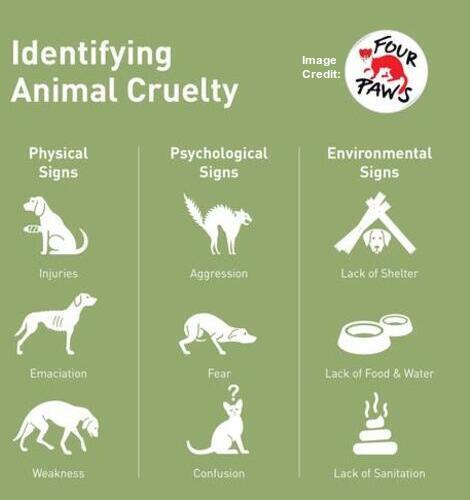
It may be noted that English naturalist, geologist and evolutionary biologist Charles Robert Darwin (February 12, 1809 – April 19, 1882) claimed that the evolution of humans and hominids (as well as animals) had taken place from the same source of life! His research shows that the more evolved the brain and autonomic nervous system of a creature, the more conscious species it is. He used to believe that both humans and animals have mind, as well as emotion. According to Darwin, mammals (which of course includes elephants and dogs) are quite advanced creatures. Later, neuroscientists showed that no matter how much people feel proud of their sense of logic, it is actually driven or controlled by emotion. Yet, humans consider themselves quite exceptional mainly because of their alienation from nature and species-centric thinking.
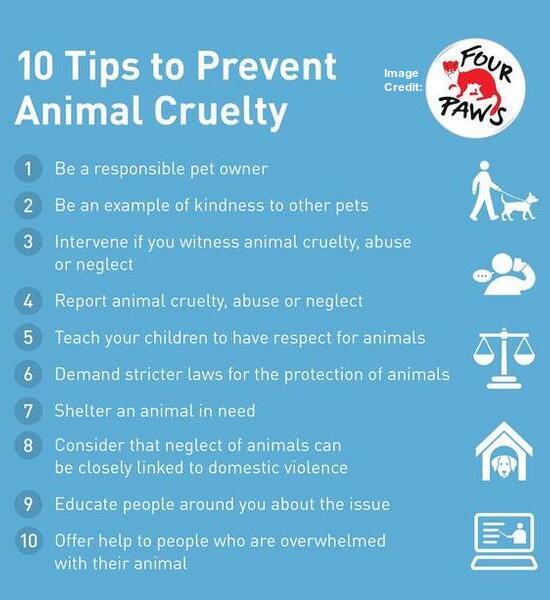
In reality, people mistreat other people and animals in the same way. Post-Modernists realised this fact even before Post-Humanists! Since the 1960s, Post-Colonial theorists, Post-Modern theorists and Feminists have been questioning the Western Liberal Humanist concept of otherness. It is because the Western Liberal Humanist thought has left room for various exceptions.
Interestingly, the Post-Humanists have related the process of suppression of human society not only to modernity, but also to the entire history of human civilisation. Slaves and women were not considered as proper human beings in ancient times. In the Colonial Era, Blacks received a similar treatment. Post-Humanists have rightly pointed out that the so-called superiors did not give due respect (or dehumanised) slaves, women, Blacks and also animals. The majority of human beings still believe that animal means those whose existence is purely physical and they have no mind. Therefore, animals cannot have any rights, not even the Right to Life, in many cases! Here, one can find the connection between a man’s behaviour with a man and a man’s behaviour with animals. Animal Rights activists, like Peter Singer and Tom Regan, have also found parallels between human cruelty to humans and human cruelty to animals.
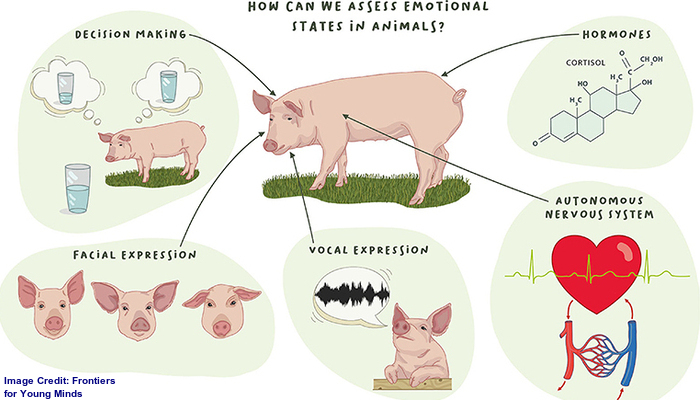
Both Science and Sociology have recognised the importance of the body by challenging the Cartesian dualism of body and mind. All the creatures, including humans and animals, have a body. Most importantly, the body also includes the mind! Humans have developed a tendency to ignore physicality due to their cultural pride. All the creatures want to keep their bodies healthy as physical injury, illness and death are painful for everyone. Still, some humans hurt animals and even other humans, physically!
Paul-Michel Foucault (October 15, 1926 – June 25, 1984), the French historian of ideas and philosopher, explained how humans rule other humans at the biological level through his Theory of Biopower. Later, the Post-Humanists, such as Jacques Derrida (July 15, 1930 – October 9, 2004), Cary Wolfe (born 1959) and others, did the same. Derrida concentrated on animal behaviour in his final days. He stressed: “The most important question is not whether animals do or do not have access to logos, speech, spirit, tekhnē, death and the like, but to know whether animals can suffer. Being able to suffer is precisely this possibility without power, this radical finitude that man shares with the animal.” Since this question has never been raised in this manner; human civilisation, philosophy, policy and politics stand on the practice of sacrificing some people (as well as animals) for the sake of others. Hence, attempts are still being made to deprive some people and animals of the minimum necessities of life often by killing them.

Here, Derrida’s statement enters the field of Philosophy from the emotions of empathy and sympathy, questioning the basic sense of human life, the world and thought patterns of human beings. It has a great significance not only for animals, but also for humans. Derrida raised another important question: Why do humans claim sovereignty and oppress animals in spite of the fact that they all are born on the same Earth? In other words, why should humans rob animals of their own habitat or kill them? Derrida stated that the biggest difference between humans and animals is that animals cannot be brutal or cruel like humans. He said: “No one can deny seriously any more, or for very long, that men do all they can in order to dissimulate this cruelty (towards animals), or to hide it from themselves; in order to organise on a global scale the forgetting or misunderstanding of this violence, which some would compare to the worst cases of genocide (there are also animal genocides: the number of species endangered because of man takes one’s breath away).” (The Animal That Therefore I Am; 2006)
According to Derrida, human consciousness is active only for those whom people consider us or our own people, and not for others. An Amygdala, which is the source of fear and aggression, is deep in the brain. This small and almond-shaped Amygdala is a part of the limbic system that is involved in many aspects of brain function, including emotional processing, fight-or-flight response, decision-making, motivation and memory. It is also the source of aggression and thoughts about otherness! As animals are quite different from humans due to their physical structure, humans consider them other. Humans often treat the other as an enemy and hate or persecute them. Only few treat other as friends. Hence, humans use animals for their own interests and also do not hesitate to kill them! This is the politics of the human species.
The environmental crisis has triggered a terrible conflict among people themselves in recent times. Hence, it becomes necessary to question this sort of politics. Perhaps, it is the right time to see human existence as part of the entire animal world and to give importance to peaceful coexistence of all creatures. Instead of considering animals as other, one needs to ensure the peaceful coexistence of all the species. Even before the Post-Humanists, Max Horkheimer (February 14, 1895 – July 7, 1973) and Theodor W Adorno (September 11, 1903 – August 6, 1969) of the Frankfurt School extended the Classical Marxist analysis of Capitalism to include animals. Descending from the very top of the social edifice, philosophers associated with the Frankfurt School of Critical Theory found the slaughterhouse, flooded with animal blood, in the basement!
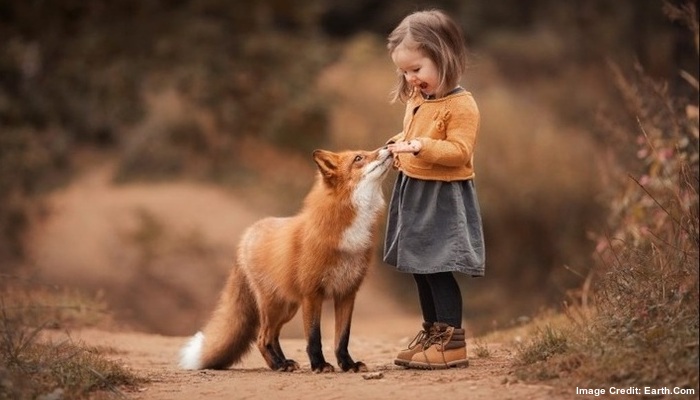
Humans cannot afford to stay alienated from nature, as well as other species, anymore, if they really want to protect the environment.
Boundless Ocean of Politics on Facebook
Boundless Ocean of Politics on Twitter
Boundless Ocean of Politics on Linkedin
Contact: kousdas@gmail.com

 ISMC
ISMC Boundless Ocean Of Politics