

New Maritime Corridor To Benefit Russia, India
Russia and India have started using a new maritime trade route, called the Chennai-Vladivostok Maritime Corridor (CVMC), bypassing the ever-busy Suez Canal. New Delhi has claimed that the corridor has reshaped regional, as well as global, trade networks for India. It has become easier for ships to reach Russia from India in a short span of time through this route. Experts believe that the CVMC is going to be a new milestone for the Indian economy!
Sarbananda Sonowal, the Indian Minister of Ports, Shipping and Waterways, confirmed on November 18, 2024 that the CVMC became fully operational, stressing that the route would be a game changer as far as India-Russia trade was concerned. India, usually, uses the Suez Canal for trade with Europe and it takes at least 40 days for a container ship to travel from India to Russia on this route. With the CVMC emerging as a new alternative, the Indian ships can save both time and cost while travelling to Russia.
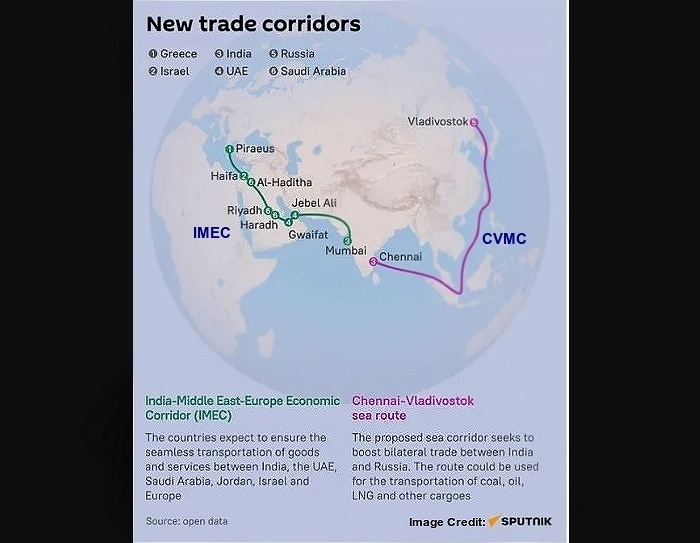
The Indian ships have to sail a distance of 8,675 nautical miles or 16,666km to reach Europe via the Suez Canal. Furthermore, Egypt charges a fee of USD 70,000 per ship to transport cargo through this canal! On the other hand, the distance from the southern Indian city of Chennai to the eastern Russian city of Vladivostok is 5,647 nautical miles or 10,459km by sea. Hence, it would take just 16-20 days for a large container ship, which travels at the normal cruising speed of 20-25 knots (or 37-46km) per hour, to reach Europe from India.
Nowadays, Egypt occasionally closes the Suez Canal due to the ongoing geopolitical crisis in West Asia, making it difficult for the Indian ships to reach Europe. It may be noted that China maintains cordial ties with Egypt. Hence, Beijing may request Cairo not to allow India to use the Suez Canal. Such a move would certainly cripple the Indian economy. That is why New Delhi was looking for an alternative route. According to Sonowal, the CVMC has resolved this problem.
Vladivostok has a huge strategic importance as the biggest Russian seaport on the Pacific Ocean is situated here. The distance from Vladivostok to the Chinese border is only 50km. The CVMC traverses important maritime areas, such as the Sea of Japan, South China Sea, Straits of Malacca, Bay of Bengal, and Andaman and Nicobar Islands. This corridor also connects the Indian ports of Paradip and Visakhapatnam to different ports in the Indo-Pacific Region. Hence, the CVMC has strengthened India’s presence in this region.
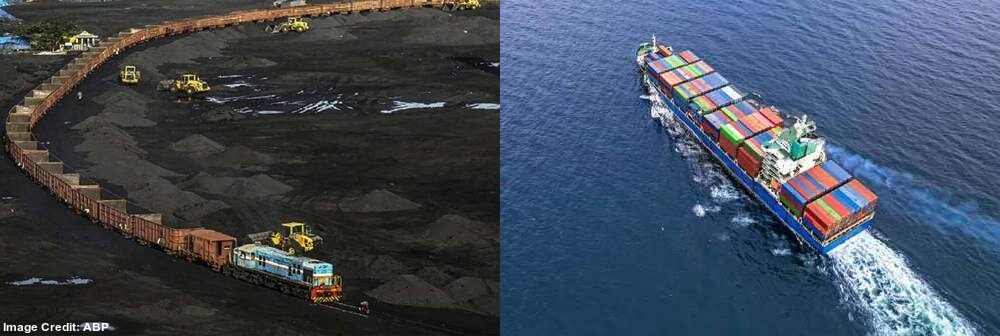
India has been importing crude oil from Russia at cheap rates since the beginning of the Ukraine War on February 24, 2022. The South Asian nation has not only started importing crude oil through the new maritime route, but also exporting textiles, pharmaceutical products, tea, machineries and engineering goods to Russia. This maritime route would also boost the Russian economy, as Moscow could easily export crude oil to the East Asian nations through this particular corridor.
Sonowal stated: “This maritime corridor has the potential to redefine the trade relationship between India and Russia. We have been able to reduce the dependence on Western dominance and traditional supply chain.” The Indian minister added: “The CVMC has unlocked new avenues for trade and fortified supply chain resilience across the region.” During his visit to India in the second week of November 2024, Russian First Deputy Prime Minister Denis Valentinovich Manturov stressed on increasing the volume of import and export with the South Asian nation. At present, India is trying hard to reduce the trade deficit with Russia. India and Russia are aiming to achieve USD 100 billion in bilateral trade by the end of 2030. Analysts are of the opinion that the CVMC is going to play an important role in achieving this target.
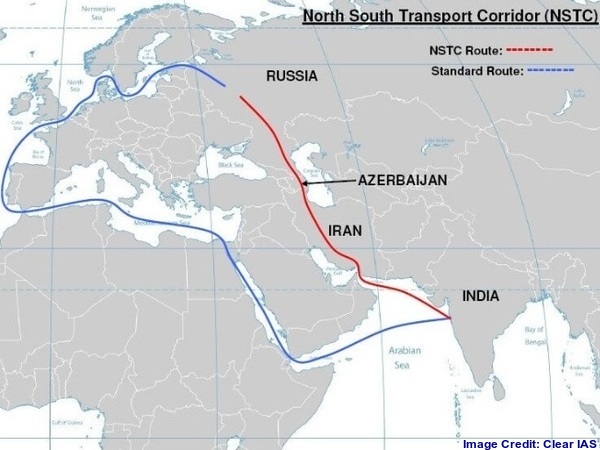
In fact, New Delhi opened the first commercial corridor with Moscow in June when Russia sent coal by train from Saint Petersburg to Mumbai through the 7,200km-long International North-South Transport Corridor (INSTC). INSTC is basically a multi-mode network of ship, rail and road routes, linking the Indian Ocean and Persian Gulf to the Caspian Sea via Iran and then onwards to northern Europe via Saint Petersburg. The route primarily involves moving freight from India, Iran, Azerbaijan and Russia. On this route, cargo from Saint Petersburg arrives at Chabahar port in Iran through Central Asia. From Chabahar, the cargo reaches Mumbai port by sea. However, Russia and India are dependent on other countries while using this corridor.
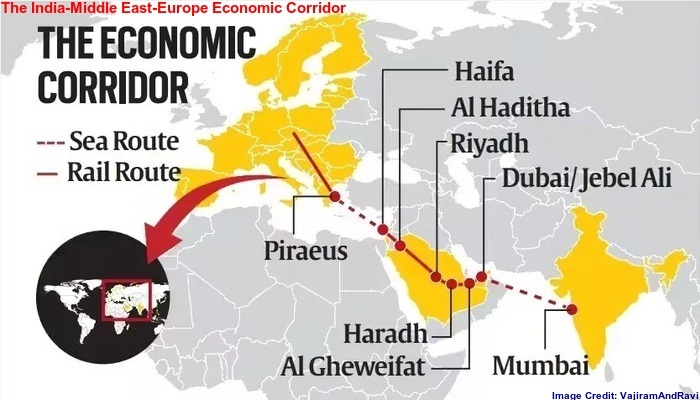
The 2023 G20 Summit in India decided to build another corridor, the India-Middle East-Europe Economic Corridor (IMEC) in order to connect the South Asian nation to Europe. This corridor would begin from western Indian city of Mumbai and end in Greece through the Mediterranean Sea over West Asia. As per the original plan, the IMEC shall connect the Indian ports of Mumbai and Mundra to the UAE by waterway. From the UAE, the cargo shall reach Haifa Port of Israel via Saudi Arabia and Jordan by rail. Then, the export items shall be transported to the Port of Piraeus in Greece through the Mediterranean Sea.
Meanwhile, the ongoing armed conflict between Israel and the Palestinian Hamas Movement has delayed the implementation of the IMEC project.
Boundless Ocean of Politics on Facebook
Boundless Ocean of Politics on Twitter
Boundless Ocean of Politics on Linkedin
Contact: kousdas@gmail.com

 ISMC
ISMC Boundless Ocean Of Politics