

Russia Uniting China, India For Lunar Nuke Project
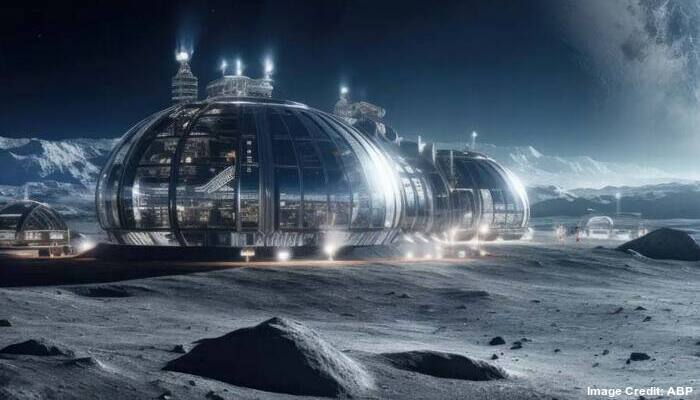
Russia and China have started making preparations for building a research centre on the lunar soil within the next decade. India, too, is ready to join hands with arch-rival China and friend Russia in order to implement this huge project! In fact, Russia has managed to unite India and China for this purpose. Russia also wants to build a nuclear reactor on the Moon by 2035 with the help of India and China in an attempt to ensure uninterrupted power supply to the proposed research centre.
According to a report published by leading Russian news agency TASS, Roscosmos, a state corporation of the Russian Federation responsible for space flights, cosmonautics programmes and aerospace research, and China National Space Administration (CNSA) have decided to build the research centre on the Moon in a joint venture. The Kremlin wants India to join this venture. As Russia plans to send astronauts to the Moon by the end of 2040, it wants to set up the centre in advance. These three countries need the centre for conducting research and exploration, and uninterrupted power supply would be required to run that centre. Solar panels would not be a source of power on the Moon because the duration of a single lunar day (from sunrise to sunset) is approximately 14 Earth days! Hence, a Nuclear Power Plant (NPP) would be the best alternative to generate power there.
TASS reported that Rosatom, a Russian state corporation headquartered in Moscow that specialises in nuclear energy, nuclear non-energy goods and high-tech products, would build the NPP in cooperation with India and China. Alexey Likhachev, the Director General of Rosatom, told TASS that the NPP would produce up to 500 kilowatts of electricity for the research centre. At the same time, he admitted that building a nuclear reactor on the Moon would not be an easy task. According to Likhachev, much of the construction may be carried out autonomously, reducing the need for direct human involvement. “By the way, with the involvement of the international community, our Chinese and Indian partners are very interested in this. We are trying to lay the foundation for several international space projects,” he stressed.
Earlier, NASA had announced that it would generate nuclear power on the Moon in a few years. Media reports suggest that the US space research agency is gearing up for the Artemis 2 lunar mission that is scheduled to launch in September 2025. This mission is estimated to cost over USD 93 billion (between 2012 and 2025). NASA also announced that a small electricity-generating nuclear fission reactor could be used during a future demonstration on the Moon and to inform future designs for Mars.
In 2021, Russia and China unveiled plans for a joint lunar base, called the International Lunar Research Station (ILRS), with potential commissioning between 2035 and 2045. Moscow and Beijing also announced that other interested countries could use the ILRS for research purposes. The project has laid the groundwork for current plans, involving India. As expected, NASA did not respond to this call of Russia and China.
Russia also plans to launch an International Space Station by 2025. Therefore, many believe that Moscow would not allow NASA astronauts to use the proposed lunar research centre. So far, the US, Russia, China, India and Japan have successfully landed their spacecraft on the Moon. Now, India’s participation in the Sino-Russian lunar NPP project marks a significant step in the global race to establish a permanent presence on the surface of the Moon. Despite the complexity of the project, safety remains a key concern. Russia has claimed that the reactors are designed to automatically shut down in case of any issues, mitigating safety concerns.

Meanwhile, neither the Government of India nor the Indian Space Research Organisation (ISRO) has made any comment on this joint venture!
Boundless Ocean of Politics on Facebook
Boundless Ocean of Politics on Twitter
Boundless Ocean of Politics on Linkedin
Contact: kousdas@gmail.com

 ISMC
ISMC Boundless Ocean Of Politics