

On The ‘Global Elections Super Cycle’…
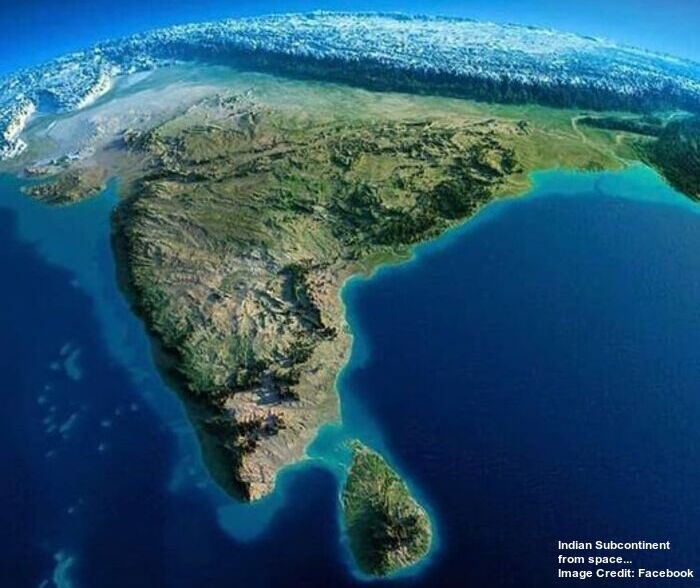
The year 2024 began with two Parliamentary Elections in the Indian Subcontinent. While the General Elections took place in Bangladesh on January 7, Pakistan held Parliamentary Polls on February 8. The biggest difference in the elections of these two countries was the stability of the Prime Ministers! None of 29 Prime Ministers of Pakistan has managed to complete her/his five-year term so far. Imran Ahmed Khan Niazi was ousted as Prime Minister shortly before the February 8 elections. The political culture of Bangladesh is quite different, as Sheikh Hasina Wazed was re-elected even after serving as Prime Minister for 15 years (since 2009)!
Interestingly, similarities have been noticed in the electoral context of Pakistan and Bangladesh. While Pakistan has spent half of its last 75-year history under military rule, Bangladesh has spent half of its 50-year history in a likewise manner. Moreover, the US and its Western allies showed a similar attitude towards the Parliamentary Elections in the two South Asian countries, and also allegedly interfered in the polls!
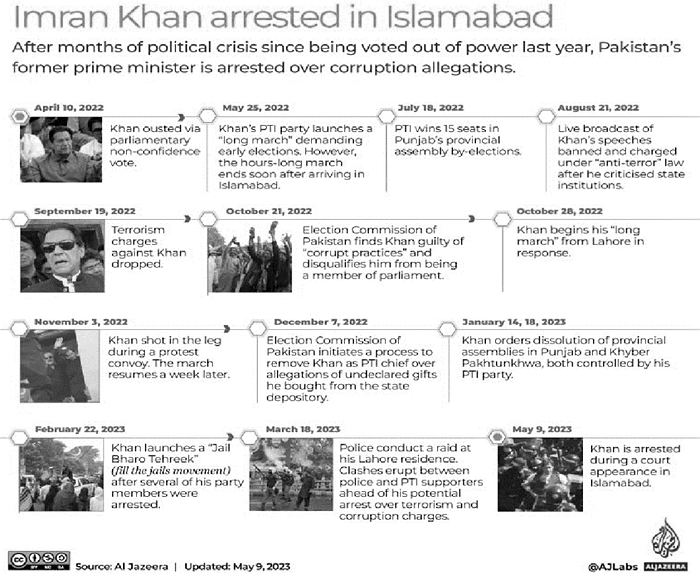
The foreign powers started interfering in internal affairs of Pakistan in early 2022. Many believe that Imran Khan came to power in 2018 with the support of the Pakistani Army and it is quite a common phenomenon in Pakistan. However, the cricketer-turned-politician gradually started implementing a somewhat independent national policy after becoming the PM! Khan not only opposed the US on various issues, but also praised the economic development of arch-rival India. The issue reached a critical stage when he visited Russia in February 2022, amid the Russia-Ukraine War! It was the first visit to Russia by a Pakistani Head of State after 25 years. As expected, Khan met Russian President Vladimir Vladimirovich Putin in Moscow. Instead of condemning the Kremlin for triggering the war against Ukraine, Khan stressed that the problem should be resolved through diplomatic talks. His statement hurt the US and most importantly, the Pakistani Army described Russia as an aggressor! Pakistan has long been an important player that protects the US’ military influence in Asia on the basis of various agreements, such as the Southeast Asia Treaty Organisation (SEATO) and the Central Treaty Organisation (CENTO). As the US defence support is the main strength of the Pakistani Army, Khan’s ouster became inevitable.
Imran Khan did not keep all these a secret. At a public meeting, he reportedly discussed about a threatening letter that he had received from the US Government and called for fresh elections! However, the Supreme Court of Pakistan declared Khan’s move to dissolve the Parliament illegal and the former Prime Minister lost the Vote of Confidence in the Legislature. The Supreme Court also sentenced Khan to 10 years in prison for violating national security by making the letter (of the US Government) public! The Election Commission did not allow his Pakistan Tehreek-e-Insaf (PTI) Party to take part in the 2024 Parliamentary Polls. Finally, a Coalition Government (without Khan) came to power in Pakistan on February 8, fulfilling the US’ hopes.
The US and its Western allies have also been worried about Parliamentary Elections in Bangladesh for a long time. Uzra Zeya, the US Under Secretary for Civilian Security, Democracy and Human Rights, held a meeting with Sheikh Hasina in New York on September 21, 2023. Later, she announced that the US would not grant visas to any Government officials of Bangladesh, leaders of ruling or opposition parties, law enforcement officials and their families who would obstruct democratic activities during the polls. In October 2023, Maria Vladimirovna Zakharova, the spokesperson of the Russian Ministry of Foreign Affairs, alleged in a report that US Ambassador to Bangladesh Peter D Haas had planned to organise Anti-Government protests with the help of various opposition leaders in an attempt to destabilise the South Asian country!
According to a media report published on October 17, 2023, visiting US Deputy Assistant Secretary of State in the Bureau of South and Central Asian Affairs (SCA) Afreen Akhter told the then Bangladeshi Foreign Minister, Masood Bin Momen, that the Sheikh Hasina Government should resign by November 3 (2024), else Washington DC would take special measures! After the publication of this report, a Public Interest Litigation (PIL) was filed at the Dhaka High Court so that Sheikh Hasina could continue as Prime Minister. On October 27, 2023, the ruling Awami League Party and the opposition Bangladesh Nationalist Party (BNP) held mass rallies in Dhaka, with BNP supporters clashing with the Police in various places. The BNP called a nationwide strike the next day (October 28). The US Embassy in the capital city of Bangladesh issued a statement immediately after the strike, mentioning that it would review all violent incidents for possible visa bans.
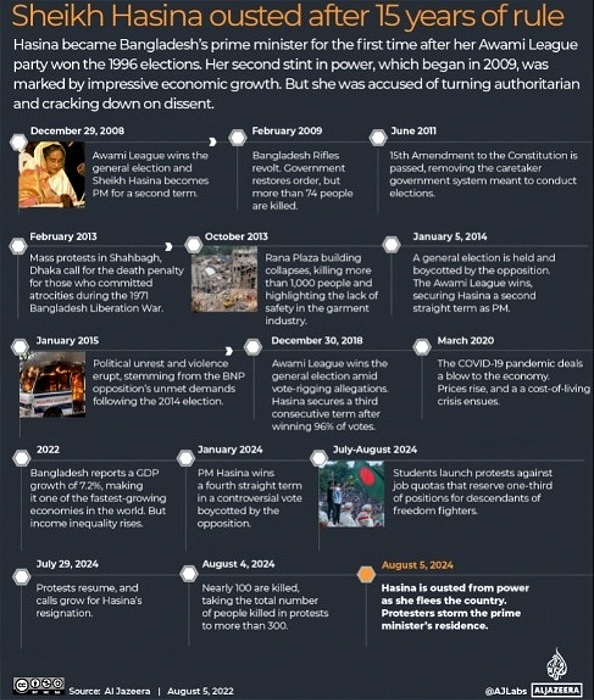
Unlike Pakistan, there was no change in the Government in Bangladesh after the 2024 Parliamentary Elections, as Sheikh Hasina returned to power, yet again! Of course, the US and the Western European countries were quite unhappy with the outcome of this election. It is also a fact that the last few General Elections in Bangladesh were not at all free and fair and people were quite angry about it. Hence, the Students’ Movement against reservation in jobs gained public support and rocked the nation just six months after the Parliamentary Elections. However, no one could imagine that the movement would turn into a violent and bloody uprising, leading to the fall of the Hasina Government.
The students’ movement gradually became an anti-Indian movement, with the Islamist forces playing an important role in triggering the fall of the Government. As expected, the US and its Western allies backed this movement. Like Imran Khan, Sheikh Hasina was ousted in July 2024. Surprisingly, the Bangladeshi Army, which had plotted a number of coup d’états in the past, supported the controversial mass protests against the Hasina Administration, this time! Later, Hasina hinted at US hands in her ouster, stating: “I resigned so that I did not have to witness the bloodshed. They wanted to seize power over the dead bodies of students, but I did not allow it. I stepped down from the premiership.” She added: “I could have stayed in power if I had surrendered the sovereignty of Saint Martin Island and allowed the US to dominate the Bay of Bengal.“
India, too, held Parliamentary Elections in May 2024, although the electoral context was completely different there. India has never experienced military rule and the majority of Prime Ministers have completed their full terms in office. It is obvious that major global powers have an eye on the Indian elections, politics and governance mainly because of its large population, size and economy. Since the Second World War, India has never been part of any Western power axis. Instead, it has largely remained close to the erstwhile Soviet bloc and present-day Russia.
During Prime Minister Narendra Modi‘s visit to the US in 2023, 75 Democratic Congressmen sent a letter to President Joe Biden, asking him to discuss the issue of oppression of minorities and opposition parties by the Government of India with Modi. Although Prime Minister Modi’s Bharatiya Janata Party (BJP) failed to get an absolute majority in 2024 Parliamentary Polls, he formed a Coalition Government with the help of two regional parties. PM Modi and his BJP did not introduce some important bills in the Parliament in the last 10 years, in spite of enjoying an absolute majority. Now, it has become difficult for the Modi Administration to introduce those bills.
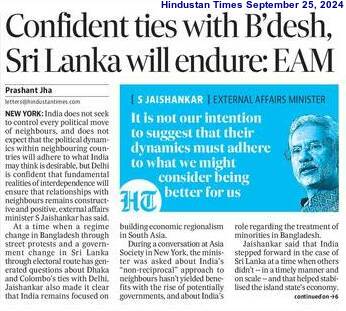
In such a scenario, 40 organisations and more than 300 leaders of the Federation of Indian American Churches in the US claimed in August 2024 that the number of attacks on Christians has started to increase in India since Modi became Prime Minister in 2014. They also urged the US Government to declare India a Country of Special Concern and to take appropriate action against it! India is not Bangladesh or Pakistan. Hence, nation-wide mass protests cannot help the Army to take political control in India! However, it is quite possible for major global powers to trigger the fall of the Modi-led Coalition Government by influencing the regional parties!
This is the reason why India should be wary of the present situation…
Boundless Ocean of Politics on Facebook
Boundless Ocean of Politics on Twitter
Boundless Ocean of Politics on Linkedin
Contact: kousdas@gmail.com

 ISMC
ISMC Boundless Ocean Of Politics