

Opening The Door To New Perspectives…
Once India had refused to accept the concept of good Taliban, stressing that New Delhi would never establish ties with a terrorist outfit. However, the changing geopolitical landscape in South Asia has prompted India to change its stand. Nearly two-and-a-half years after the change of power in Kabul, the Narendra Modi Administration in New Delhi has resumed diplomatic activities with the Taliban. On March 7 (2024), an Indian delegation, led by Joint Secretary of External Affairs Ministry J P Singh, met Amir Khan Muttaqi, the Afghan Taliban politician serving as acting Minister of Foreign Affairs of the Islamic Emirate of Afghanistan, in Kabul.
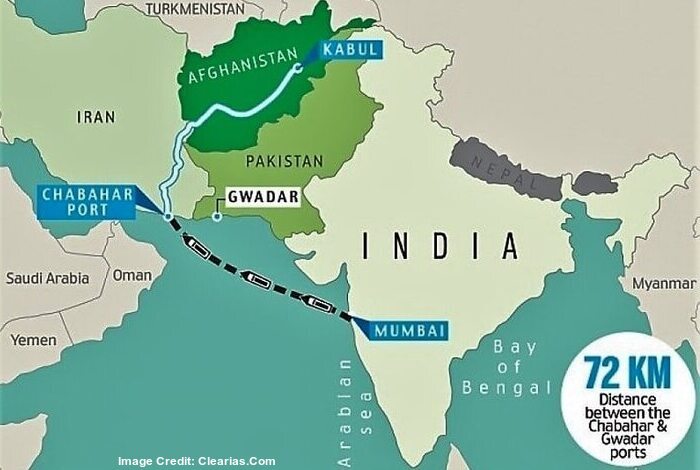
Interestingly, the Indian officials met the Taliban minister three weeks after China held diplomatic talks with the Afghan outfit. Some diplomats are of the opinion that India has made the move in order to protect Afghanistan from China’s trap. Earlier in 2024, India announced to provide Afghanistan with 50,000 tonnes of wheat, medicines, COVID-19 vaccines and other relief materials. A senior Taliban spokesperson said that the two sides discussed various issues, including increasing bilateral economic cooperation and trade volume through transit routes, fighting corruption and countering ISIS (Khorasan) militancy, during the March 7 meeting. India has been working hard to increase commercial transactions through Iran’s Chabahar Port using Afghan soil in recent times.
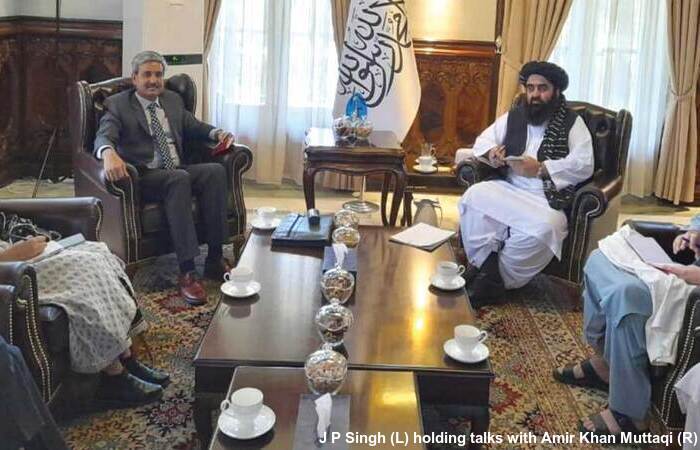
Reports suggest that the Afghan Foreign Minister thanked India for its humanitarian assistance, saying that the regime in Kabul “seeks to strengthen political (and) economic relations with India as an important state-actor in the region, in line with the Taliban’s ‘balanced foreign policy’”.
For his part, spokesperson of the Indian Ministry of External Affairs Randhir Jaiswal stated that the J P Singh-led delegation met senior Taliban officials, former President Hamid Karzai, UN Assistance Mission in Afghanistan (UNAMA) officials and members of the Afghan business community during their stay in Kabul. “The delegation held discussions on India’s humanitarian assistance to the people of Afghanistan and also discussed the use of Chabahar port by Afghan traders,” he added, referring to the Iranian port where an Indian state-run firm operates a terminal. Jaiswal told the press: “India has historical and civilisational ties with the Afghan people and these longstanding linkages will continue to guide our approach.”
Although the militant organisation with an ideology comprising elements of Pashtun nationalism and the Deobandi current of Islamic fundamentalism seized power through a civil war in August 2021, the Taliban-led Government in Kabul is still not recognised by the UN. India, the US, Britain and some other countries, too, are yet to establish diplomatic ties with Taliban-ruled Afghanistan. In such a situation, the meeting between Muttaqi and the Indian officials is considered to be diplomatically significant.
It may be noted that the Taliban fighters captured most of Afghanistan, including Kabul, on August 15, 2021. Nearly 10 months later, the officials of the Indian Ministry of External Affairs arrived in Kabul. J P Singh had held a meeting with Muttaqi and other top Taliban officials in Kabul in June 2022. However, India has not yet formally established diplomatic relations with the Taliban Government in Afghanistan.
Boundless Ocean of Politics on Facebook
Boundless Ocean of Politics on Twitter
Boundless Ocean of Politics on Linkedin
Contact: kousdas@gmail.com

 ISMC
ISMC Boundless Ocean Of Politics