

On The Blind Submission To Authority…
Freedom House, a Washington DC-based non-profit organisation that is best known for political advocacy surrounding issues related to Democracy, Political Freedom and Human Rights, has been measuring Political and Civil Liberties of people in different countries on the basis of some yardsticks for the last eight decades. As expected, there are objections to the index published by Freedom House every year. Many countries are not happy with compilation of indices or numerical measurements by this organisation founded in October 1941. However, Freedom House’s indicators are useful in creating an acceptable understanding of the functioning of Democracy in a country.
As per the latest index of Freedom House, India has scored a total of 33 out of a possible 40 points as far as basic elements of Political Rights, such as the electoral process, the right to contest election, equal voting rights, etc., are concerned. On the other hand, the South Asian nation has managed to get only 33 out of 60 points in other areas, including Freedom of Press, Religious Freedom, Freedom of Speech, Freedom of Education and Independence of the Judiciary. Hence, India is considered a Partially Free country as per the 2023 Freedom House Index.

To many, an assessment of Democracy by foreign institutions may seem quite offensive. However, the majority of Indians have realised that the index prepared by Freedom House is not at all misleading, as far as Civil Liberties are concerned. Incidentally, the people of India do not bother about Civil Liberties, and even the political position of the ruler, as long as there is no emergency situation. The adverse impact of the deteriorating democratic environment in India and the possible imposition of contingent political conditions on people may seem absurd to many at the moment. The percentage of people who discuss the political environment of Russia, China or North Korea is nothing compared to India’s vast population.
In fact, Indians believe that only a war or a civil war, and not a mere change in the government, can shake the basic foundations of the existing political system in their country. If the institutional voting system in local, provincial and national levels remains fairly functional, then not many Indians bother about the political dynamics of the country. The question arises here: Whether it is bad for the economy, if Democracy declines in the country and authoritarianism is slowly, but surely, established without creating any emergency situation. In case food, clothes and shelter become the last resort of political judgement, then an authoritarian ruler may easily dictate the terms of the economy and may also influence the thought process of people in a different manner. One should also consider whether the backward classes are worried about economic authoritarianism.

Political personalities, like Hungarian Prime Minister Viktor Mihály Orbán, back the establishment of an authoritarian system, stressing that a visionary and strong leader, along with some thirsty tough guys, can only get rid of Democracy and ensure a rapid economic growth! Authoritarian rulers often call a country a Developmental State, where a strong authoritarian bureaucratic system decides the need of the people, instead of ensuring Right to Property and Rule of Law. They believe that Liberal Democratic debates hamper fiscal growth! Authoritarian leaders, and not members of the elite class, have started coming to power through the electoral process in different parts of the globe in recent times. They usually blame the minorities, people who monitor the functioning of a country’s political system, foreign powers or the media for all the crises created by them. In other words, devious authoritarian rulers blame other factors for the failure of a Democratic System. In fact, most people always look for someone to blame for their situation.
The data suggests that although authoritarian leaders are efficient in grabbing power, their economic achievements are not at all stunning. Except for Singapore and Rwanda, national income has grown at a higher rate under Democracies everywhere. National income in Democracies is much more stable or less uncertain than in an Authoritarian System especially in lesser developed countries. One should consider the upheaval of domestic industry in relatively advanced China in this regard. Some data suggest that there is little reason to believe that China’s national enterprises, under tight Government control, are quite successful. Almost all the Chinese companies receive cheap loans from nationalised banks, apart from enjoying subsidies, tax exemptions etc. Incidentally, the Chinese Government has shut down a Beijing-based research institute that made the revelation.

Currently, some private organisations in India enjoy similar facilities by (mis)using their political connections. For example, if the busiest route of the former National Airlines (Air India) remains closed, then the private airline companies get an opportunity to make a huge profit. Similarly, consumers, fed up with the poor service of the State-run telecom company, help the private telecommunications business to grow. In spite of getting various benefits, businesses fail to boost the innovative power of people due to the absence of Freedom of Thought. Huge capital investment in a country cannot be an alternative to innovative power of people. It was seen in the past that capital failed to increase the growth rate in a significant way. Otherwise, poor countries could have experienced rapid economic growth only by collecting capital for investment purposes. It did not happen because of the lack of human resources and innovative power.
It is impossible for a country to maintain a steady economic growth only by importing technology and borrowing skills from abroad. Innovative power is appreciated in an Authoritarian Political System, too. However, it is used for individual growth, and not for the overall economic growth of the country. Albert Einstein‘s Germany is a fine example of how an authoritarian system evaluates scientists or researchers.
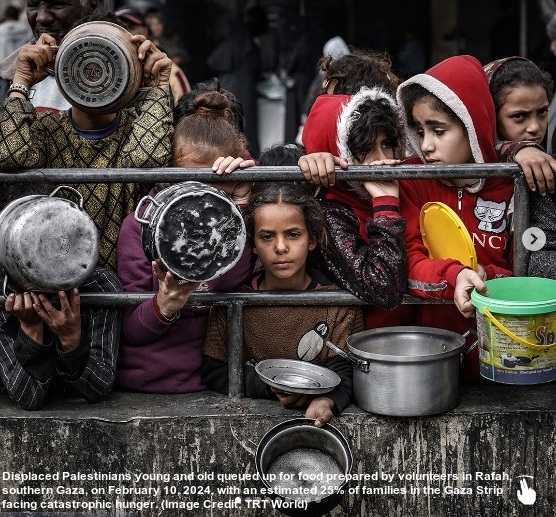
Of course, an authoritarian ruler can be benevolent. However, it is like winning a lottery. In an authoritarian state, the distribution of necessary commodities is not up to the mark due to the absence of democratic institutions. Still, the poor people depend on this distribution system. Mutual trust is also an important factor, even in the field of business agreements, in this world. The main problem of a benevolent authoritarian ruler is that the person does not have any institution for distributing necessary commodities among people in a just manner. (Here one can recall John Rawl‘s Theory of Distributive Justice) There are not many examples like Harun al-Rashid of Baghdad. The reign of Harun al-Rashid (born Abu Ja’far Harun ibn Muhammad al-Mahdi; AD 763/766 – March 24, 809) is traditionally regarded to be the beginning of the Islamic Golden Age. The fifth Abbasid Caliph of the Abbasid Caliphate had ruled the present-day Iran and Iraq from September 786 until his death in March 809. During his rule, Baghdad began to flourish as a global centre of knowledge, culture and trade. However, one should not wait for a ruler like him in the modern world.
Boundless Ocean of Politics on Facebook
Boundless Ocean of Politics on Twitter
Boundless Ocean of Politics on Linkedin
Contact: kousdas@gmail.com

 ISMC
ISMC Boundless Ocean Of Politics