

Oh God!!!
Many Europeans used to practice Polytheism in the 4th-6th Century, and early Christians called them Pagans. The Greeks, too, used to practice Paganism, a term first used in the 4th Century by early Christians for people in the Roman Empire who practiced polytheism or ethnic religions other than Judaism. Interestingly, those who were called Pagans did not identify themselves as Pagans. According to Norse (or Nordic or Scandinavian) Mythology, many used to worship Odin, while others were worshipers of Thor. There were many such gods in Europe, and people worshiped whatever god they wanted. The Christian history did not mention religions or gods worshipped in Europe after the Middle Ages, as the early Christians eradicated pluralist religions from Europe with the help of monarchs.
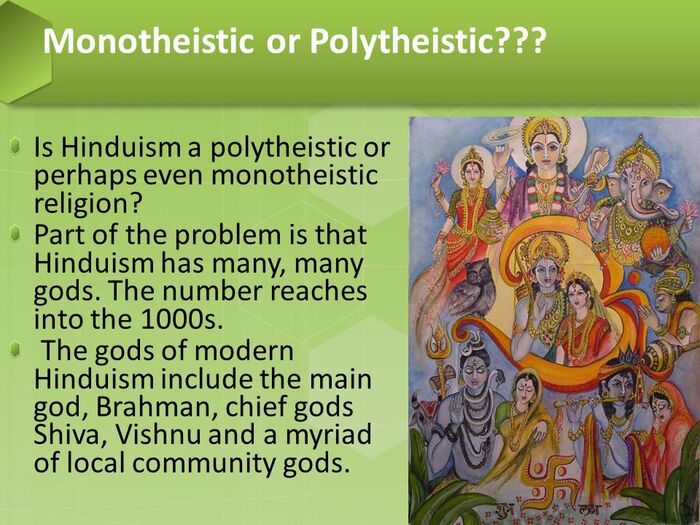
Similarly, Brahmanism also has polytheism at its root in India. Some of them call themselves Vaishnavas (worshipers of Lord Krishna), some Shaivas (worshipers of Lord Shiva), while others call themselves Shaktas (worshipers of Goddess Kaali or Kalika). It may be noted that Brahmanism is the complex sacrificial religion that emerged in post-Vedic India (c. 900 BC) under the influence of the dominant priesthood (Brahmans), an early stage in the development of Hinduism. In Sanskrit, Brahman means the supreme being. The philosophies of different communities, their spiritualism and traditions have been passed down from one generation to the next. The outside world called these people Hindus. However, those who were called Hindus identified themselves by the names of their respective religious communities. Polytheists were not the only ones who used to identify themselves by the name of their communities. If one goes through the history of Medieval Europe, s/he shall find that each of them was identified by the name of their community. No one called her/himself a Christian.
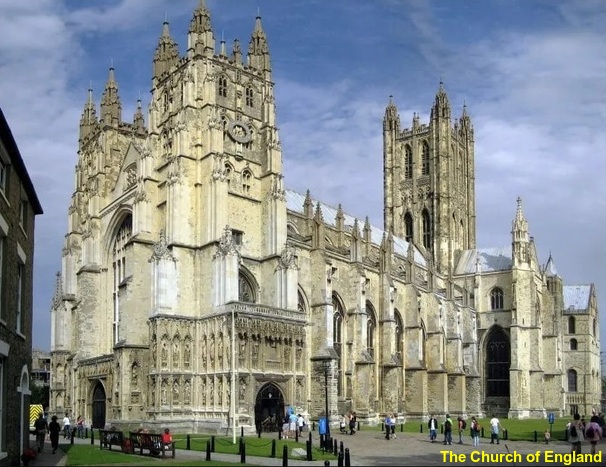
King Henry VIII (June 28, 1491 – January 28, 1547) founded the Church of England or the Anglican Church in 1534. At that period of time, some used to follow Catholicism, while others were part of the Anglican Communion. They used to fight among themselves as if they belonged to two different religious communities. In fact, they considered themselves as followers of two different religions. During that chaotic period, Catholics fled the country, while some went underground, and others perished.
After the demise of King Henry VIII, his daughter Mary I (February 18, 1516 – November 17, 1558) ascended the throne of England (and Ireland). She was known as Mary Tudor and also as Bloody Mary by her Protestant opponents. She strongly believed in Catholicism under the influence of her mother. Immediately after becoming the Queen, Mary I tried to wipe out her father’s religion from the mainstream English society. After her death, Mary I’s half-sister Elizabeth I (September 7, 1533 – March 24, 1603) became the Queen of England and Ireland (from November 17, 1558 until her death in 1603). It may be noted that Queen Elizabeth I, often referred to as the Virgin Queen, was the last monarch of the House of Tudor. She tried her best to re-establish her father’s religion. However, the Catholics continued to flee the country. One can find violence between various sects in the religious history of every European country.
It is not that only the Christians considered their own religion as supreme and wanted to eliminate other religious communities. The followers of Islam also did the same. Abu Abdullah Muhammad ibn Battutah (commonly known as Ibn Battuta; February 24, 1304 – 1368-69), a Maghreb traveller, explorer and scholar, visited most of North Africa, the Middle East, East Africa, Central Asia, South Asia, Southeast Asia, China, the Iberian Peninsula and West Africa from 1325 to 1354. Near the end of his life, he dictated an account of his journeys, titled ‘A Gift to Those Who Contemplate the Wonders of Cities and the Marvels of Travelling‘ (commonly known as ‘The Rihla‘). In this publication, Battutah mentioned that the followers of Sunni Islam were quite interested in exterminating the Shīʿa Muslims or the Shīʿites. The Sunnis used to believe that it was their religious duty to help the king defeat the Shīʿa sect. They, too, preferred to be known by the name of their community.
There are a number of examples of self-identification in the name of community in the literature of the Middle Ages. When asked about her/his religion, a person used to identify her/himself as a Catholic or an Anglican or a Protestant or an Orthodox, etc. It is widely believed that the Hindus did not know the name of their religion, as others called them the Hindus. It is quite natural in pluralist religions, like Brahmanism. In Europe, the Greeks did not have specific religious names, neither did the Norse. The Christians considered all of them as Pagans! Even followers of monotheistic religions identified themselves on the basis of their sects until the Middle Ages. Today’s social climate will become more toxic, if one forgets history and makes her/his own arguments as far as religious issues are concerned. One would have to tell the truth after studying the history with a lot of patience.
Indian historian Madhusree Bandyopadhyay is of the opinion that pluralism is not the fault of Brahmanical religion, rather it welcomes different types of human mindsets. The main flaw of this religion (read Hindu) lies in the (Indian) caste system. Scholars would have to identify this flaw in an attempt to safeguard the pluralistic fabric of Indian society.
Boundless Ocean of Politics on Facebook
Boundless Ocean of Politics on Twitter
Boundless Ocean of Politics on Linkedin
Contact: kousdas@gmail.com

 ISMC
ISMC Boundless Ocean Of Politics