

North-South Dialogue & Economic Diplomacy
The North-South Dialogue and Economic Diplomacy represent critical aspects of international relations and economic cooperation between developed (North) and developing (South) countries. These concepts emerged in the mid-20th Century as a response to the disparities in economic development, trade and global power.
After the Second World War, many Latin American countries became increasingly frustrated with the US trade and tariff policies. At the same time, nationalist movements in Asia and Africa helped lead to widespread decolonisation. Membership in the United Nations had risen from 51 countries in 1945 to 100 in 1960 and 150 by 1979. The sudden influx of new countries changed the Balance of Power in the UN General Assembly and made possible the establishment of the United Nations Conference on Trade and Development (UNCTAD) in 1964.
Several factors increased the willingness of the industrialised nations to negotiate. One was the rising power of oil-producing countries in the Arab World, and another was the US loss in the war in Vietnam, which demonstrated to both the world and the industrialised North that not even wealth and power were enough to guarantee military victory. Both of these issues drew Western attention toward the Global Balance of Economic Power. Additionally, the dialogue began in a period of relaxed East-West tensions, which meant that the industrialised world could give more attention to issues, like development. The Newly Industrialising Economies, meanwhile, believed the entrenched international economic system benefited developed countries at the expense of the developing world. They hoped to facilitate a reorganisation of the international economic system to rectify this imbalance.
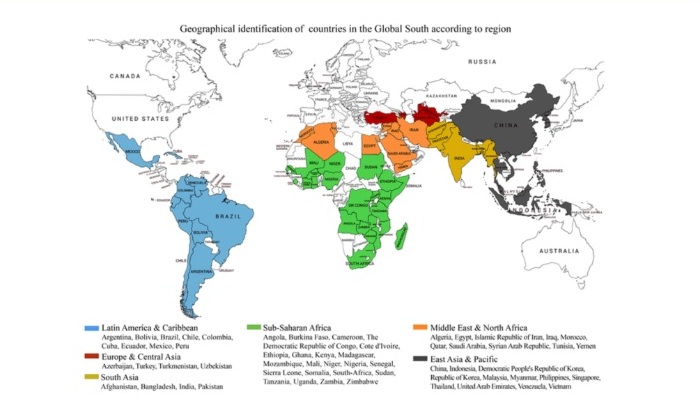
The North-South Dialogue gained prominence in the 1970s as a means to address the stark economic inequalities between the Northern and Southern hemispheres. Developing countries, often referred to as the Global South, sought to level the playing field by advocating for fairer trade practices, debt relief and development assistance. This dialogue aimed to reduce poverty, promote sustainable development, and foster economic growth in the South.
Economic diplomacy plays a crucial role in the North-South Dialogue. It involves negotiations, agreements and the use of economic tools, such as trade agreements, foreign aid and investment, to advance a country’s economic interests and build international partnerships. Developed countries often employ economic diplomacy to expand their markets, access resources, and strengthen political alliances. In contrast, developing countries use it to attract investment, secure favourable trade terms and address economic vulnerabilities.
Several key issues dominate the North-South Dialogue and Economic Diplomacy, including trade imbalances, debt relief, technology transfer and Climate Change mitigation. The UN, the World Trade Organisation (WTO), and various regional forums provide platforms for these discussions. Effective economic diplomacy within the North-South Dialogue can promote global economic stability and reduce poverty in developing nations. However, achieving a fair and equitable balance between the North and the South remains a complex and ongoing challenge in the evolving landscape of international relations and global economics. Cooperation, negotiation and diplomacy are vital tools in addressing these disparities and fostering a more equitable global economic system. In this view, the discussions became a vehicle through which the South could unite and assert power within the UN and other international organisations to counter the ability of the North to dictate the course of world affairs.
Source: Talk Diplomacy (Instagram)
Boundless Ocean of Politics on Facebook
Boundless Ocean of Politics on Twitter
Boundless Ocean of Politics on Linkedin
Contact: kousdas@gmail.com

 ISMC
ISMC Boundless Ocean Of Politics