

On Combating Gender Stereotyping
The Supreme Court (SC) of India recently suggested alternatives to words that stereotype women, and also prepared a list of alternative words! Although the learned lawyers and honourable judges of the SC have prepared a handbook of alternative words, the handbook demands the attention of the entire nation.
It may be noted that Language is the main medium through which Patriarchy has created a stereotype image of women. Therefore, the Indian judiciary has decided to abolish the use of words that devalue women. The move is aimed at stopping people (especially men) from making derogatory comments about them. In other words, the SC wants to remove gender stereotypes from the law. In fact, the Court has made an attempt to free the judiciary and the legal community from the mechanical application of gender stereotypical language in judgements, orders and court pleadings.
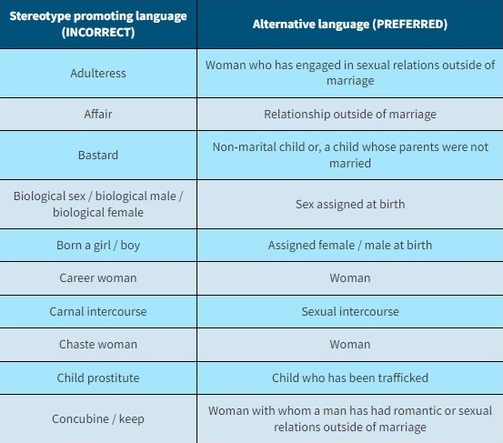
For example, the SC has suggested Indians to use the term Woman, instead of Indian woman or Western woman. The Apex Court has argued that terms, like Indian and Western, do not refer to a particular geographical location of a woman, but to her character. The judiciary has further explained that the term Indian woman is socially related to the role of a homemaker, while the term Western woman portrays the image of a lady who is not so interested in family-related issues and is morally grey. Hence, the usage of words, such as Indian or Western, to describe a woman should be avoided.

Another adjective, often used to disrespect women, is Career woman. The actual meaning of this term overshadows its literal meaning. In India, this term is commonly used in case of a woman who gives priority to her career and ignores responsibilities regarding her family. Interestingly, the word Career or Profession is not used in such a negative sense for Indian men. By suggesting use of the word Woman, the SC has actually warned both speakers and listeners about the status of women as individuals. The judiciary has also suggested sexually harassed, assaulted or raped, instead of violated, claiming that the use of terms, like survivor and victim, are applicable to describe those affected by sexual violence. The SC has stated that unless the individual concerned expresses a preference that should then be respected.

One might even raise a counter-argument that gender discrimination can never be eliminated to the full by promoting usage of alternate words only. They may also express doubt whether the society shall accept the sexual freedom of women, if words, such as Concubine, Harlot or Mistress, are abolished! It seems that the use of the word Mother, instead of Unwed Mother, would fail to encourage the society to respect a single mother.
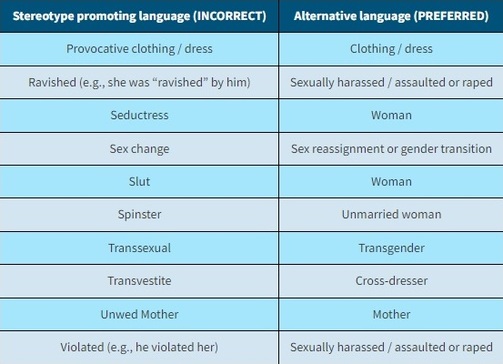
Perhaps, Dhananjaya Yeshwant Chandrachud, the honourable Chief Justice of India (CJI), has suggested these alternative words only after considering the strength of language. In his foreword to the 30-page ‘Handbook on Combating Gender Stereotypes‘, honourable CJI Chandrachud has stated: “Reliance on stereotypes about women is liable to distort the law’s application to women in harmful ways. Even when the use of stereotypes does not alter the outcome of a case, stereotypical language may reinforce ideas contrary to our constitutional ethos.” He added: “Language is critical to the life of the law. Words are the vehicle through which the values of the law are communicated. Words transmit the ultimate intention of the lawmaker or the judge to the nation. However, the language a judge uses reflects not only their interpretation of the law, but their perception of society as well.” The CJI wrote: “In recognition of the fact that language conveys certain ideas about its subject and can either recognise or diminish the dignity of such persons, the statute was amended and the word ‘Pauper’ was replaced with the word ‘Indigent’.” He has expressed hope that the handbook “would mark a significant milestone in the journey towards a more just and equitable society“.

At a time when the Indian politicians often deliver hate speeches and abuse women verbally, the SC’s advice to be careful while using sexist language against women has brought an almost-forgotten fact to the centre of discussions. Like society, language, too, is our subject of discussion, as there are various discriminations implied in it. From gender identification to the use of names and adjectives, there are gender discriminations everywhere. Hence, it is important to consciously change the use of language in order to make a social revision. It should not be the case that an authoritative institution, like the judiciary, would always take this responsibility. The careful use of words in media, literature, drama, everyday conversations, etc. is one of the main conditions for establishing gender equality.
Boundless Ocean of Politics on Facebook
Boundless Ocean of Politics on Twitter
Boundless Ocean of Politics on Linkedin
Contact: kousdas@gmail.com

 ISMC
ISMC Boundless Ocean Of Politics