

Laws Of ‘Unnatural’ Selection
Charles Robert Darwin (February 12, 1809 – April 19, 1882) used to believe that human beings have done everything possible to survive on the planet Earth. In his 1859 publication On the Origin of Species, the English naturalist, geologist and biologist discussed this issue in detail. Darwin got the idea of Struggle for Life from Thomas Robert Malthus (February 13/14, 1766 – December 29, 1834), an English economist, cleric and scholar influential in the fields of political economy and demography. Malthus explained this concept in his 1798 book An Essay on the Principle of Population. He stated that the population increases in multiplication progress. In other words, if the population doubled in a certain period of time, it would increase four times thereafter. Next time, it would increase eight times. However, according to Malthus, the production of food grains increases in a particular arithmetical progression… two, four, six times.
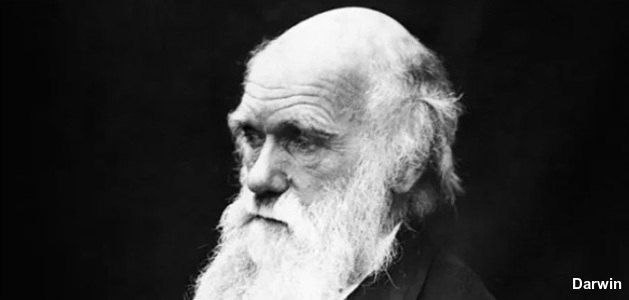
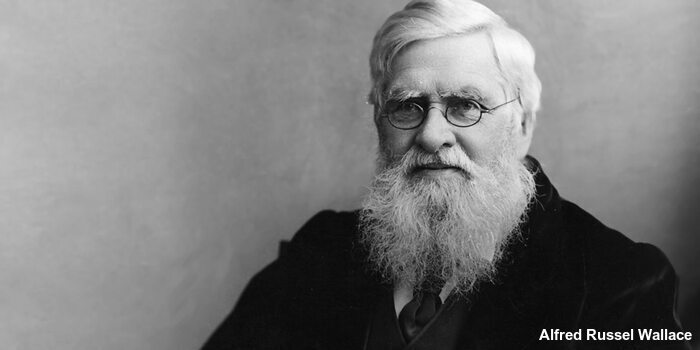
Incidentally, both Darwin and Alfred Russel Wallace (January 8, 1823 – November 7, 1913), an English naturalist, explorer, geographer, anthropologist, biologist and illustrator, read the book authored by Malthus. The publication prompted both of them to think about Natural Selection, which is a determinant of Evolution. When there is a scarcity of food and the population is high, nature plays an important role as far as survival of human beings and other creatures is concerned. Nature determines who will survive and who will not, if the situation arises. This is how evolution has taken place in this world. Darwin’s well-wisher Thomas Henry Huxley (May 4, 1825 – June 29, 1895), an English biologist and anthropologist who specialised in Comparative Anatomy, popularised this theory.
Human beings had to do a lot of things for their survival. For example, one can mention deforestation for constructing buildings; destroying biodiversity for food; usage of plastic, refrigerator and air-conditioner for comfortable living, etc. The outcome of these acts is fatal. While rainfalls have lessened as a result of deforestation, the destruction of biodiversity has reduced beneficial drugs, and the use of the refrigerator has increased the ozone hole in the atmosphere by producing chlorofluorocarbons. Therefore, Global Warming is constantly increasing.
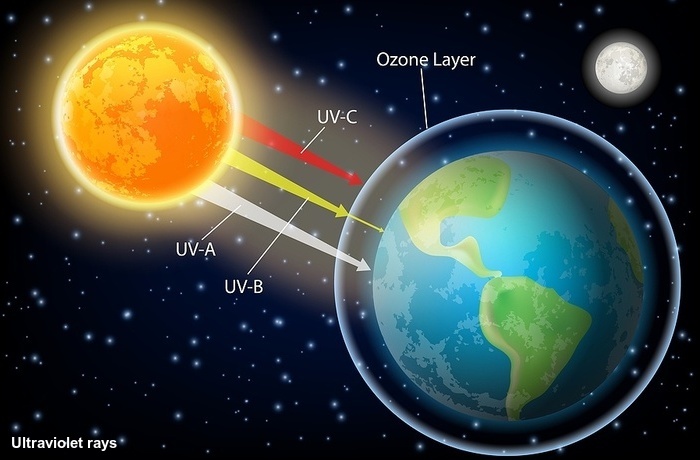
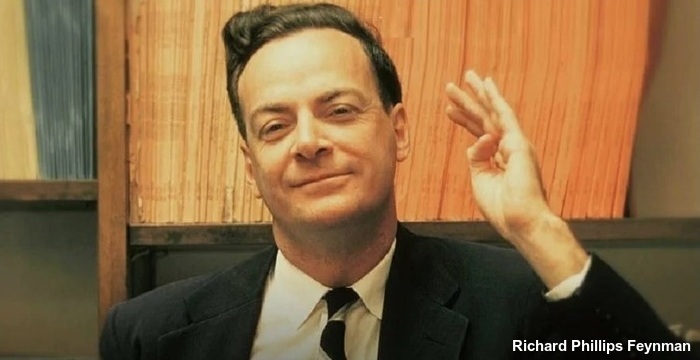
A layer of Ozone gas covers the Earth, protecting the planet from the harmful effects of ultraviolet rays. Any leakage in the ozone layer is dangerous for the Earth. With Global Warming damaging the layer of ozone, the effects of ultraviolet rays have increased the chances of human illness. Scientists have realised all these effects that are detrimental to the living on the Earth by examining the soil of different lakes. Common people cannot even imagine where a danger lies and in which form. Perhaps, this is why US Theoretical Physicist Richard Phillips Feynman (May 11, 1918 – February 15, 1988) described research as one of the most fantastic pieces of detective work.
Geologists are such detectives as far as scientific research is concerned. They have got an idea about the survival of human beings on the Earth by monitoring Crawford Lake in Ontario, Canada for a long time. The water of this 80ft deep and 26,000sqft lake is quite clean. Geologists can easily guess the age of the Earth from the layers of sediment that have accumulated over the years beneath the water of this lake. Analysing those layers, they have found that human activities over the past seven decades have affected the Earth’s surface so much that a new era has begun. According to the geologists, we are living in the Holocene geological epoch. As Holos (ὅλος) is the Greek word for “whole“, and “Cene” comes from the Greek word kainos (καινός), meaning “new“; the concept of Holocene Epoch means “entirely new“. The Holocene Era began around 11,700 years ago.
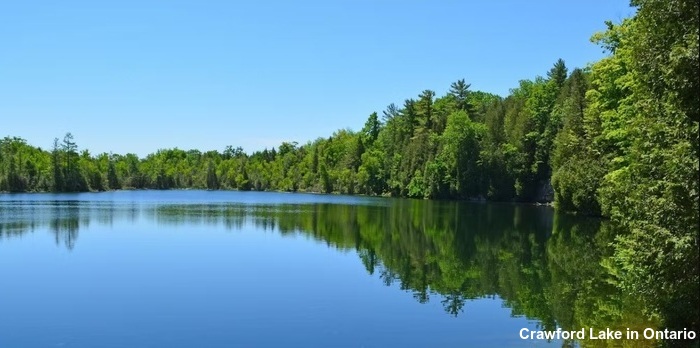
The geologists were also talking about a new era triggered by the environmental pollution caused by human beings’ struggle to survive. That is Anthropocene Era or the Age of Man. Italian geologist and palaeontologist Antonio Stoppani (August 24, 1824 – January 1, 1891) first coined the term Anthropocene Era in 1873. In 2002, Paul Crutzen, the Nobel Laureate in Chemistry in 1995, called the current geological period the Age of Man. Both Stoppani and Crutzen claimed that human beings did irreparable damage to the environment. Geologists from different parts of the globe organised an international conference in Berlin in July 2022 to discuss the Anthropocene Era. Unfortunately, they failed to reach a consensus. In view of the damage to the environment, it is important to discuss the issue in detail on an urgent basis.
Boundless Ocean of Politics on Facebook
Boundless Ocean of Politics on Twitter
Boundless Ocean of Politics on Linkedin
Contact: kousdas@gmail.com

 ISMC
ISMC Boundless Ocean Of Politics