

On Tunisia & Cross-Mediterranean Migration
Tunisian President Kais Saied made it clear on June 10 that his country would not serve as a border guard for the European countries. He said so ahead of the visit by European leaders, who are concerned over the increasing number of migrants crossing the Mediterranean. On June 11, Italian Prime Minister Giorgia Meloni, Dutch Prime Minister Mark Rutte and Chief of the European Commission Ursula von der Leyen offered aid to the north African nation upon their arrival in Tunis. It may be noted that Tunisia is facing a public finance crisis.
Ahead of their visit, President Saied stressed: “The solution will not be at the expense of Tunisia… we cannot be a guard for their countries.” The President made the comment while visiting the port city of Sfax. Sfax is the main departure point for migrants, who want to reach Italy by boat.

On June 9, Fitch downgraded Tunisian debt deeper into junk territory, as the credit ratings agency underscored the possibility that the country would default on loans, prompting a collapse in state finances. The situation could also cause widespread hardship. Meanwhile, the European countries fear that such a situation in Tunisia would certainly increase cross-Mediterranean migration in the coming months.
A rescue package by the International Monetary Fund (IMF) has been stalled for months, as President Saied rejected the economic reforms required to unlock the loans. Earlier, donor countries requested him to change his economic policy. However, the President rejected the request. Italy recently urged the IMF to sanction the loan, after considering the scenario.
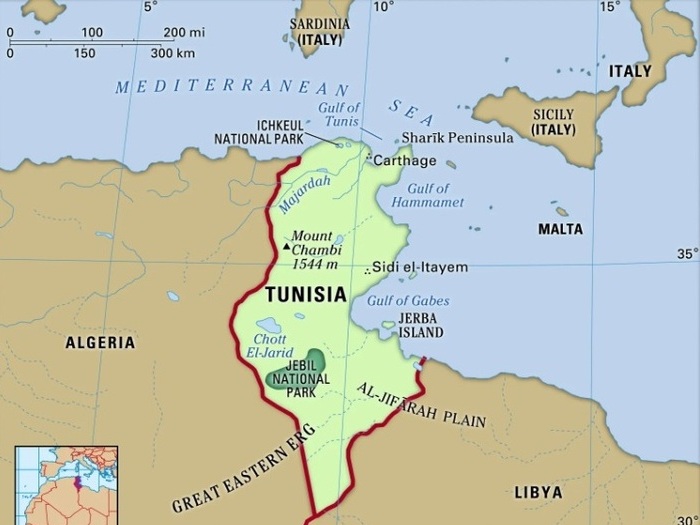
There was an increase in perilous Mediterranean crossings after the Tunisian President announced a crackdown on sub-Saharan migrants in February 2023. The African Union (AU) strongly condemned his decision, terming it as a racialised one.
Boundless Ocean of Politics on Facebook
Boundless Ocean of Politics on Twitter
Boundless Ocean of Politics on Linkedin
Contact: kousdas@gmail.com

 ISMC
ISMC Boundless Ocean Of Politics