

Links Across Civilisations!
The recent discovery of a statue of Lord Buddha (born Siddhartha Gautama; BCE 563/480 - BCE 483/400), the revenant ascetic who founded Buddhism, in Egypt has pointed to deep civilisational links between India and the north African nation.
Members of a Polish-US mission discovered the statue in the ancient Egyptian port city of Berenice on the Red Sea in the last week of April 2023. Berenice is situated about 900km south of Cairo and nearly 3,800km west of Khambat, the ancient Indian port city in the present-day Gujarat Province. According to the researchers, the statue has revealed that Buddhist traditions of India left their trail of ascetic uniqueness in ancient Egypt. The Antiquities Ministry of Egypt issued a statement on April 26, 2023, saying that researchers found the statue dates back to “the Roman Era while digging at the ancient temple in Berenice“.

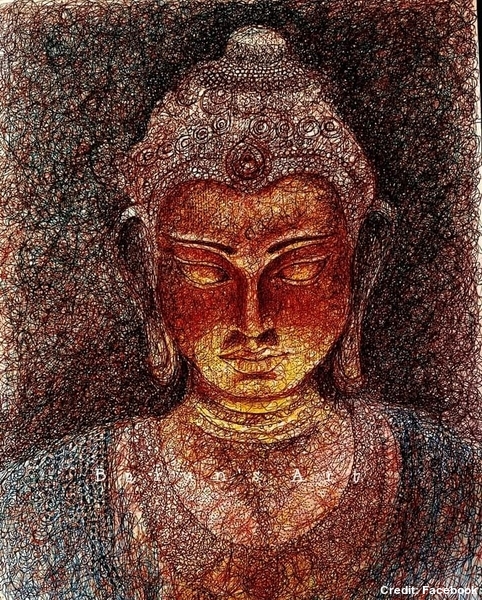
According to the ministry, the discovery sheds light on trade ties between ancient India and ancient Egypt (as well as the larger West Asian region). Talking to the local media, Mostafa al-Waziri, the Head of Egypt’s Supreme Antiquities Council, stressed that the find has “important indications over the presence of trade ties between Egypt and India during the Roman Era“. The 71cm-long statue portrays Lord Buddha with a halo around his head and a lotus by his side. Interestingly, part of the statue’s right side is missing.
Waziri claimed that Berenice was one of the largest seaports in Roman Era Egypt, and ships from India, laden with spices, semi-precious stones, textiles and ivory, used to anchor there. As far as ancient India’s trade network with West Asia is concerned, the Antiquities Ministry stated that India used to export pepper and other food items to Egypt, as researchers had found pepper from the dried fruits in the nostrils of the mummy of Ramesses II, popularly known as Ramesses the Great. It is the first evidence of trade contacts between ancient India and ancient Egypt.
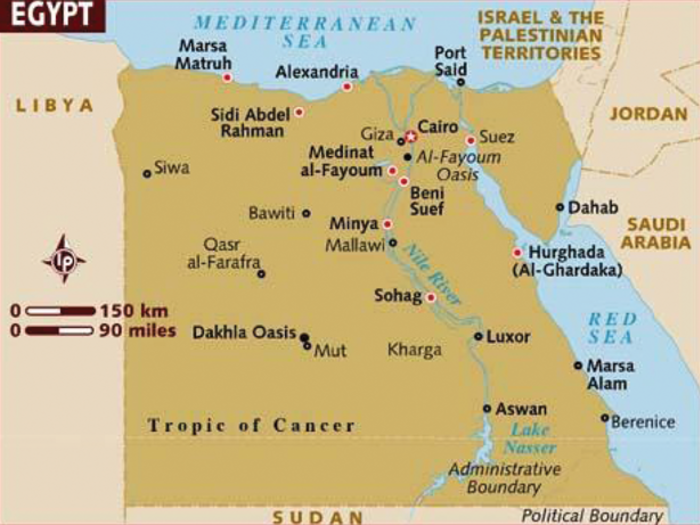
Later, researchers unearthed more evidence of the maritime trade networks between the two ancient civilisations, one that flourished on the banks of Rivers Ganges and Indus, and the other on the both sides of River Nile. Researchers also found the Greek and Latin inscriptions engraved on the walls of a cave in the Wadi Mineh area, about 700km south of Cairo. These inscriptions have established the fact that Roman traders, too, used to travel to India on a regular basis by the turn of the millennium.
In recent times, researchers have unveiled a number of major archaeological discoveries in Egypt, while trying to revive the vital tourism industry of the country after years of political unrest and the COVID-19 Pandemic. Critics are of the opinion that although the flurry of excavations has grabbed media attention, there is a need for hard academic research.
Boundless Ocean of Politics on Facebook
Boundless Ocean of Politics on Twitter
Boundless Ocean of Politics on Linkedin
Contact: kousdas@gmail.com

 ISMC
ISMC Boundless Ocean Of Politics