

France On Brink Of Financial Collapse
The financialisation of Europe was summed up in an observation made by French public radio station franceinfo on October 22, 2026, announcing: “On October 28, 1966, French President Charles de Gaulle stated that the policies of France are not decided by the stock market. That, of course, is no longer the case today.”
Indeed 60 years ago, politicians would draw up a budget and then submit it to the financial world. But today, it’s the other way around: Banks and insurance companies in London decide what the budget should be and then order politicians to approve it, or else….
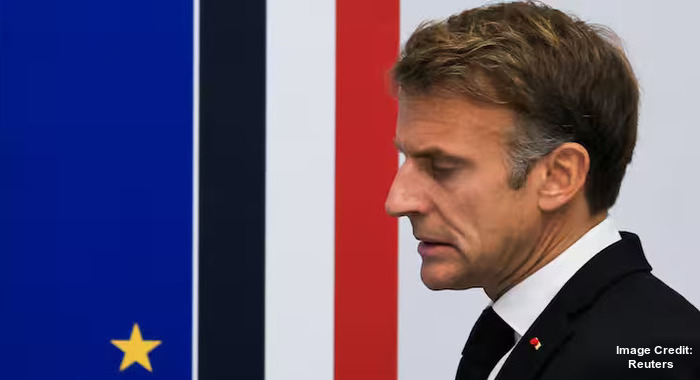
That would explain why French Economy Minister Roland Lescure travelled to London one month before the French Parliament was to vote on a budget for 2027. According to Le Monde, the minister wanted “to reassure City investors about France’s financial trajectory. Some foreign investors are choosing to sell their French bonds”. After meeting his British counterpart on October 8, Lescure “brought together about 10 international banks and asset managers in London to reassure them about France’s financial trajectory and its ability to pass the 2027 budget, if necessary by decree”, (i.e., if the National Assembly rejects it).
One day later at the Ecofin Council in Luxembourg dedicated to the capital markets union, the French minister discussed with his European counterparts how to ease the bond market tensions, “even though intervention by the European Central Bank (ECB) is completely ruled out at this stage”, commented Le Monde. The markets are in fact very worried about the amount France has to pay to borrow money from the markets in order to reimburse its huge public debt, amounting to 119% of the country’s GDP.
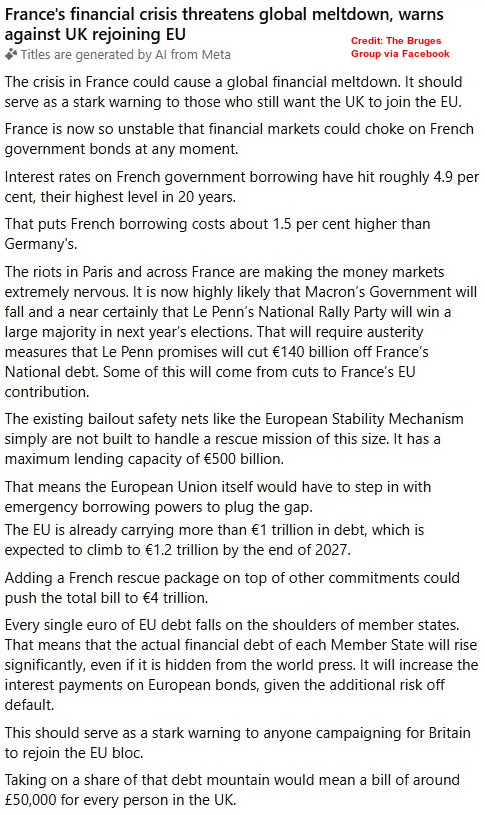
A clear warning was sent by the markets on October 21, when the yield on 10-year French bonds rose above 5% for the first time in 24 years. Some experts, including Hideo Shimomura of Fivestar Asset Management, fear it could climb to 7%, if “the ECB lets things continue as they are”. In the meantime, foreign investors are preparing to sell their French bonds and buy some with higher yields.
However, as pointed out by Peter Kinsella, the Head of UK investment services at Swiss private bank UBP, in The Telegraph of London: “The European Central Bank cannot credibly intervene in the absence of a French cost-cutting programme, and that will not happen until after the Presidential Election next May. So, this is going to be a thorn in the side of the euro for a while.”
Indeed, the French Government is supposed to implement cost-cutting measures in 2027, which it cannot do politically, with the country already erupting in protests. With an estimated deficit of 5.6% in 2026, the budget would have to be cut by EUR 72 billion in order to avoid an infringement procedure from Brussels. And that will not happen.
Young People Fight for Their Future In Europe
“What is happening in France today contains elements specific to our country. However, it is the expression of a global dynamic. In this sense, France is an epicentre of the European, and undoubtedly global, earthquake.” With that observation, Jacques Cheminade, President of Solidarité et Progrès, began his report to the meeting of the International Peace Coalition (IPC) on October 23, 2026. Faced with “an oligarchy that wages war and steals their future, while claiming to defend democracy”, he said, adding that the young generation is demanding conditions worthy of human beings. And their demands are supported “by the teachers, by a resurgence of the Yellow Vest movement, by the majority of labour unions, and by all the victims of the dominant military-financial system. This is a potential catalyst for a mass strike ferment, in the sense that Rosa Luxemburg understood it”.
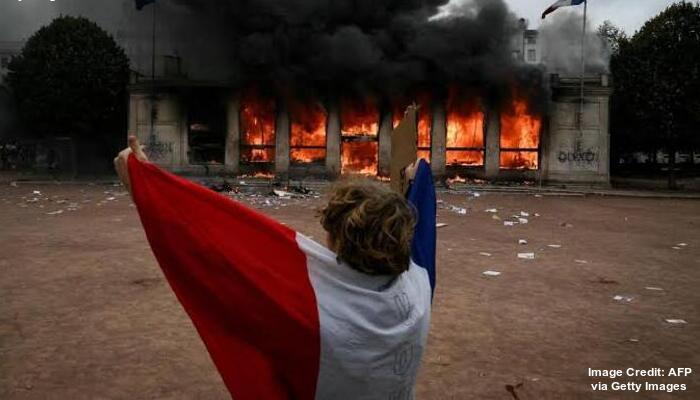
On the contrary, Cheminade cautioned: “What you see in the images propagated by the media does not correspond at all to the dynamics of the movement but to the tactics used to discredit it. These images reflect the consequences of the oligarchy’s policy of repression and infiltration, designed to create a climate of fear.”
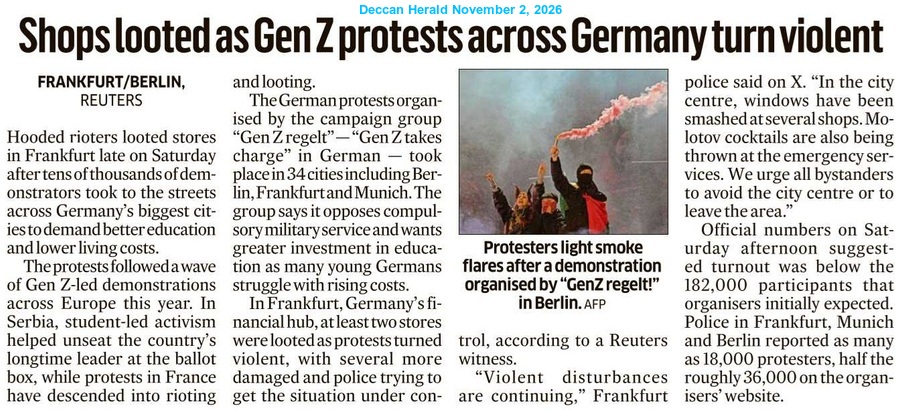
Nonetheless, the violence and looting that erupted at the October 17 demonstrations did not prevent another 800,000 Frenchmen from taking to the streets one week later. Only a few violent incidents occurred, despite the provocations. The country is now preparing for the general strike called by trade unions for November 5. The mobilisation thus far is such that the government has had to make significant concessions to the students, including to try and calm the markets. Meanwhile, the dynamic is spreading throughout Europe.
This article was first published in Executive Intelligence Review (EIR) Strategic Alert weekly newsletter (Volume 40, No. 44) on October 29, 2026.
Meanwhile,

Boundless Ocean of Politics on Facebook
Boundless Ocean of Politics on Twitter
Boundless Ocean of Politics on Linkedin
Contact us: kousdas@gmail.com

 ISMC

