

Nyctophobia: A Primal Instinct
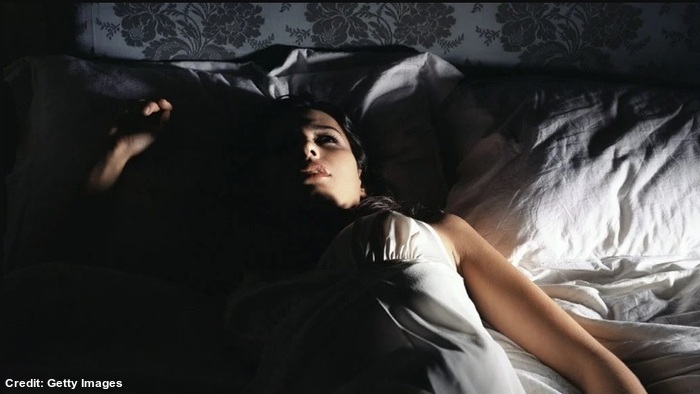
When the lights suddenly go out and darkness envelops everything, the human mind becomes restless. In fact, darkness triggers an evolutionary fear of the unknown, releasing adrenaline and activating the fight-or-flight response. Since time immemorial, human genes have been carrying this anxiety.
One of the primary reasons for the Fear of Darkness, or Nyctophobia, is the absence of visibility. It is often described as less a fear of the dark itself and more a fear of what the absence of light conceals. Daylight offers superior visibility, making it generally easier to spot threats compared to darkness. However, when one is plunged into darkness, immediate threats can remain invisible until it is too late. Hence, the fear of darkness is a persistent and natural phenomenon.
The cycle of day and night serves as one of nature’s most fundamental teachers, representing the essential balance between action and rest, light and shadow. Although daylight provides visibility, the darkness of night, too, is essential for our perception of the cosmos, as it reveals the billions of stars and distant galaxies that constitute our understanding of the universe. Without the contrast of darkness, the sheer scale, depth and history of the universe, which one observes as a cosmic record of light, would remain invisible to humanity.
At the same time, one has to admit that the darkness also casts some negative effects upon the human mind and one of them is nyctophobia. This physiological arousal is indeed an innate, evolutionary process rather than a random phenomenon that activates the body for a rapid response for self-defence in times of danger. Scientists call this deeply embedded, primitive network in the human brain the Survival Circuit which has been crucial for survival for over a million years. A Forbes report published in April 2026 has confirmed that the fear of darkness is one of the most ancient, deeply embedded and rational fear responses in the human repertoire, stemming from an evolutionary history of survival that spans roughly one million years.
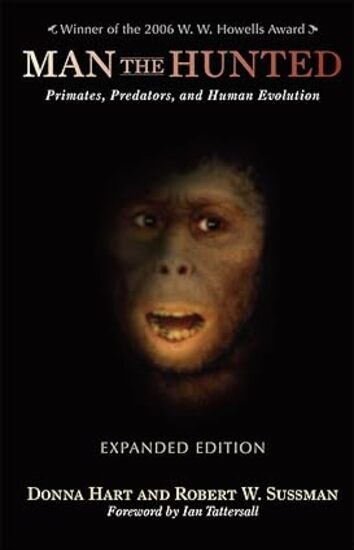
In their 2005 publication Man the Hunted: Primates, Predators, and Human Evolution, anthropologists Donna Hart and Robert W Sussman claimed that the night was terrifying throughout most of the long history of human evolution. The authors argued that early hominids were not the dominant, aggressive hunters (as depicted in the Man the Hunter hypothesis), but rather were heavily preyed upon, particularly after sunset. It may be noted that hominids are members of the biological family Hominidae, which includes modern humans, chimpanzees, gorillas, orangutans and their immediate ancestors (both living and extinct). The book challenges the traditional Man the Hunter hypothesis, arguing instead that for most of human evolution, our ancestors were primarily prey rather than top-tier predators. According to Hart and Sussman, early humans were highly vulnerable to predators, such as large cats, hyenas and snakes, during the night, as they lacked natural defences, like night vision or sharp claws.
The Psychological Review journal published a research paper by psychologist Martin Seligman way back in 1971. Seligman’s classic article, Phobias and Preparedness, marked a break from Traditional Conditioning theories of the Etiology of Phobias, inspiring a line of research integrating Evolutionary Theory with Learning Theory. The psychologist claimed that humans tend to acquire certain specific fears quite easily. For example, the fear of darkness, heights (Acrophobia), snakes, spiders, etc. According to Seligman, these fears are evolutionary threats (or phylogenetic threats). He argued that humans are biologically predisposed (prepared) to rapidly develop intense fears of specific stimuli that were dangerous to our ancestors, such as snakes, spiders, heights and darkness. These fears are special, as well, because they develop rapidly, are selective and resist extinction. Most importantly, it is quite difficult to eliminate these fears solely through logic.

The Forbes report has drawn a comparison between two early humans. It reads: “Imagine two early Homo individuals: one who experienced heightened anxiety after dark, who stayed close to the fire and flinched at sounds, and one who did not. The anxious one was more likely to survive long enough to reproduce. Over hundreds of thousands of generations, that difference compounded. What we now experience as discomfort in a dark parking garage is, at its primal core, the inheritance of ancestors who made it through the night.” Seligman gave this pattern a name: Prepared Learning.
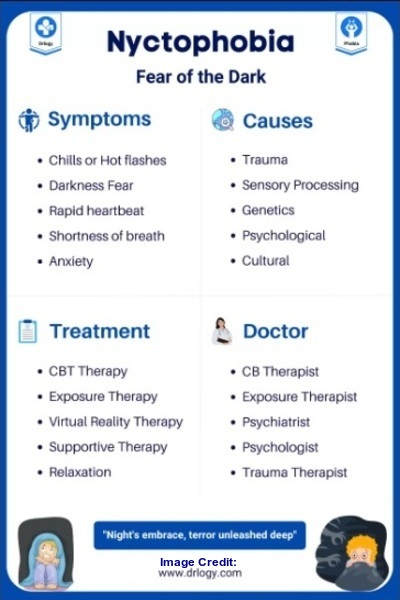
According to neuroscientists, the amygdala – a small, almond-shaped cluster of nuclei located deep within the brain’s temporal lobe (part of the limbic system) – serves as the primary processing centre for fear, anxiety and survival instincts. It acts as an early warning system, scanning sensory input, even before conscious perception, to detect potential threats. When a threat is detected, the amygdala not only triggers the autonomic nervous system, causing physical symptoms of fear, like a rapid heart rate, sweaty palms and shallow breathing, but also works with the hippocampus to create and store memories of fearful experiences, helping one to recognise future danger.
A review on this subject was published in the journal Molecular Psychiatry in 2001. As per the review, the amygdala is highly sensitive to ambiguity, uncertainty and potential, rather than definite threat. When danger is vague or unpredictable, the brain, specifically the amygdala, remains highly active to assess the situation; whereas a clear and known threat may trigger a faster and more localised response that allows the amygdala to habituate or power down faster (once the danger is identified). It is because the real danger cannot be identified in the case of a vague possibility of danger.
A research paper was also published in the Journal of Clinical Child Psychology in 2000. The study, conducted with children of various ages, revealed that the most common fear among children of all age groups was the fear of darkness. According to researchers, the fear of darkness intensifies during early childhood, reaching its peak between the ages of three and seven. Thereafter, it gradually begins to subside. It is not limited to any specific population group; as the tendency toward this fear remains the same among children of all populations.
This similarity is extremely significant for various populations. The fear of darkness can emerge even in a child who has never watched a documentary on Africa’s predatory animals or heard any scary tales about the darkness of night. Had these fears transmitted through observational learning (watching others) and informational learning (being told to be afraid), then its prevalence would vary across different societies. However, it did not happen.
Hence, researchers have come to the conclusion that the fear of darkness is a common, often innate, developmental stage rather than solely a learned behaviour, rooted in evolutionary survival mechanisms.
Meanwhile,












Read: Republic or Empire? Are we witnessing the decline of the Anglo-American order?

Boundless Ocean of Politics on Facebook
Boundless Ocean of Politics on Twitter
Boundless Ocean of Politics on Linkedin
Contact us: kousdas@gmail.com

 ISMC
ISMC
