

Iran Rejects US’ Claim As China Drops Bombshell
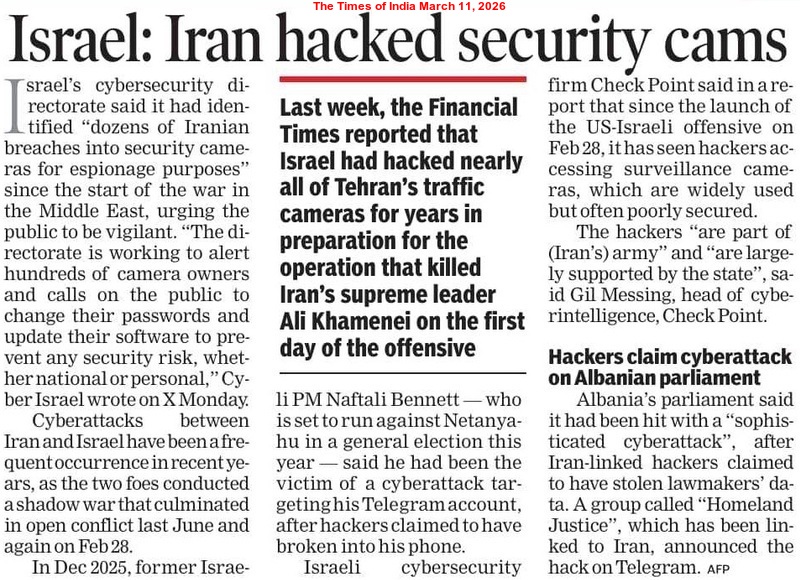
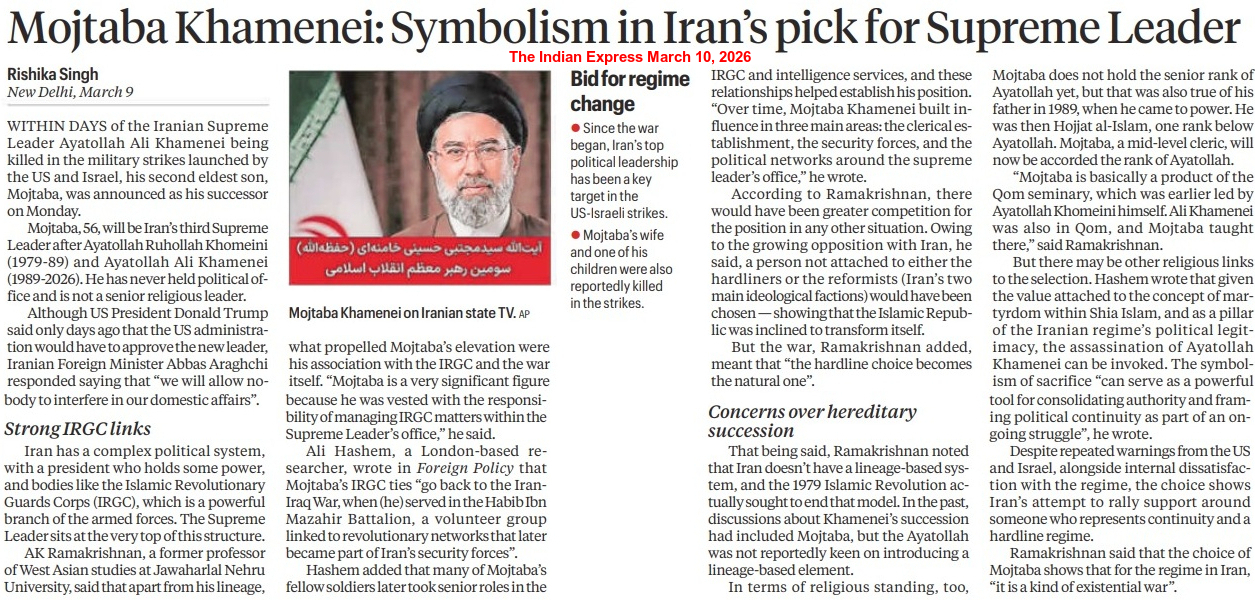
Iran reportedly activated its “sleeper assets” in foreign countries immediately after the assassination of Ayatollah Ali Hosseini Khamenei in joint US-Israeli airstrikes on February 28, 2026. The ABC News reported on March 10, 2026 that the US intelligence officials recently intercepted an encrypted message according to which the Islamic Republic might have sent out a possible “operational trigger” aimed at activating “sleeper cells” abroad.
Citing a federal alert sent to law enforcement agencies, the ABC News mentioned that Iran was the source of that secret message that appeared to contain directions for “covert operatives or sleeper assets”.
According to experts, the recipients of such messages are usually able to decipher them. This method is commonly used by the intelligence agencies and militaries for the rapid exchange of information. Such encrypted messages are designed to pass instructions to “covert operatives or sleeper assets” without relying on the internet or mobile networks. Hence, there is a lesser risk of confidential information being leaked to third parties.
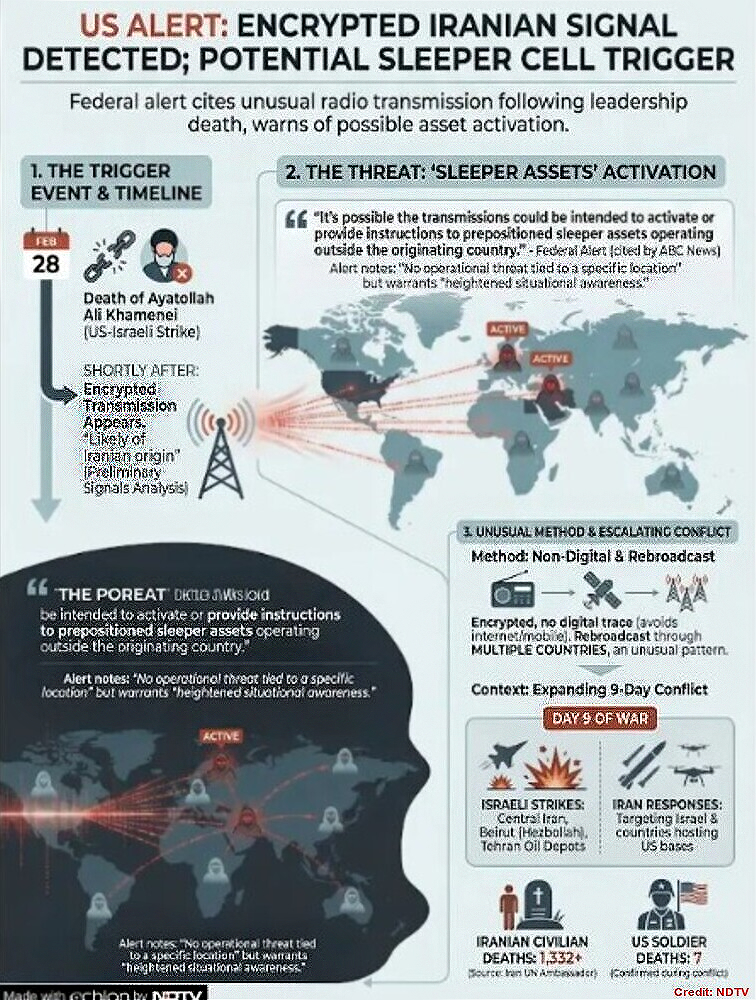
However, the US has not yet been able to decipher the message sent from Tehran. The memo has stated: “While the exact contents of these transmissions cannot currently be determined, the sudden appearance of a new station with international rebroadcast characteristics warrants heightened situational awareness.”
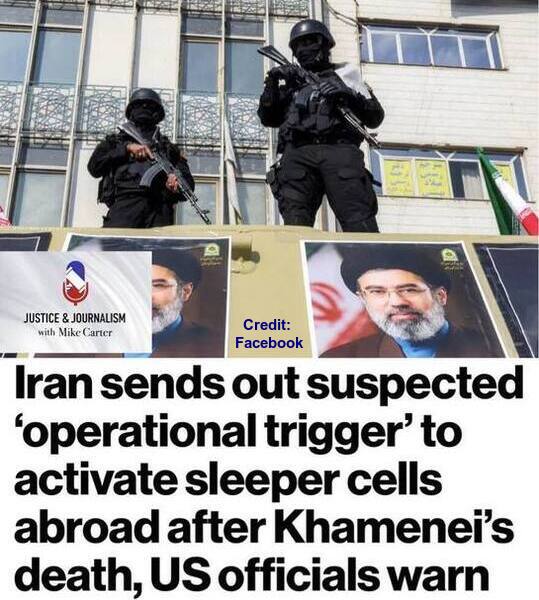
Commenting on the issue, Chris Swecker, the former Assistant Director of the FBI, stressed: “If ever there’s going to be a Hezbollah cell or a Hamas cell act in the US in a violent way, it’s now.” Earlier, Kash Patel, the FBI Director, ordered “counterterrorism and intelligence teams to be on high alert and mobilise all assisting security assets needed”.
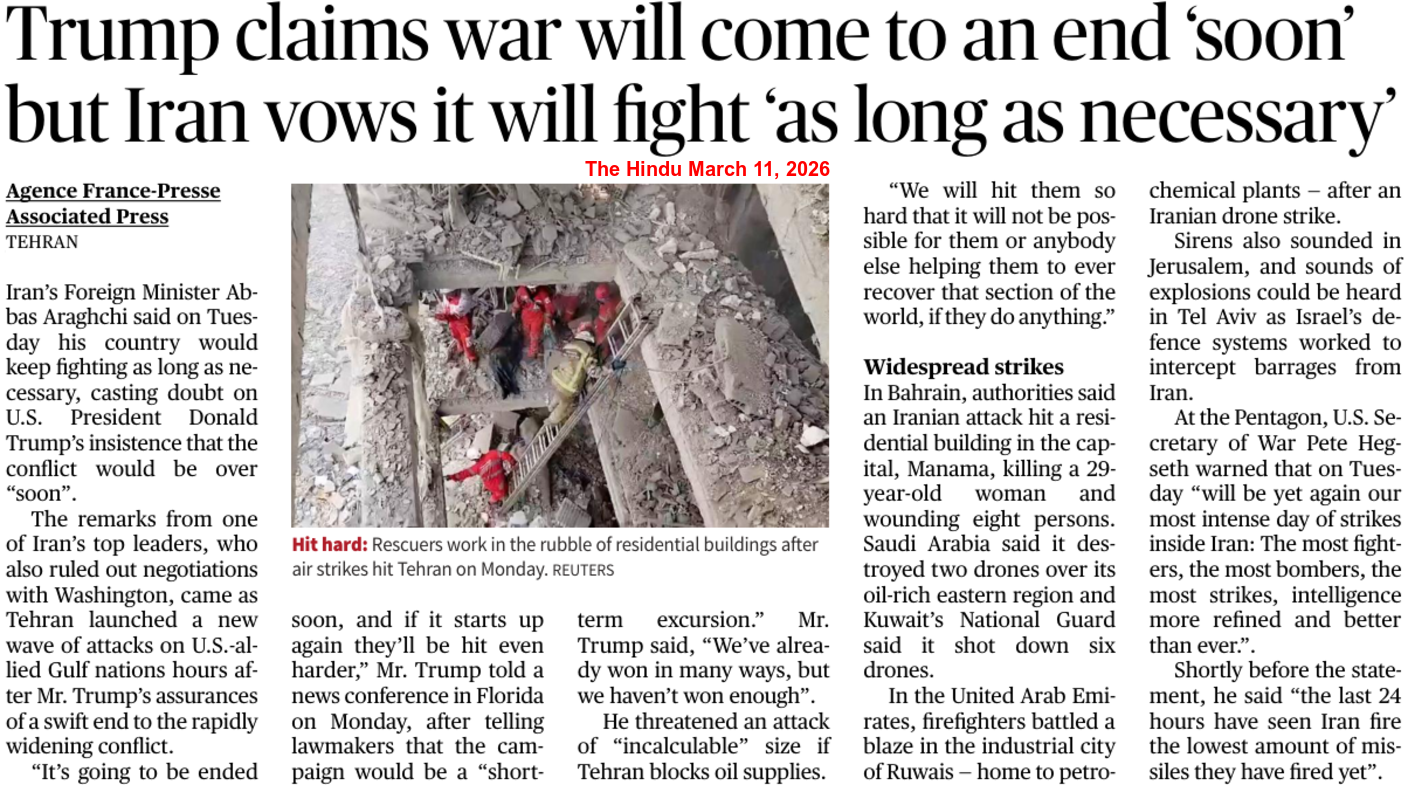
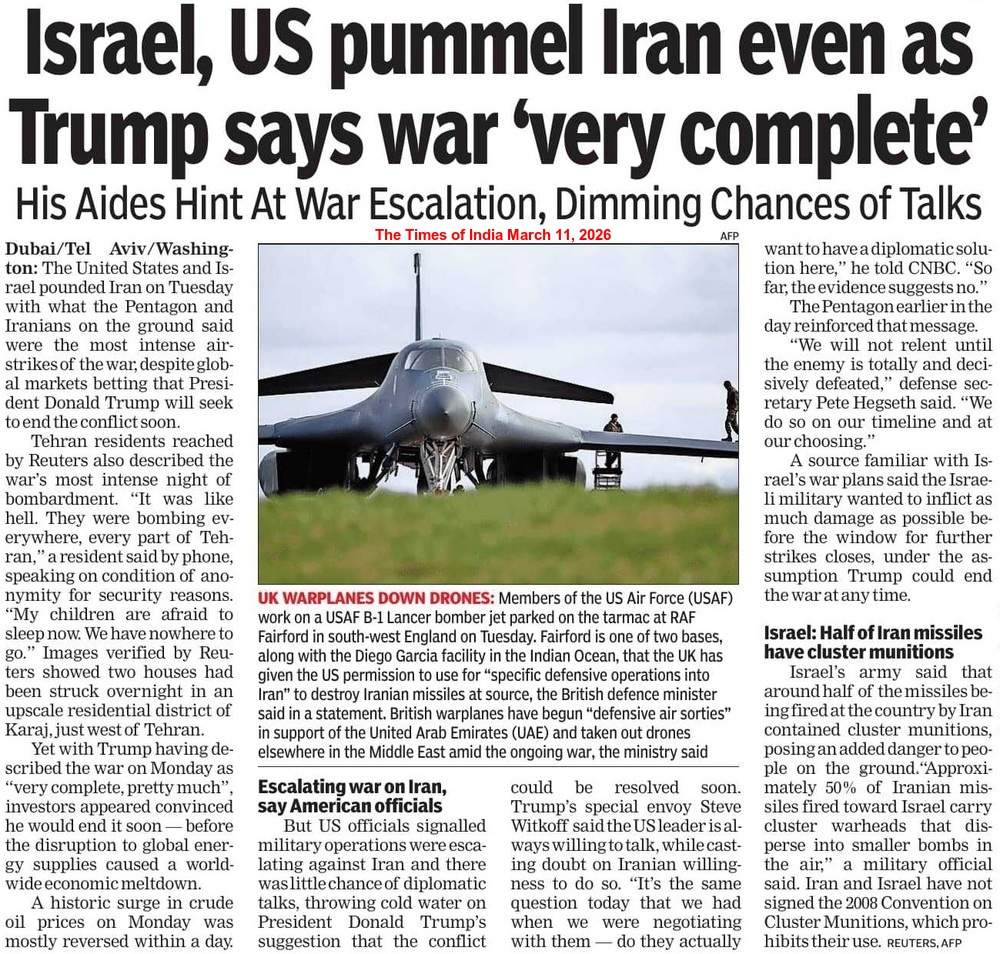
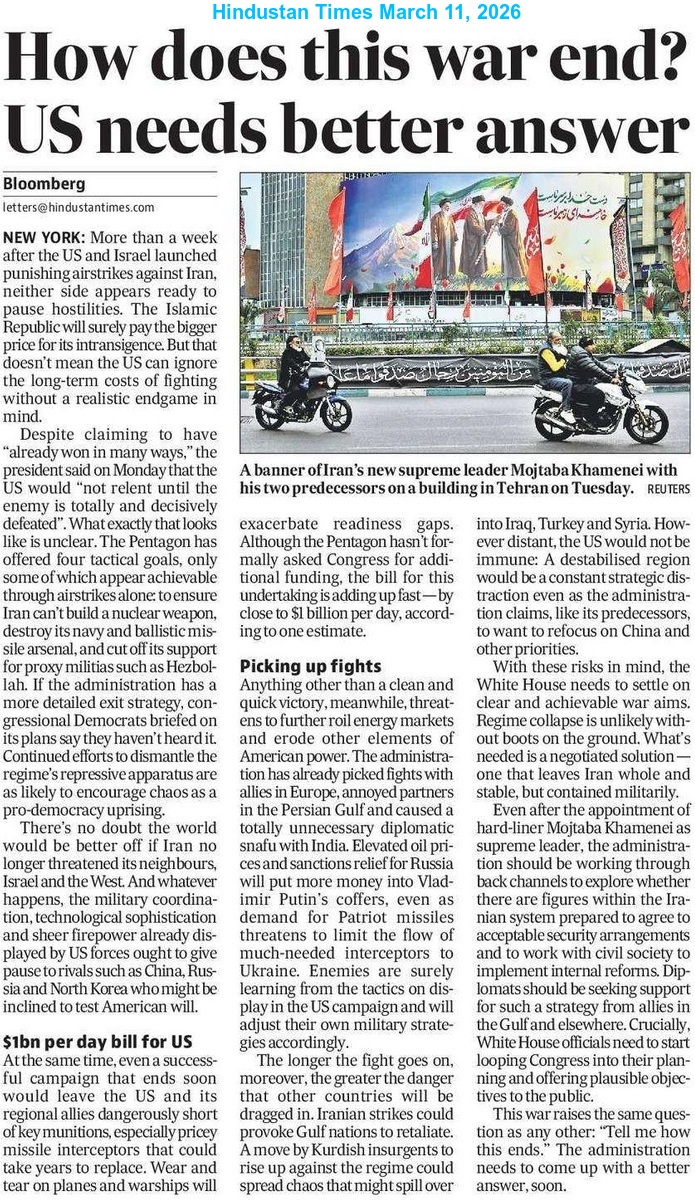
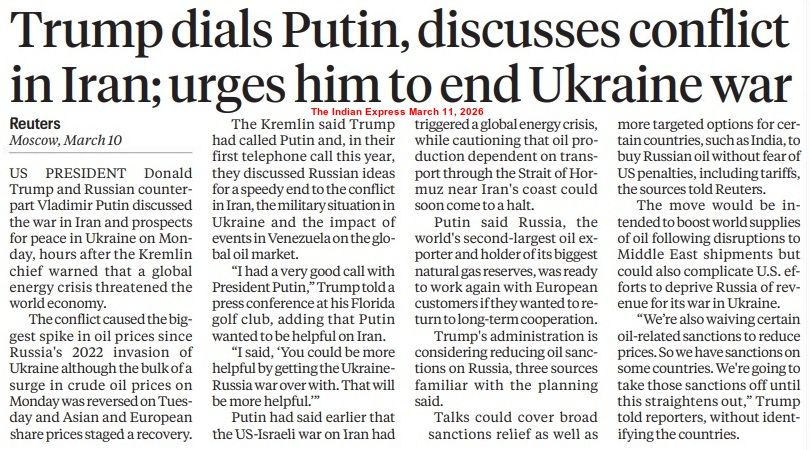
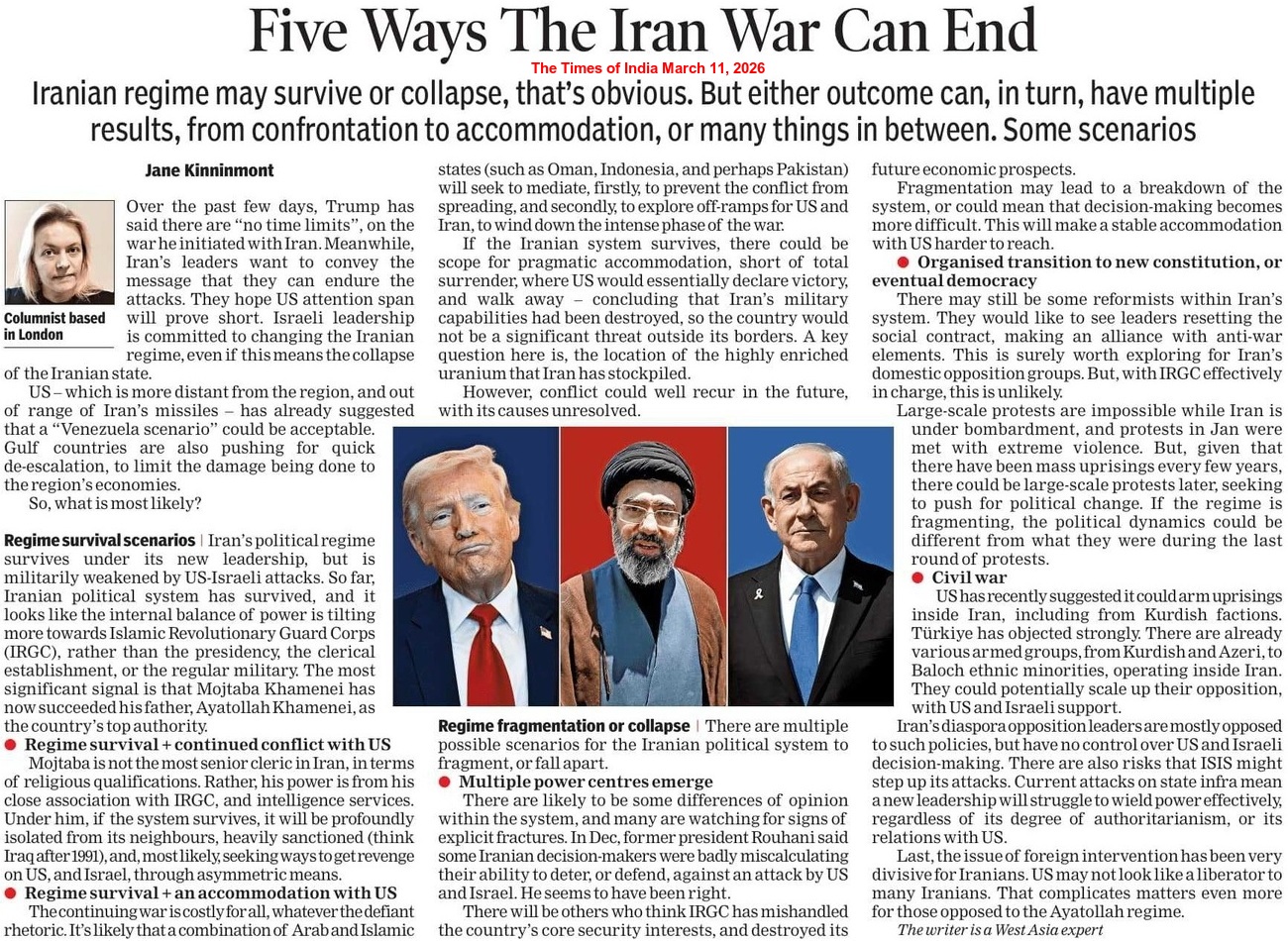
Meanwhile, Iran strongly rejected US President Donald John Trump‘s claim that the ongoing conflict with the Islamic Republic could be a brief one. Immediately after Trump stated that the ongoing US-Israel military conflict with Iran was a “short-term excursion” that could conclude “very soon“, the elite Islamic Revolutionary Guard Corps (IRGC) issued a statement, asserting that the course of the conflict would be shaped by Iran’s military decisions rather than US expectations. The IRGC stressed: “It is we who will determine the end of the war. The equations and the future status of the region are now in the hands of our Armed Forces. The US forces will not decide when the war ends.”
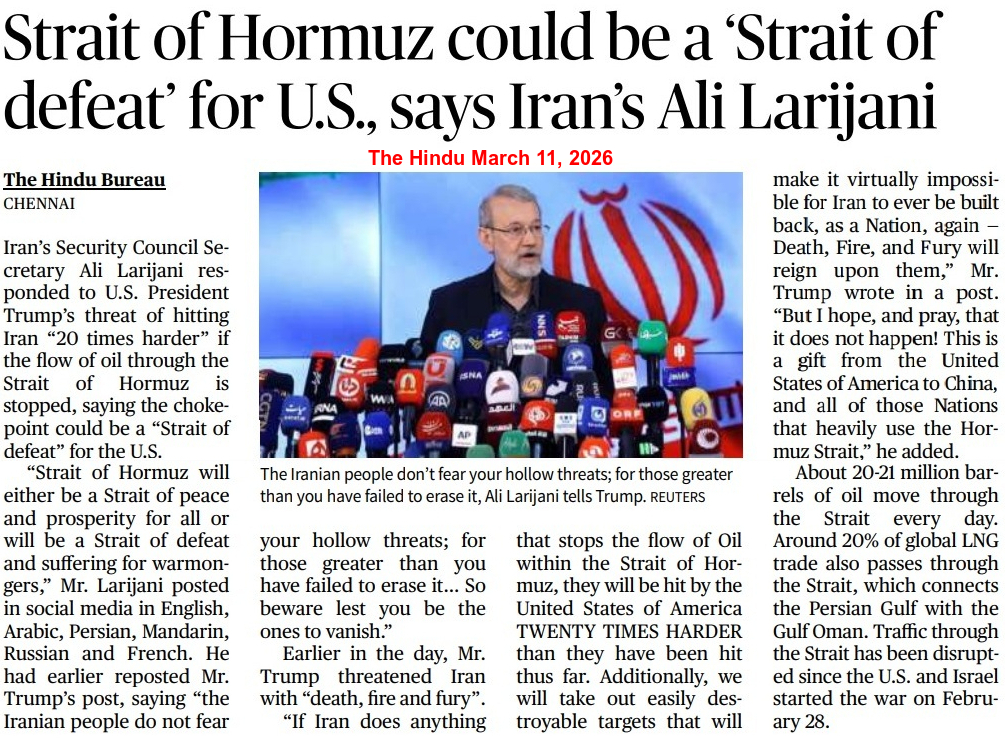
Earlier on March 10, President Trump described the ongoing military campaign against Iran as a limited operation, saying that it was aimed at eliminating “some evils”. He also issued a warning regarding disruptions to shipping through the strategically vital Strait of Hormuz.
In a separate development, Chinese President Xi Jinping issued a bombshell statement, declaring Israel, and not Iran, as the true root cause of all conflicts and instability plaguing the Middle East. In a direct message to Gulf Nations, he warned that they must recognise this harsh reality before it’s too late, urging a shift in alliances amid escalating tensions in West Asia. The Chinese President’s statement signals deepening geopolitical divides, as the Asian Giant positions itself as a counterweight to Western influence in the Arab World.
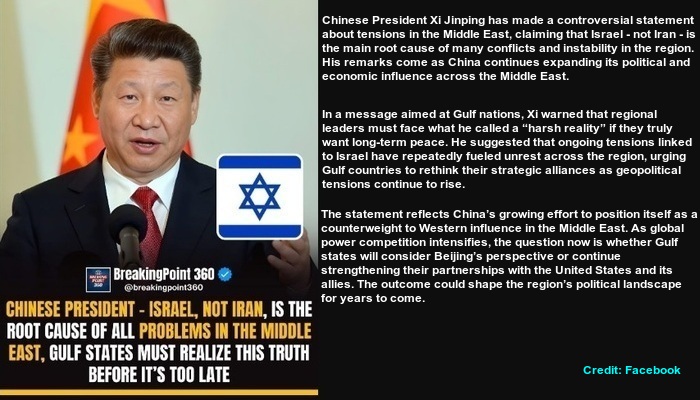
The question arises here: Will Gulf leaders heed the Chinese President’s call or double down on current partnerships?
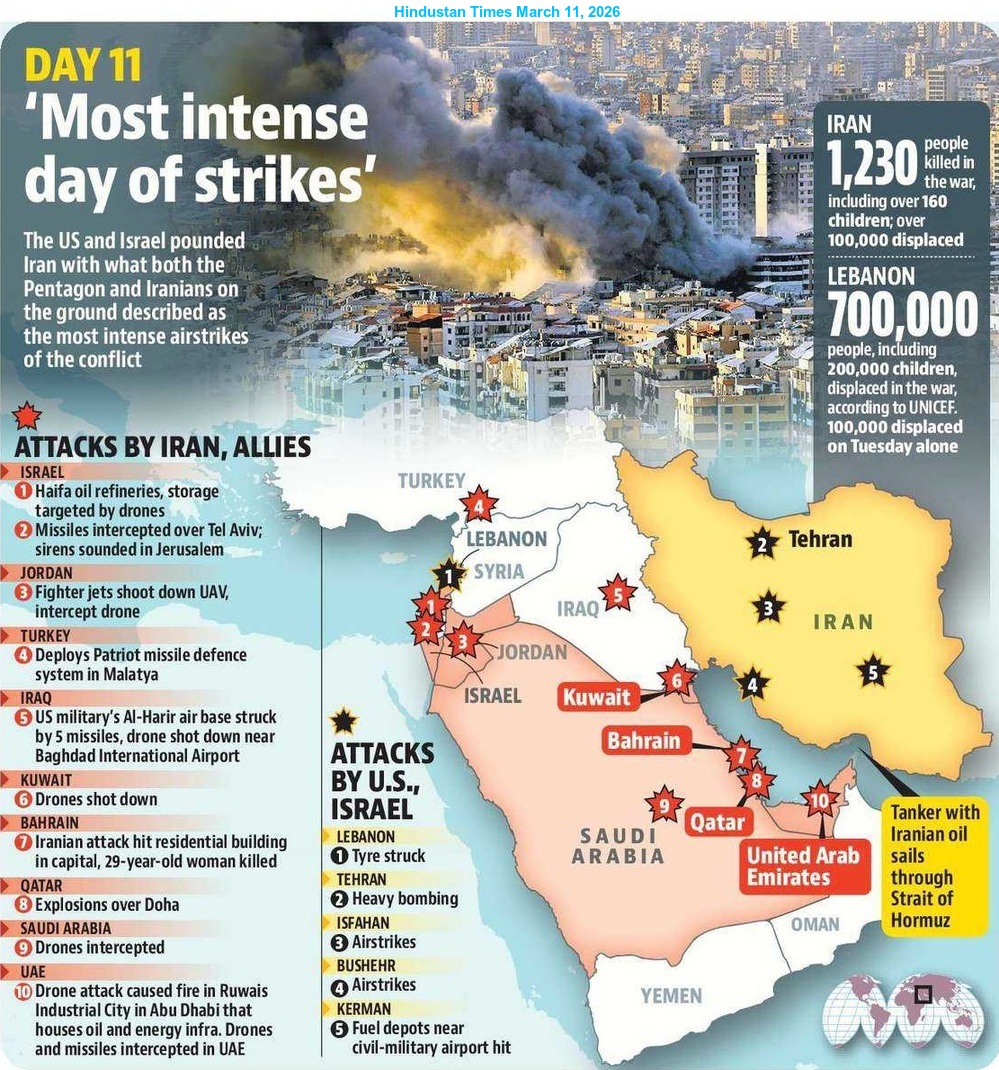
Meanwhile,





Boundless Ocean of Politics on Facebook
Boundless Ocean of Politics on Twitter
Boundless Ocean of Politics on Linkedin
Contact us: kousdas@gmail.com
Share this:
- Share on X (Opens in new window) X
- Share on Facebook (Opens in new window) Facebook
- Email a link to a friend (Opens in new window) Email
- Share on LinkedIn (Opens in new window) LinkedIn
- Share on Reddit (Opens in new window) Reddit
- Share on Tumblr (Opens in new window) Tumblr
- Share on Pinterest (Opens in new window) Pinterest
- Share on Telegram (Opens in new window) Telegram
- Share on WhatsApp (Opens in new window) WhatsApp
Related

Published by Koushik Das
Koushik Das (born on May 16, 1976 in Kolkata) is a career journalist. Based in the Indian capital of New Delhi, Koushik writes mainly about foreign policies and current geopolitical issues, and rarely about other topics. His own political ideas are highly influenced by Antonio Gramsci, Louis Althusser, Michel Foucault, Michael Oakeshott and others. English philosopher and political theorist Oakeshott (Dec 11, 1901-Dec 19, 1990) says that “in political activity, men sail a boundless and bottomless sea. There is neither harbour for shelter nor floor for anchorage, neither starting-place, nor appointed destination. But we have to keep afloat”. (Rationalism in Politics, 1962) As a student of Political Science, Koushik loves to share his views on issues, which have great impacts on his thought process (and also on India, South Asia and of course on the global community), with his readers through his website – Boundless Ocean of Politics. By doing so, he tries to keep himself afloat. You will find some of his articles in https://inserbia.info/today/ (https://inserbia.info/today/author/kou_das13_i/), as he has been trying to assess the global geopolitics since 2003. You can also mail him at kousdas@gmail.com View all posts by Koushik Das
Archives
Authors
 ISMC
ISMCSupport Journalism
As you visit this website, we have a small favour to ask. Independent journalism that speaks truth to power and is free of corporate and political control is possible only when people contribute towards the same. Please consider donating in support of this endeavour to fight misinformation and disinformation. Your support helps protect the Boundless Ocean of Politics’ independence and it means we can keep delivering quality journalism that’s open for everyone around the world. Every contribution, however big or small, is so valuable for our future.
Donate with Paypal: kousdas@gmail.com
 Boundless Ocean Of Politics