

Exploring New Possibilities
There are still a number of steps to go through for implementation. However, it would not be an exaggeration to call the recently-concluded trade agreement between India and the European Union (EU) historic.
The landmark Free Trade Agreement (FTA) between India and the 27-member European bloc, concluded on January 27, 2026, is immensely important mainly because of the size of the market. The two economic regions reportedly account for 25% of the global GDP. While the EU has agreed to grant India preferential access for 97% of all categories of goods exported from the South Asian nation (known as Tariff Lines), New Delhi shall provide preferential access on 92% of its tariff lines, covering approximately 97.5% of EU imports to India. Nearly half (49.6%) will see immediate duty elimination, while 39.5% will be phased in over 5-10 years. This covers key goods, like automobiles, machinery and agricultural products. Hence, the implementation of the FTA would open up a huge market for both parties.
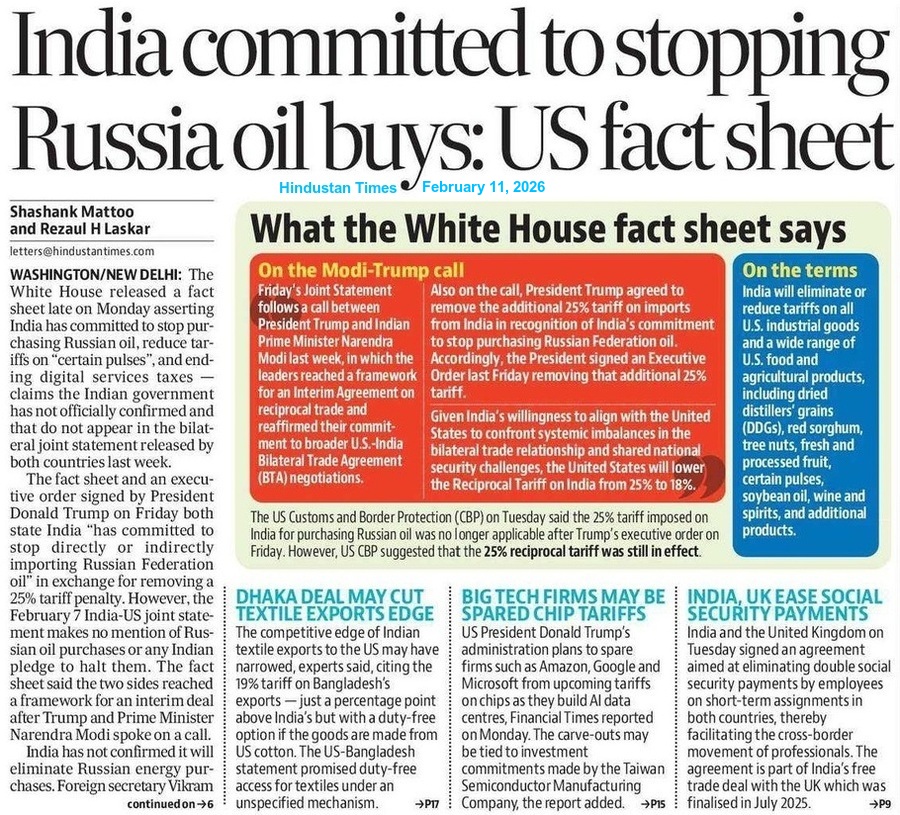
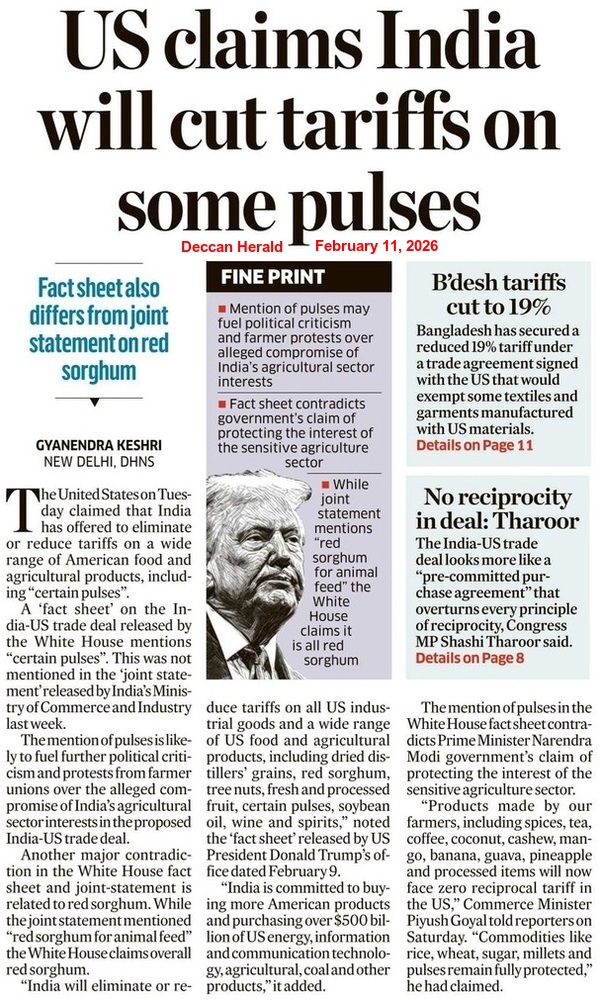
Interestingly, the timing of concluding the agreement has primarily made this accord a historic one. US President Donald John Trump is furious with India over the latter’s purchase of Russian crude oil. His recent decision to reduce tariffs also makes it clear that the US wants to trade with India not on equal terms, but from a superior position. Therefore, over-reliance on such a trading partner could be dangerous for India.
On the other hand, Trump’s handling of the Greenland issue has angered the EU, the long-standing and close diplomatic partner of the US. In such a situation, the India-EU FTA has sent a strong message to the global community: The global trading system can continue without the US, if necessary. Even President Trump cannot ignore this message. The importance of sending the message, too, is immense. The way the US President is attempting to dismantle liberal trade policies and misuse the economic power of his country is fatal for the global system. In fact, the return of Trump to the White House in 2025 initiated a sharp pivot toward aggressive economic nationalism, characterised by sweeping tariffs and the use of economic power as a coercive tool to reshape trade. Analysts are of the opinion that he is profoundly altering the liberal international economic order established post-Second World War. The FTA between India and the EU is quite significant in order to restrain him.
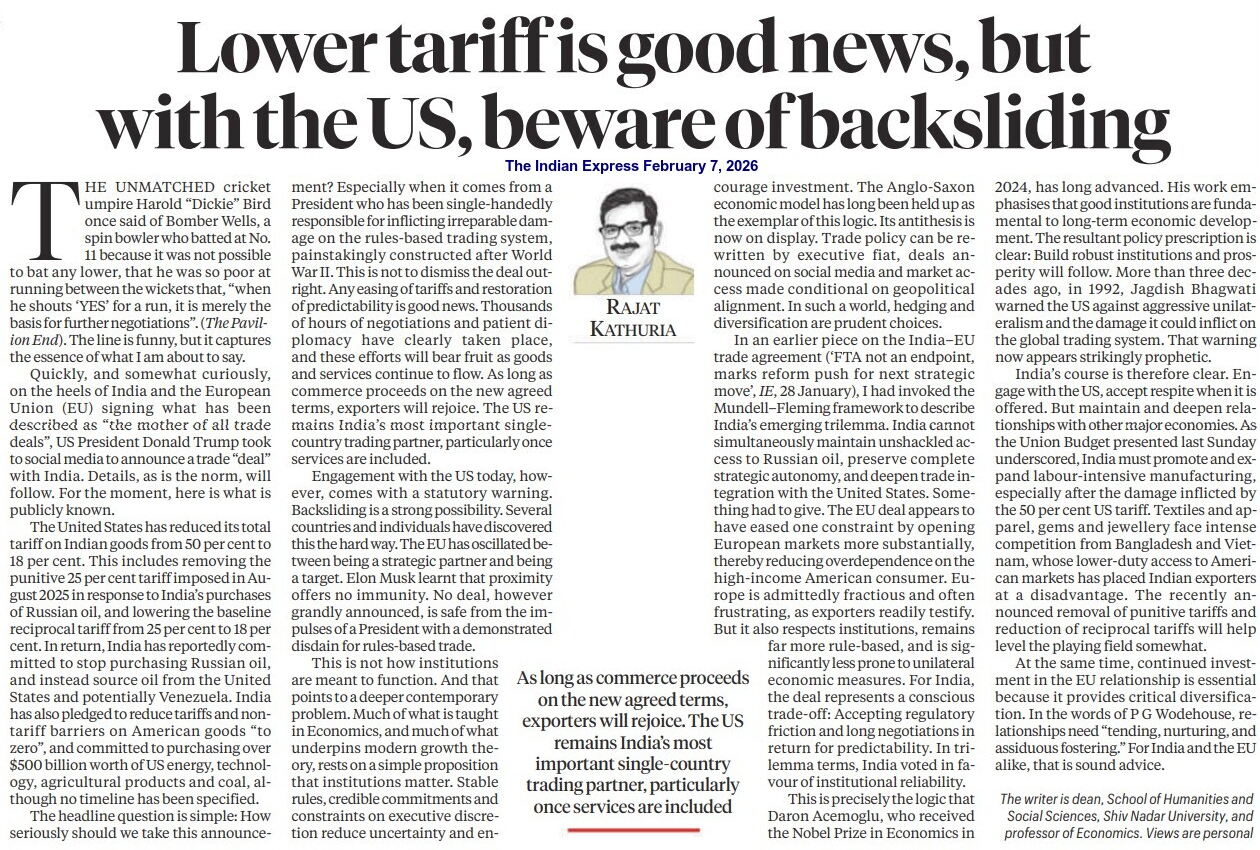
The FTA with the EU carries a significant message of change for India, as well. India’s dependence on the US especially in the field of foreign trade has increased to a dangerous level in recent times. It encouraged President Trump to create troubles for New Delhi by imposing higher tariffs on Indian goods. As expected, the Narendra Modi Administration had no alternative, but to build relationships with other countries or regions as trading partners. The Economic Survey 2024-25, tabled in the (Indian) Parliament on January 31, 2025, emphasised the need for systematic deregulation and a more liberal trade regime to boost India’s economic growth, as well as competitiveness.
Following the trade agreement with the EU, India would have to look for new partners. It is also important for the policy-makers to keep in mind that the attempt to strengthen trade ties cannot be limited to trade alone as it is also necessary to find new diplomatic partners. Alongside the FTA, India and the EU have also decided to boost cooperation in other sectors, such as defence and security. The importance of the India-EU collaboration in those sectors is immense. To solidify its authority in South Asia, India would have to pursue a multi-layered strategy that involves increasing strategic partners at the international level (to balance the growing influence of China). It will only be possible if India successfully manages to remind the world of its role not just as a large market, but also as a long-standing, peace-loving nation with a rich tradition.
The Modi Administration should remember that denying the glorious past of India on the diplomatic stage to serve narrow political interests is not a wise course of action. It is also important to remember that simply implementing agreements is not enough to achieve success in trade. Gaining preferential access to foreign markets and actually being able to sell products in those markets are different things. Preferential access to foreign markets, often established through FTAs or Generalised System of Preferences (GSP), provides a comparative advantage by reducing or eliminating tariffs. However, this access is merely a reduction in barriers, not a guarantee of market penetration, as significant obstacles remain that can prevent successful sales. For that, India needs to become competitive on the global stage and to increase productivity. At the same time, it would have to become a key player in the global value chain.
India is in a critical, high-stakes phase requiring immediate and sustained efforts to achieve these goals.
Meanwhile,
Boundless Ocean of Politics on Facebook
Boundless Ocean of Politics on Twitter
Boundless Ocean of Politics on Linkedin
Contact us: kousdas@gmail.com

 ISMC
ISMC Boundless Ocean Of Politics